What did SLO County look like in 1938? Rare travel film offers a color tour
What did San Luis Obispo County look like just before World War II?
A rare 55-minute promotional video shot on 16-millimeter color film in 1938 offers a good glimpse, serving as a time capsule of places to go and things to do in the window of time as the Depression ended and world conflict erupted.
Nostalgia fans on social media often share a 1949 Chevrolet short film called “Roads to Romance,” but this is a longer, more wide-ranging gem from a decade earlier.
Produced by the San Luis Obispo County Chamber of Commerce and titled “Recreation Unlimited,” the film touts many county activities that are still on tourists’ roadmap today, including beaches, golf, dining, clamming and going to the hot springs.
The film credits name Mary and Jeanne DeFfoset (likely a misspelling of DeFosset) and Bob and Dick Charleton as the couples on adventures exploring the county.
The film is a blue-sky public relations picture, perhaps an attempt to counter the perception that the region was down and out.
The film omits the dire scenes of poverty that photographer Dorothea Lange recorded in a Nipomo Mesa pea pickers camp only two years earlier.
Lange’s stark black-and-white portrait of Florence Owens Thompson and her children titled “Migrant Mother” became an icon of the era and was shared across the United States by the Farm Security Administration in an effort to gain support for Great Depression-era programs.
In the promotional film however, no one is having a bad day.
A short clip of the original film shows up on Twitter/X without attribution and mistakenly calls it “weekend trip to san luis obispo 1938” but the number of locations, expense of color film and flying sequences are all indications it is more than a couple’s weekend trip.
The film’s pacing is at times slow compared to the TikTok age, but when the filmmakers find a subject of interest, the scenes are fascinating and often fleeting.
Unfortunately, if there had been a soundtrack on the original film, it has been lost.
1938 film features well-known SLO County landmarks
The story starts at the county’s southern border, and soon the couples featured in the video are visiting the San Luis Obispo County Chamber of Commerce to plan their visit.
Most of the scenes appear to be shot in early spring with idyllic green hills. Only the Cayucos segment shows a golden brown background.
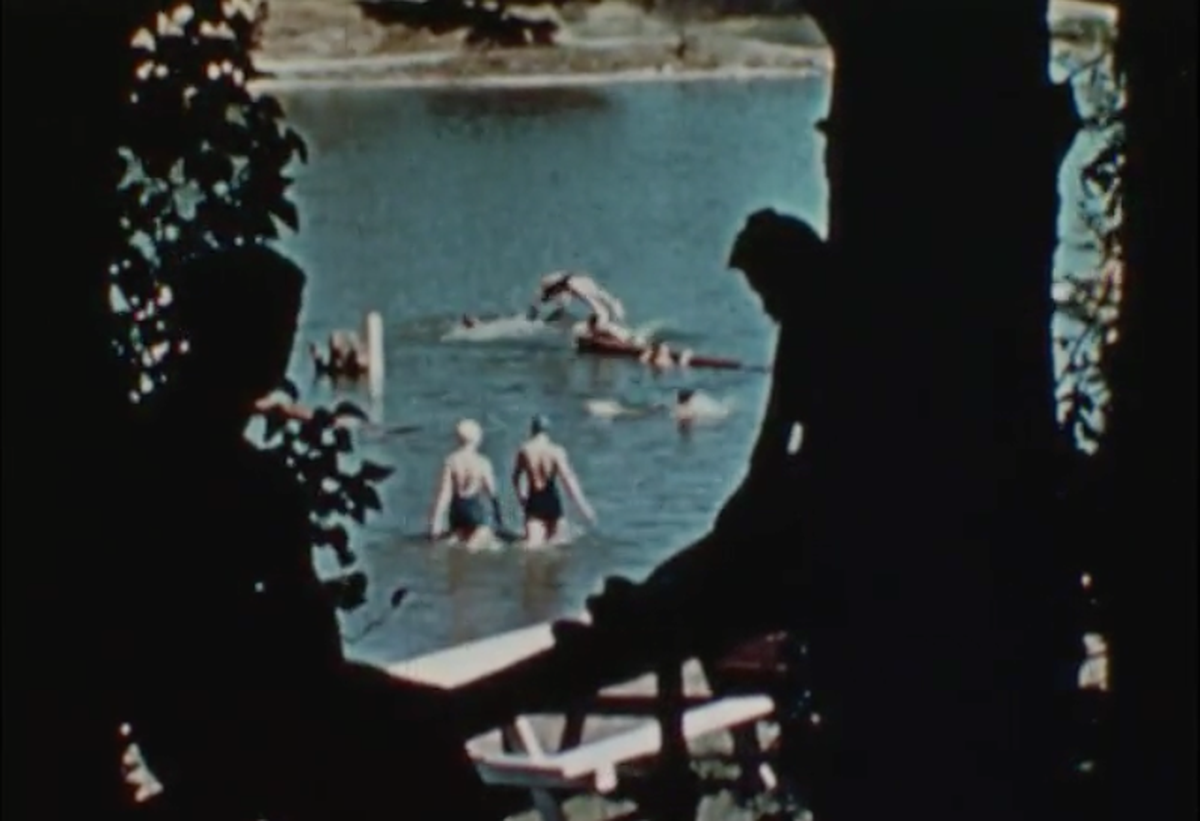
Views show people enjoying the beach (complete with cars on the sand), sailing on the ocean, visiting Sycamore Mineral Springs, playing in the water at Atascadero Lake and heading out for a round of golf.
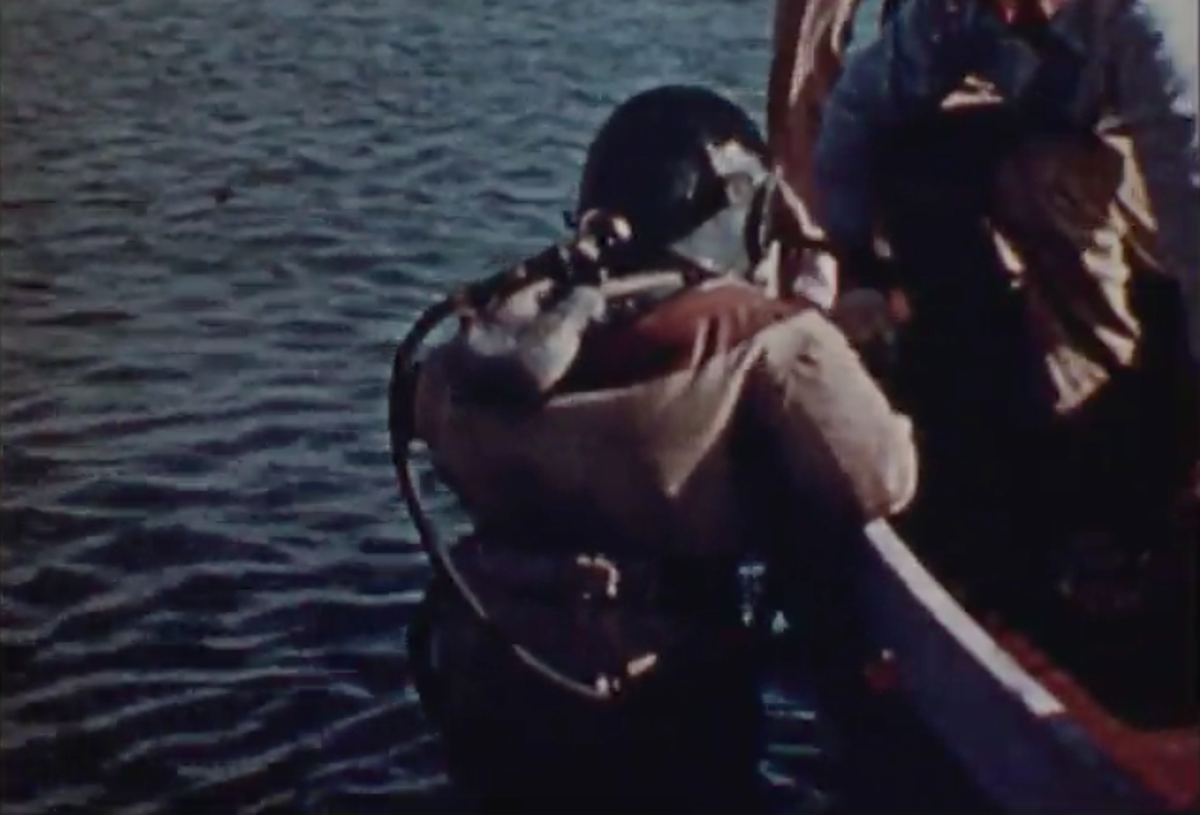
At one point, a diver in pre-scuba gear takes a dip in the waters of the Morro Bay Estuary to gather abalone.
The film was produced only five years after the end of Prohibition, and the San Luis Obispo County winery boom was still four decades away, so wine tasting is not part of this travelogue.
Some towns that attract tourists today — like Templeton and Arroyo Grande — were not on the shooting schedule in 1938.
But the biggest omission is any footage from Paso Robles, a resort destination in the county since the 1800s.
A guess on the reason for that oversight is that Paso wasn’t part of the dues-paying membership at the time and was left out.
It’s a shame because the original Victorian-era Paso Robles Inn was a vibrant destination.
Only two years later, a 1940 fire destroyed the core building, and the chance for the Chamber to have color film of the opulent resort was lost.
Despite that miss, the filmmakers didn’t skip the North County, visiting San Miguel’s Mission along with downtown Atascadero and even a turkey farm.
The film’s final sequence shows a man firing up a two-seat silver plane for an aerial tour, first flying over San Luis Obispo with views of Bishop Peak and the growing city.
The flight soars over a springtime view of Highway 101 over the Cuesta Grade, then under construction to reduce the narrow road’s 71 curves. The four-lane expansion would be officially dedicated in November that year.
It then offers views of Atascadero Lake, steam engines chugging on tracks and a low-elevation circle of Hearst Castle when it was still the private home of William Randolph Hearst, before circling back down the coast.
Other views in the shaky hand-held aerial film include Morro Rock without a power plant, Shell Beach with more roads than houses, Cal Poly with a “Green Acres”-style printing on a barn roof, and Mission San Luis Obispo surrounded by tumbledown buildings, decades the space was opened up as Mission Plaza.
“Recreation Unlimited” had only 143 views and one favorite on the Internet Archive as of this writing, which seems low.
You can view the entire film at archive.org/details/cslu_000001.