
This drought-resistant sage will bring bees — and a burst of color — to your garden
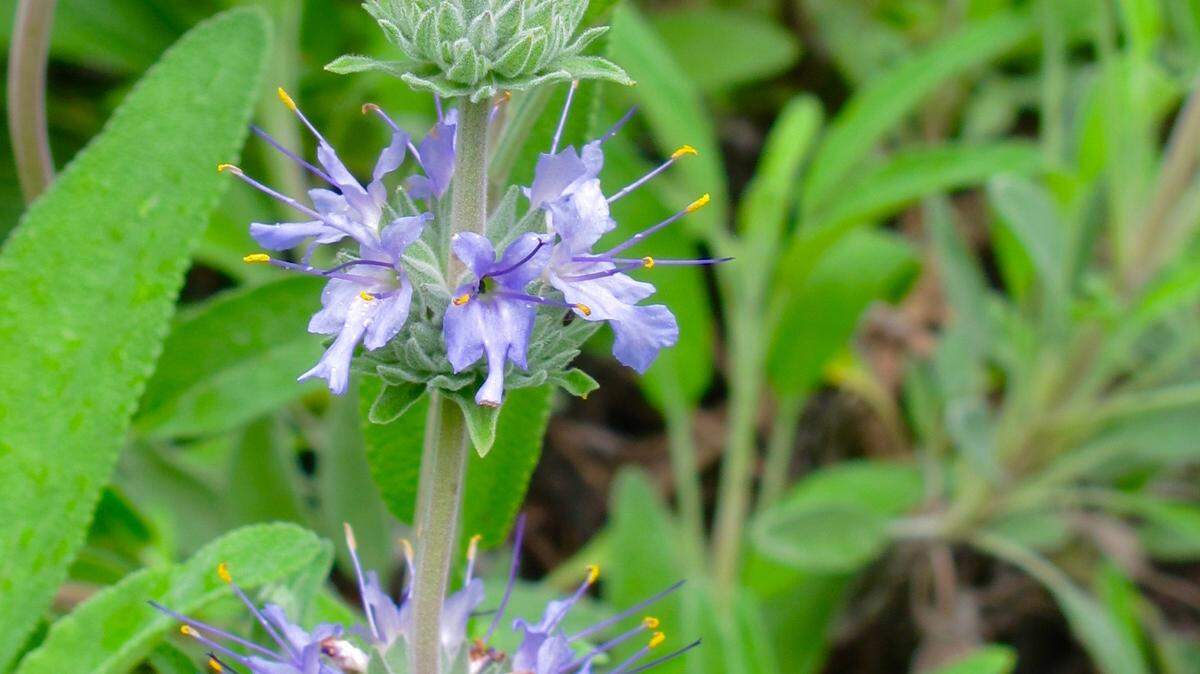
Bee’s Bliss sage
Salvia Bee’s Bliss
Planting areas: Sunset Zones 7 to 9, 14 to 24
Size: 2 feet tall, 6 to 8 feet wide
Bloom season: Spring
Exposure: Full sun to partial shade
Pruning needs: Prune tips when the plant is young to encourage bushy growth and more flowers.
Water needs: Low once established
Snapshot: As the name implies, bees love this plant’s blooms. So do hummingbirds, butterflies and other pollinators.
Deer and rabbits, however, give the California native hybrid a wide berth.
A cross between California purple sage (Salvia leucophylia) and creeping sage (Salvia sonomensis) or Cleveland sage (Salvia clevelandii), Bee’s Bliss sage has gray-green foliage and lots of lavender blue blooms on foot-long stalks, resembling shish kebab spikes.
Typical of salvias, the foliage has opposite leaves and square stems that round with age. Both foliage and blossoms have a pleasant fragrance.
Perennial in warm winter areas, this edible herb is a star as a low-growing, colorful groundcover that can assist with erosion control and suppress weeds on hillsides, slopes and native plant gardens. The foliage drapes well over retaining walls.
This salvia should be protected from high summer heat, so plant it on west-facing slopes with bushes or trees nearby to absorb direct heat. It can tolerate temperatures as low as approximately 25 degrees Fahrenheit.
Water requirements are low once plants are established, but plants may benefit from occasional deep summer watering.
Bee’s Bliss sage can thrive in sand or clay soils with modest drainage. It may develop powdery mildew on the leaves during cool weather, but that problem disappears as temperatures warm up.
In extreme drought and heat, the plant will go dormant but usually bounces back once rain returns.