
One of largest truffles in U.S. came from SLO County. Local winemakers want more
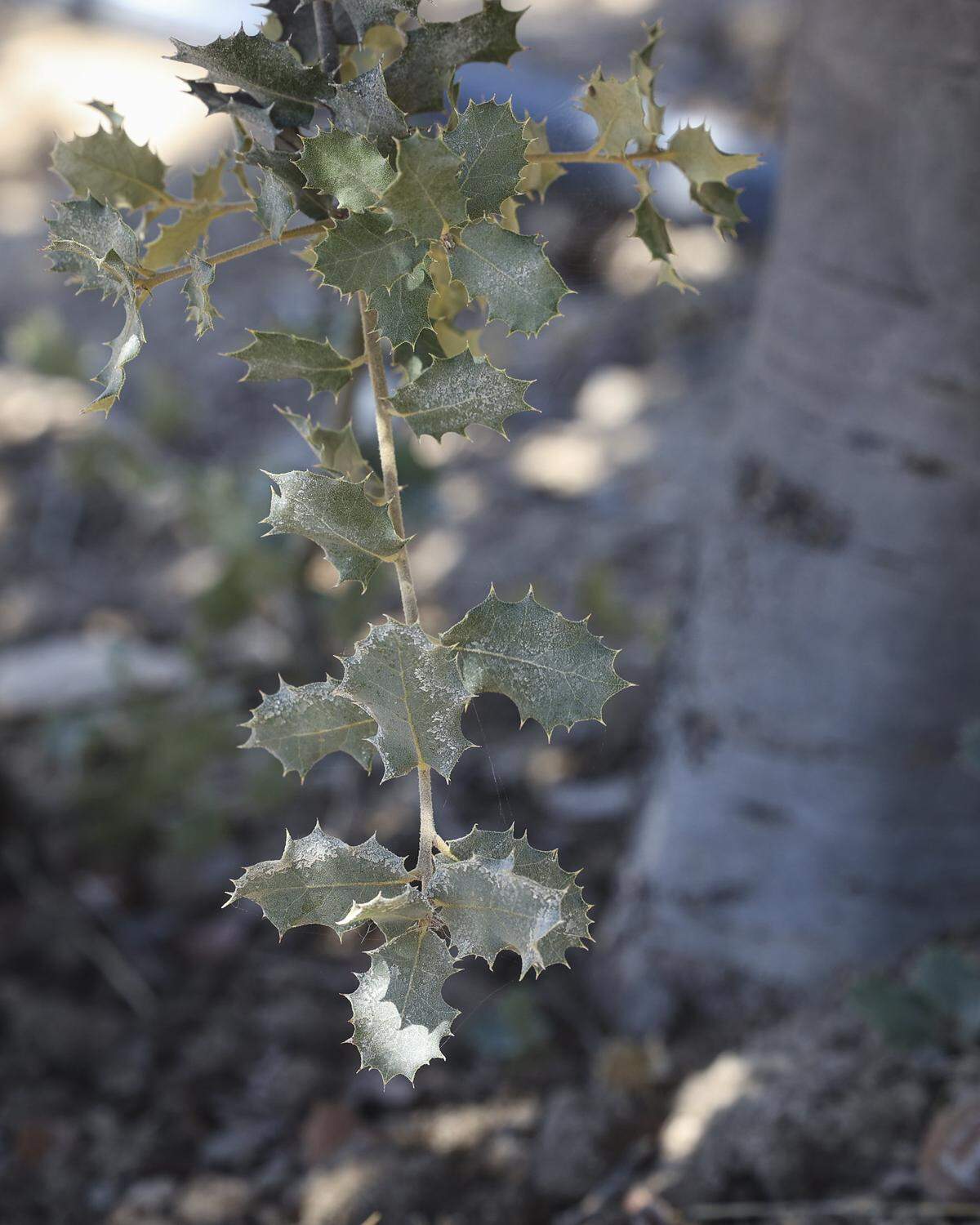
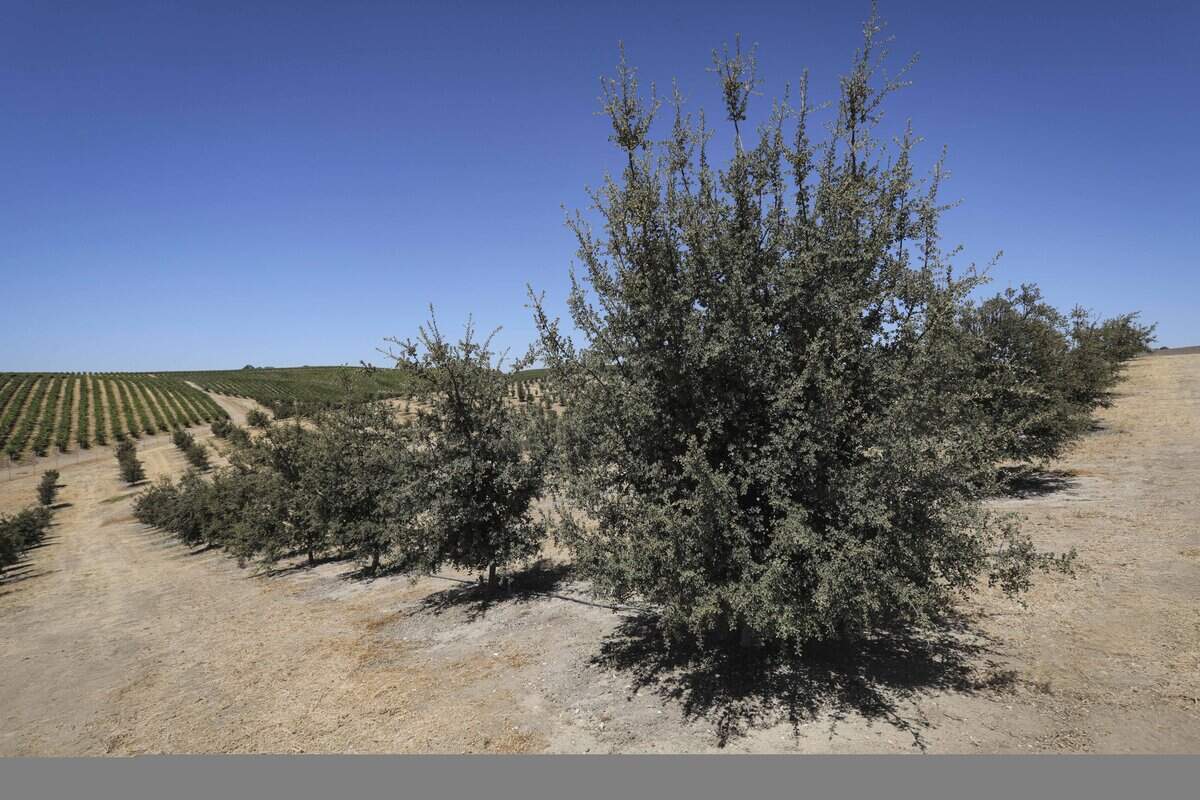
Nestled between vineyards in the rolling hills near Creston and Paso Robles, more than 1,500 holly oak trees slowly stretch their thorny leaves and branches into the rural San Luis Obispo County sky.
But there’s more at work in the orchard than just what meets the eye.
The real interest for growers is what’s happening underground.
The oaks are one of a few species of tree that can cultivate truffles — a high-dollar fungus that attaches itself to root systems.
Truffles are often used in pasta dishes or infused into oils and salts to add an earthy, umami flavor to meals.
Last year, this patch of holly oaks — which now belongs to Hope Family Wines after it purchased the plot in spring — produced one of the largest truffles ever harvested in the United States, weighing in at 1.8 pounds, according to director of vineyards Stasi Seay.
It was one of two truffles unearthed from the property last year, nearly a decade after the trees were planted.
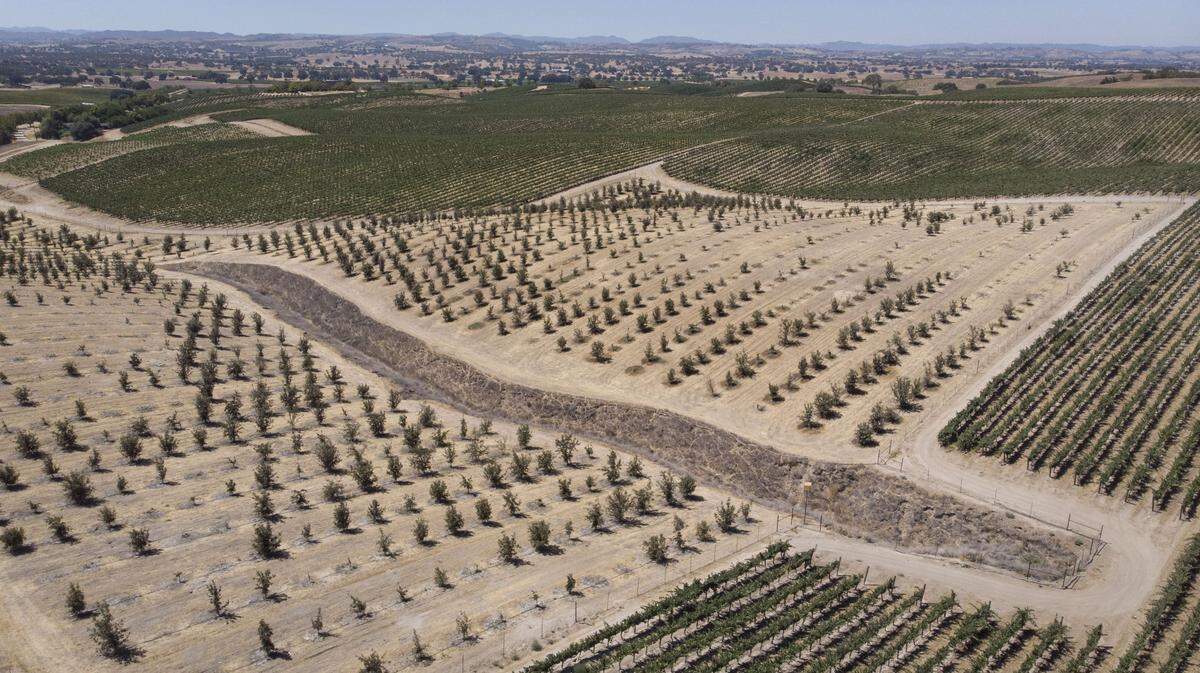
This year, the Hope Family Wines team is working to cultivate a larger crop of truffles on the property — named Tufera Farms after the Latin word for tuber — which also yields grapes used to produce the company’s various wines.
The company eventually plans to put a few yet-to-be-determined truffle products on the market — but they first need to grow enough truffles to make that happen.
“There’s a lot of different tricks and stuff to farming the trees correctly to encourage the truffle growth, so it’s definitely going to be a learning curve for us,” Seay told The Tribune. “It’s fun to grow grapes, for sure, and we all know what we’re doing, but to get a new challenge is pretty fun too.”
The wine producer is the latest to join a local effort to make SLO County into a hub for truffle cultivation.
In some parts of the county, the climate parallels areas of Europe where truffles grow best, leading growers to believe there’s a realistic future for truffles here.
Caelesta Wines and Vineyard in Templeton harvested about a pound of truffles in 2022 after a seven-year effort, The Tribune reported at the time. Another SLO County grower was attempting to cultivate truffles in 2018.
.JPEG "31C6C509-5FC6-4D9E-94BE-3656644B118E (1).JPEG")
SLO County wine producers try their hand at truffle farming
Farming truffles is a finicky process — and it’s a long game.
The Hope Family’s trees were planted about 10 years ago by another grower. Their roots were inoculated with spores before being buried — a process that jumpstarts eventual truffle growth.
Even then, truffles typically take several years to pop up after inoculation. The first harvests tend to be fairly small, like the two-truffle yield growers saw last year, prior to the Hope family’s purchase of the orchard.
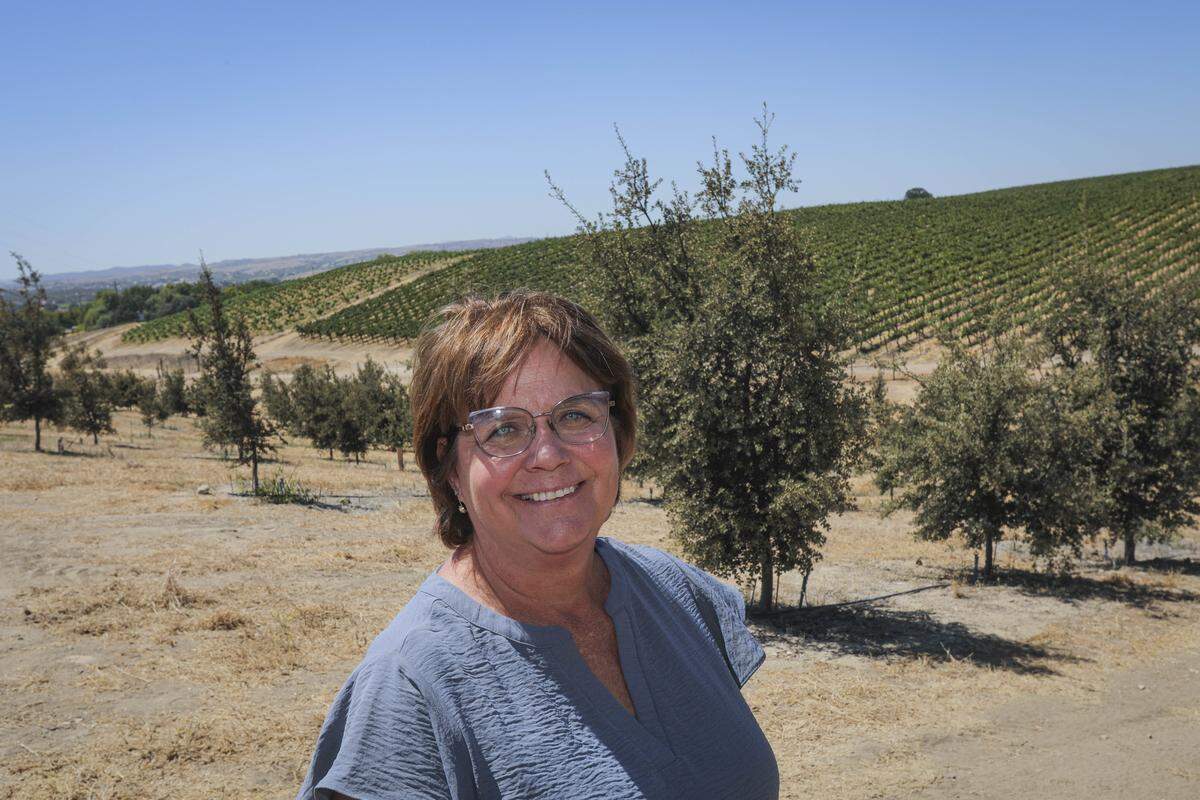
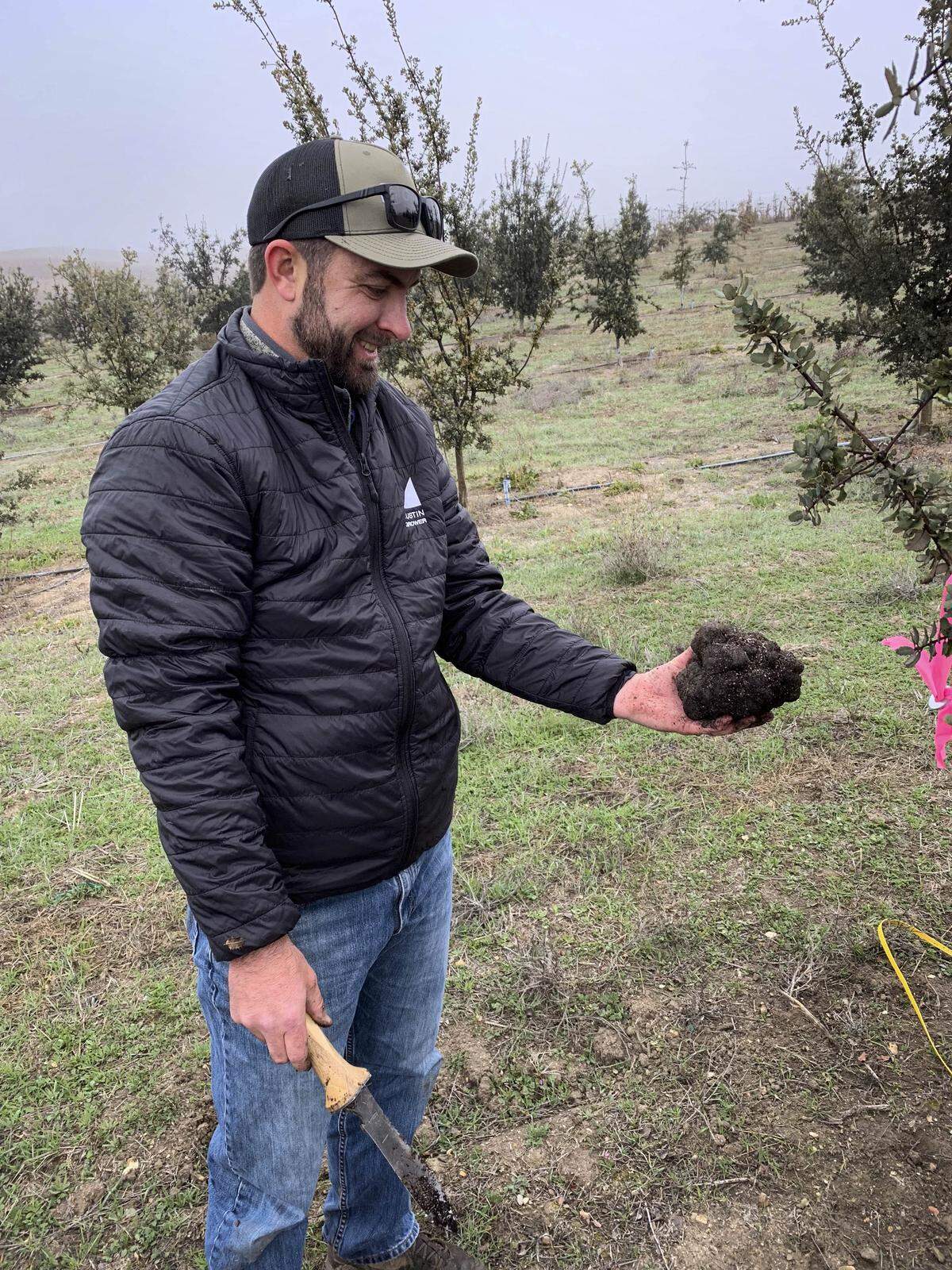
The growing process happens entirely underground as the fungus attaches itself to tree roots.
Growers can monitor conditions like soil health and moisture, and can inoculate the trees year after year using sprinklers or drip lines, but ultimately, the true yield won’t be known until harvest, which happens between December and February each year, Seay said.
During harvest, trained dogs are brought in to identify where the truffles are at underground, if any exist at all. Growers then carefully unearth the fragile fungi.
That’s when the clock truly starts ticking.
The shelf life for fresh truffles is relatively short. For the best experience, truffles should be eaten within 24 to 48 hours after harvesting, Seay said.
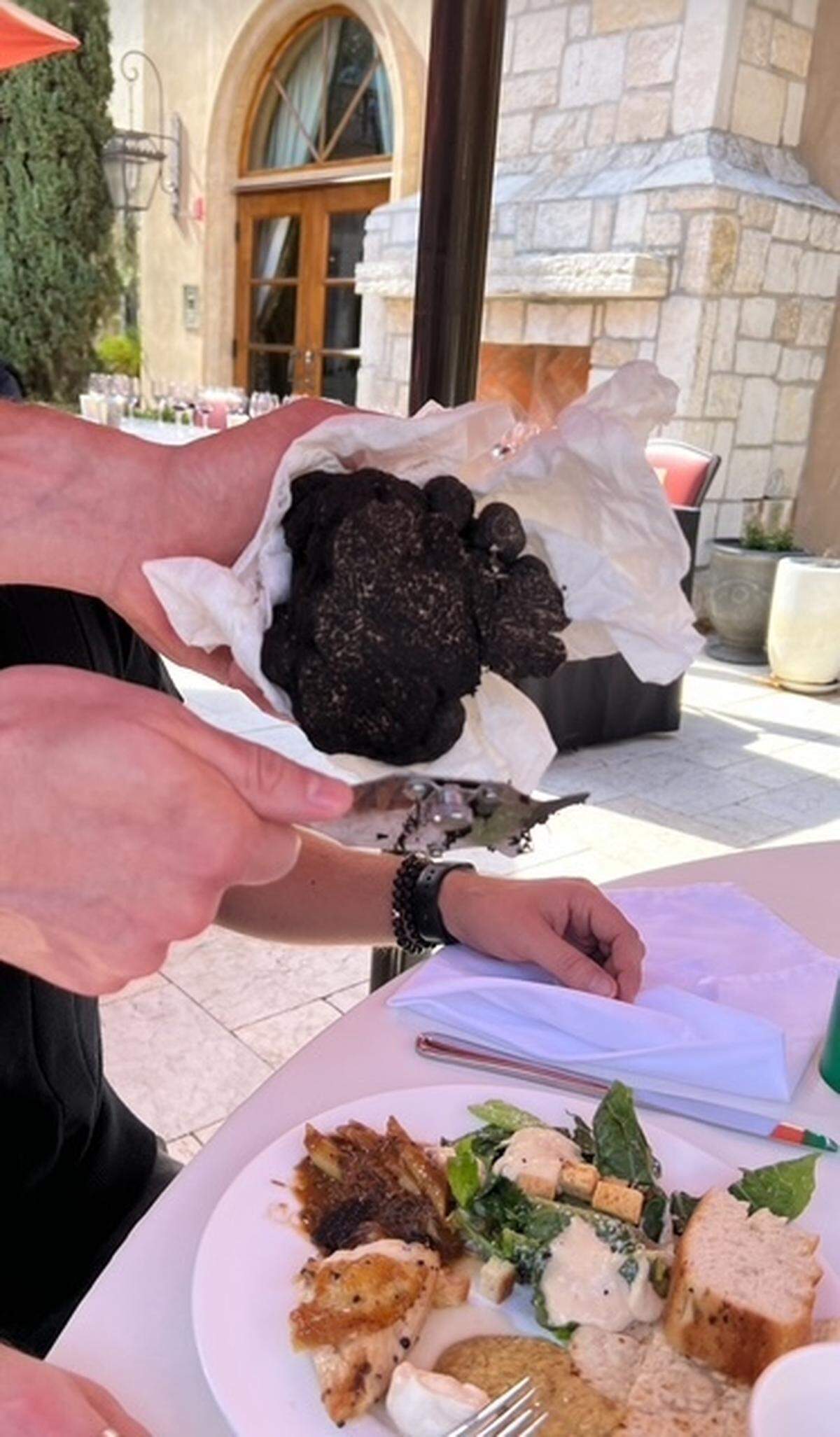
Last year, when the 1.8-pound truffle was harvested, Austin Hope was the buyer — and he toted the truffle to work meetings with a shaver so his staff could enjoy it fresh on their meals.
“It was like the gift that kept on giving, it was so huge,” Seay said with a laugh. “I didn’t know truffles got that big.”
The Hope Family business intends to incorporate their truffles into products they’ll make available for purchase. They may also start a fresh market for local restauranteurs who are interested in purchasing truffles in their prime, which typically sell for around $1,000 per pound, Seay told The Tribune.
Seay described the eventual truffle products as a “natural extension” of those the company already offers, which include olive oil and honey.
The Hope Family team is working with a truffle expert to hopefully boost their truffle yields in years to come to make the farm a sustainable operation.
Seay estimated that between six to 20 truffles would be harvested from the 10-acre orchard this winter.
Tufera to employ regenerative farming practices
The truffle farm is the latest venture for Hope Family Wines, a longtime SLO County winemaker that has achieved national success and is sold in 43 countries.
Tufera Farms also includes more than 200 acres of vineyard that will be used to produce the company’s wines. The property was previously known as Creston Valley Vineyard, and also served as a supplier for Hope Family Wines under its previous owners, a news release said.
Hope Family Wines encompasses six brands, according to its website: Austin Hope, Treana, Quest, Liberty School, Troublemaker and Austin.
The company specializes in cabernets, Seay told The Tribune, but also makes chardonnay, sauvignon blanc and some sparkling options.
Tufera Farms also includes five acres of Saint-Macaire — an obscure red that’s been monikered “the lost grape of Bordeaux,” the company said in its news release. The winery’s first bottling of Saint-Macaire will be made available at its two Paso Robles tasting rooms: the Austin Hope & Treana Tasting Cellar and Hope on Park.
In both its winemaking and farming, Hope Family Wines prioritizes sustainability.
That tradition is carrying over to Tufera Farms, where the company is employing “regenerative farming,” Seay told The Tribune.
She said the practice is similar in importance to nourishing the human body.
“If our gut microbiome isn’t healthy, we’re not healthy, right?” Seay said. “If the soil isn’t healthy, that’s the microbiome that the roots are living in. So if the soils aren’t healthy, vines aren’t healthy.”
Some of the regenerative farming practices Tufera employs include composting, avoiding soil tillage and planting cover crops to add nutrients back into the soil and host good insects. The company has also moved toward organic farming at its other properties.
Ultimately, the efforts aren’t in pursuit of certifications, Seay said. Instead, both her and Austin Hope believe “it’s the right thing to do,” she said.
“I’m third-generation farming, he’s fourth-generation farming,” she told The Tribune. “We believe that the land is here to improve so we can leave a legacy to the next generation.”
This story was originally published September 19, 2025 at 5:00 AM.
.JPG)