
They fetch up to $900 a pound. Could SLO County become a black truffle hot spot?
Five years ago, Tim Boatman looked out over the 5 hillside acres that sat tucked behind his new home off South El Pomar Road in Templeton. It was a blank canvas.
Boatman knew he wanted to grow something on the small plot of land, he just wasn't sure what. He wasn't interested in grapes, his specialty for the past 20 years. He wanted something new and exciting.
“I didn’t want to plant more grapes, and I didn’t want to plant olives or pomegranates because it’s all been done,” Boatman said recently, standing on his 16-acre property on a warm late spring day.
Boatman, a manager at Farm Supply in San Luis Obispo and an expert in vineyard irrigation, thought about what do do with the land until a chance encounter with an old friend.
Boatman was at work talking about his new place with a co-worker when innovative Morro Bay farmer Jim Shanley happened to overhear him.
“We really need to talk,” Shanley said.
“We have been scouting all over the West Coast, and you are in the middle of a bull's eye of one of the few places in California that’s absolutely prime for what we want to do,” Boatman remembered Shanley saying.
“What is that?” Boatman asked.
“Black truffles.”
Boatman wasn’t quite sure what a black truffle was, he admits now, but he was intrigued.
Truffle struggle
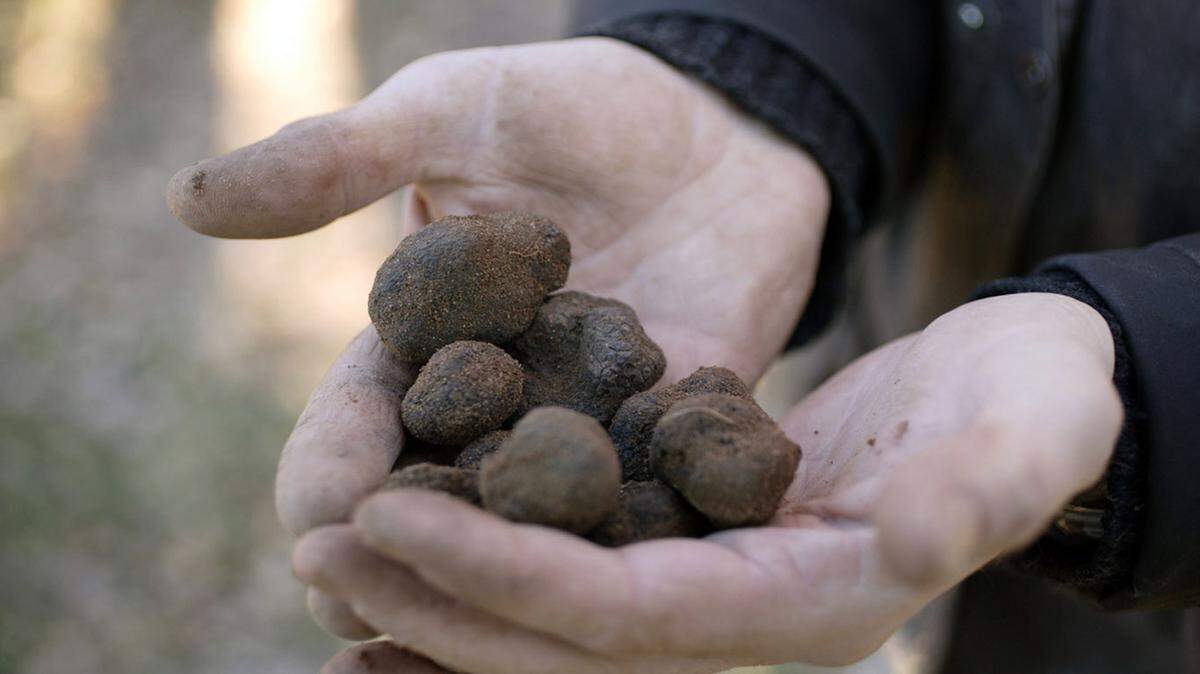
The story of growing black truffles — scientific name Tuber melanosporum, also known as Périgord truffles, winter truffles or French black truffles — is not one of great success in the United States.
The highly sought-after fungi with a reputation for being an aphrodisiac is one of the most expensive foods in the world and have been popular in France since the 1800s. But they have always been notoriously difficult to grow outside of Southern Europe, where they still occur naturally.
These days, most black truffles consumed in restaurants are cultivated on farms in France, Italy and Spain, with some coming from newer commercial operations in New Zealand and Australia.
The popularity of the “black diamond” truffle, which can fetch up to $900 per pound on the open market, has exploded alongside fine dining and created high demand in the United States in recent years. The problem for American chefs is distance. By the time black truffles arrive at restaurants, a process that can take anywhere from five days to three weeks, their unique and pungent flavor is greatly diminished.
“Every minute that a truffle is out of the ground, it's worse than the minute before,” Shanley said. “I can tell you for absolute certainly, a fresh truffle is a whole different experience than one that is three weeks old.”
Farmers have been trying to grow truffles in America for decades to solve this problem and cash in on the popularity.
The first man to do it successfully in the United States was William Griner, who farmed a black truffle on his secluded Mendocino County farm in 1987, according to the Wall Street Journal. Since then, farmers around the country have had limited success with black truffle production, but the great race to produce large numbers continues — especially in Northern California wine country.
Jackson Family Wines — owner of Kendall-Jackson — announced last year that it had harvested 17 Périgord truffles near Santa Rosa, beating out similar efforts in the Napa Valley, according to the San Francisco Chronicle. Though none of the truffles made it to market, it was a small victory and a potential sign of things to come.
Now, Boatman, and a small group of SLO County farmers are trying be the first to ride what some think could be a California black truffle wave.
‘Totally an experiment’
Stella, a 4-month old yellow lab, weaved in and out of rows of small holly and English oak trees on a warm North County day last week. Boatman followed. She’s not ready yet, but soon, Boatman hopes that Stella will be full-fledged truffle-hunting dog capable of sniffing out the fruits that are typically found at least 6 inches below the surface.
But the question remains: Will there ever be any truffles for her to find?
He's not sure, but it’s a risk that Boatman was fully aware of when he planted his first sapling nearly four years ago.
“It was totally an experiment. It’s something that I wanted to do because nobody else was doing it,” Boatman said. “It was never going to make or break me. It was something that’s fun.”
Boatman bought his trees from Shanley, who was up front about the hit-or-miss nature of the business.
“We should be able to grow them, but it also can fail,” Shanley said.
According to Shanley, there have already been failed local attempts, and The Tribune could not find any farmers who have been successful at growing black truffles in SLO County.
It can take anywhere from four to 10 years for black truffles to grow, according to most accounts, but there are already positive signs. Small circles of dead grass known as “brûlées” have formed around the bases of many of the oaks in Boatman's backyard. That development has excited the farmers.
“When a truffle grows on the roots, it emits a gas that’s a natural herbicide, and it kills the grass around the tree, creating the brûlée,” Boatman said.
And the rings are growing.
Boatman said he is hopeful that he will be able to harvest as soon as this fall. The ultimate goal is to harvest between 90 to 150 pounds per year at peak production. But even with the emerging brûlées, there is no guarantee that will ever happen. Shanley said just a few of the obstacles include competing plant life and hungry gophers.
But if Boatman is successful in building the first SLO County truffière, he’s already has a plan in place for what to do next — market them to high-end restaurants in SLO County and the Bay Area, where there are already chefs hungry to get their hands on them.
Graves, Farrell join truffle wave
Creston farmer and agriculture consultant Hilary Graves was a winemaker for 14 years before the job became too demanding for her busy family schedule. She was looking for a new venture two years ago when she first heard about the prospect of growing black truffles on the Central Coast.
There were three other benefits that attracted Graves to truffles: less water, less maintenance and higher profits per acre.
According to Kendall-Jackson, truffle "orchards" can generate up to a $63,000 per acre while pinot noir might yield $18,000 if the grapes were sold off.
So Graves tore up 5 acres of grapevines and teamed up with the American Truffle Co., which sells truffle-infused trees to farmers in prime growing areas, helps with the science and eventually gets a cut of the profits. The company is run by former Yahoo executive Robert Chang and mycologist Paul Thomas. The company has also planted orchards in Sonoma, North Carolina, Alabama and Ontario, according to a New York Times article from 2016.
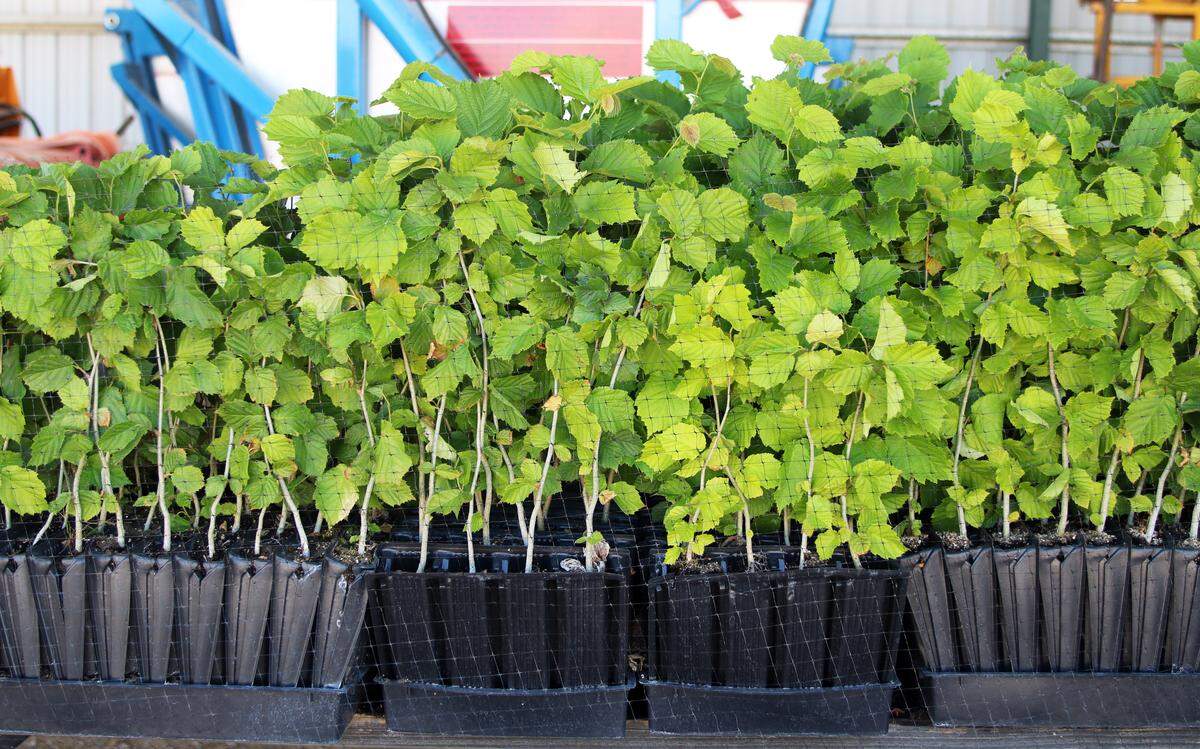
Two weeks ago, Graves planted 650 inoculated saplings, a mix of hazelnut trees and valley and English oaks, on her Creston property that the American Truffle Co. determined was suitable for truffles based on the high pH levels of the soil and other environmental factors.
Templeton farmer Brian Farrell said he planted 2,300 oak trees inoculated with the black truffle-producing fungus over 10 acres of farmland off Lupine Lane. His trees, set alongside 34 acres of grapevines, have been in the ground for three-and-a-half years.
"It's a big gamble, but we when looked at the business plan it seems really great. Even if we get one truffle, it would be good for marketing," said Farrell, who hopes to open a bed-and-breakfast on the property one day.
Symbiotic success?
Truffles form a symbiotic relationship with the host tree, acting as an extension of the root system and helping to provide additional nutrients that wouldn’t normally be available.
Boatman sees his relationship with Shanley as a similar partnership. The SLO County truffle pioneers exchange services that help both of them grow.
“(Shanley) told me, ‘I want this to be successful almost as much as you do,’” Boatman said.
If his experiment is successful and truffles are found on his Templeton farm, Boatman will be able to sell them, and Shanley will be able to show it’s possible to grow black truffles in SLO County using his trees. Acclaim is sure to follow.
And if it doesn’t work, well, Boatman is fine with that, too.
“Very worst-case scenario, I have a really expensive pile of firewood at the end,” Boatman said with a laugh.
This story was originally published June 21, 2018 at 5:00 PM with the headline "They fetch up to $900 a pound. Could SLO County become a black truffle hot spot?."