
Former SLO County officer accused of embezzling $160,000 is denied diversion
AI-generated summary reviewed by our newsroom.
- Judge denied mental health diversion for ex-officer Fallyn Rollins in embezzlement case.
- Court found no evidence Rollins' bipolar disorder influenced 18 months of theft.
- Rollins allegedly wrote regular checks from union funds totaling over $160,000.
The former San Luis Obispo County probation officer who allegedly took at least $160,000 from the department’s union was denied mental health diversion — meaning she won’t have the opportunity to erase the embezzlement charges from her record.
Fallyn Rollins, 31, was charged with nine felony counts of grand theft by embezzlement in February. The former probation officer is accused of stealing funds while she was acting as treasurer for the agency’s union.
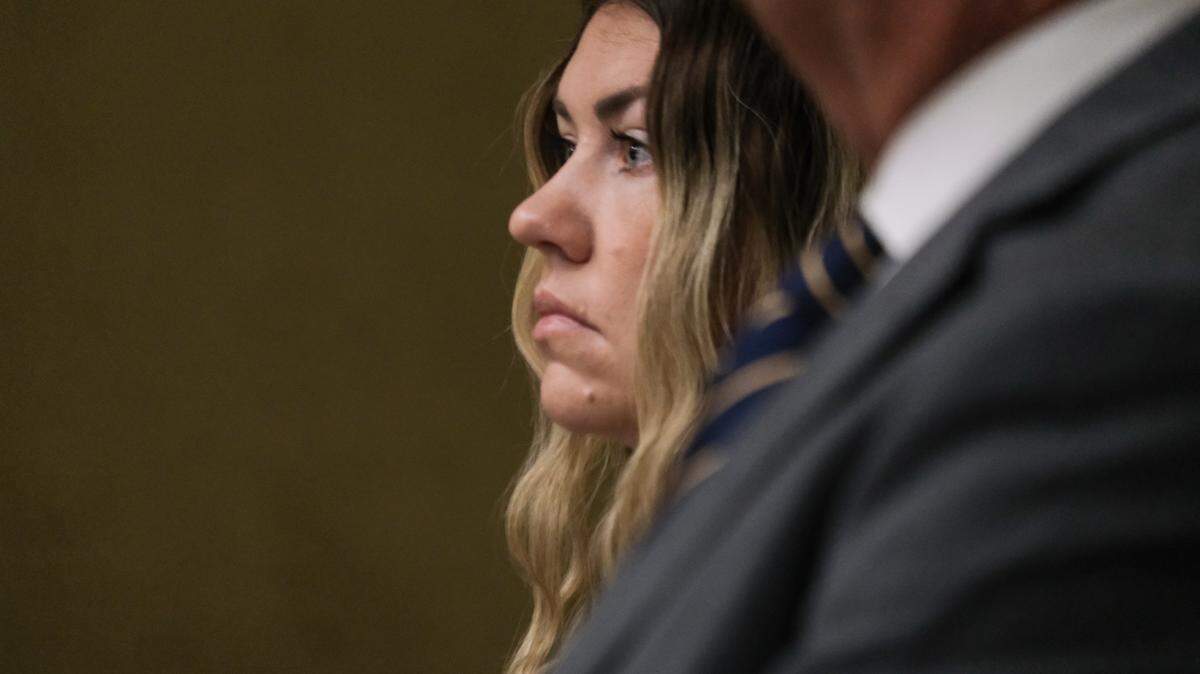
After Federman’s decision to deny the diversion, 18 probation officers from Rollins’ former union quietly celebrated in the courtroom gallery. On the other side of the room, Rollins raised both hands to wipe a few tears and turned away.
At a hearing on July 16, Rollins’ attorney, Robert Sanger, argued his client’s actions were a symptom of her mental health diagnosis, bipolar II, which can cause people to spend large amounts of money impulsively. Dr. Carolyn Murphy, a forensic psychiatrist who analyzed and diagnosed Rollins with bipolar II but said she also met the criteria for bipolar I, testified that Rollins’ diagnosis played a “significant factor” in Rollin’s alleged crimes.
San Luis Obispo County Deputy District Attorney Ben Blumenthal, however, argued Rollins’ purchases show they were well-thought-out decisions that went toward bills and other typical expenses.
In a Tuesday hearing, San Luis Obispo Superior Court Judge Rita Federman denied Rollins mental health diversion. She noted that while Rollins did have a qualifying mental health disorder, the evidence did not show Rollins was experiencing symptoms at the time of her crimes.
“Given that the symptoms and manifestation of bipolar law disorder are cyclical in nature and are manifested in impulsive and erratic behavior, the court is not persuaded that Ms. Rollins was suffering from the effects of the disorder when she made a conscious decision every month for 18 months to write a check to herself, deposit the funds, tend to her own account and use them to cover her living expenses,” Federman said.
Federman also said that due to the “constraints of the criminal process,” Dr. Murphy’s knowledge about Rollins’ crimes were “rudimentary.” Murphy did not directly connect Rollins’ conduct for 18 months with the cyclical or manic episodes of bipolar I, Federman said.
Federman added that the fact Rollins excluded her partner from the criminal activity “underscores that she was not acting impulsively or exercising poor judgment each time she wrote a check to herself from the union’s account.”
Rollins would regularly write herself checks, ranging from $608 to $9,980, around both the first of the month and in the middle, Federman said, which does not correspond to what is typically seen in hypomania.
“There was no evidence that Ms. Rollins was experiencing manic or hypomanic episodes regularly at the beginning and middle of the month, and there was no evidence that hypomania would manifest itself in a regular, routine pattern that could correspond to the alleged crimes,” Federman said.
Sanger asked the court to delay the arraignment to Sept. 29. He also requested to remove Rollins’ ankle monitor, which will be decided at that time.
This story was originally published July 29, 2025 at 5:53 PM.