
Ocean's distinctive lines caused by Langmuir circulation
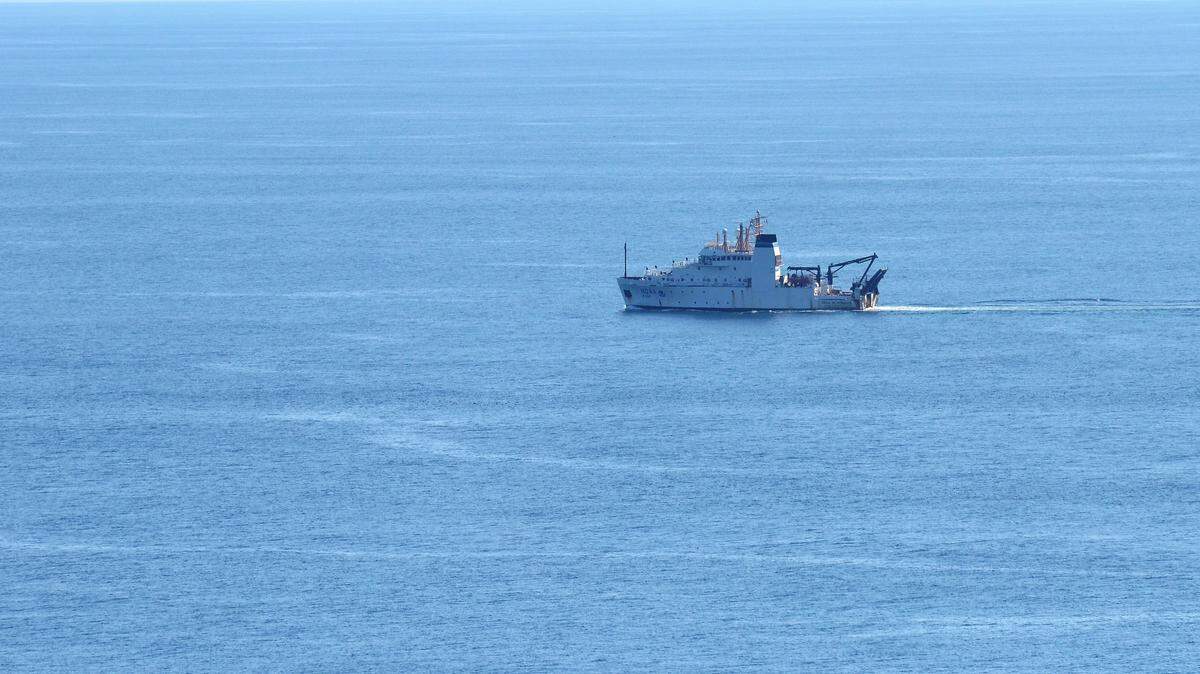
Except for the southerly swells from hurricanes off Baja California and large storms from the Southern Hemisphere, the Pacific Ocean has been unusually calm and warm along the Central Coast for most of August.
With the absence of the relentless northwesterly winds and the seas they generate, blows from whales have been easy to spot.
Other phenomena that have been easy to see on these glassy seas are the parallel lines of Langmuir circulation. They resemble corresponding paths of dark and light lines on the ocean’s surface that linger up and down the coastline. They can be easily seen from a boat or the shoreline.
The scientist who discovered this was Irving Langmuir, who was born in January 1881 in Brooklyn, N.Y. Langmuir was a true Renaissance man. His interdisciplinary work reached across chemistry, physics, biology, oceanography and meteorology to explain the interactions and exchanges of chemicals and nutrients in the surface layer of the ocean. He received the Nobel Prize in chemistry in 1932 for his work in surface chemistry.
For decades, Langmuir worked for General Electric, where he made huge breakthroughs on gas-filled incandescent lamps and high-vacuum power tubes used for TV and radio broadcasting, even coining the term plasma for ionized gas in 1927.
During World War II, he worked to improved sonar for the U.S. Navy that helped in the detection of Nazi and Japanese submarines. He also developed methods for de-icing aircraft, which then led to his work developing the science of cloud seeding with silver iodide to produce additional rain or snow in regions of stormy weather.
It was during a voyage of discovery across the Atlantic in 1927 that he noticed an ocean phenomenon that many San Luis Obispo County residents have seen along our coastline.
On that voyage, Langmuir noticed windrows of drifting seaweed in the Sargasso Sea. He hypothesized that these long parallel streaks of seaweed developed when the wind blew steadily over the surface of the ocean and formed helix-like bands of divergence and convergence.
When the winds blow across a flat ocean, long sets of shallow parallel counter-rotating vortices form in the surface waters. These can also develop in lakes and even slow-flowing rivers.
In our hemisphere, these slowly rotating cells align themselves to between zero and 20 degrees to the right of the direction of the wind.
These convergent zones are areas of down-dwelling. If the winds blow strong enough, streaks of debris such as seaweed or foam can collect where the vortices converge, producing windrows.
On the other side of these adjacent twisting vortices are long lines of divergence or upwelling, where water rises from below the surface. The water remains relatively calm. In the divergence zones, plankton can be caught and carried to the surface.
If there is enough plankton, fish can be found in these regions feeding on them.
This story was originally published August 30, 2014 at 7:35 PM with the headline "Ocean's distinctive lines caused by Langmuir circulation."