
Pismo Beach voters to decide on sales tax extension, Price Canyon development
On Nov. 4, Pismo Beach voters will have their say on two ballot measures with very different purposes.
One, an extension of an existing half-percent sales tax, would raise money to pave streets, repair sidewalks, install storm drains, fix seawalls, and more.
The other measure looks to limit what could be developed in Price Canyon, east of the city’s limits.
While the two measures vary in their history and purpose, both will help shape the future of Pismo Beach.
The sales tax measure, Measure I, was placed on the ballot by Pismo Beach City Council members, who called it “essential” and want to extend it for 12 years. They say the annual income generated — about $1 million a year — helps to make the city “a nicer, prettier, safer and more pleasant place to live.”
Meanwhile, the Price Canyon issue, Measure H, was placed on the ballot after local residents gathered enough signatures to force the council to either adopt it or put it before voters. Two of the measure’s proponents, Sheila Blake and Marcia Guthrie of the Save Price Canyon group, are running for council seats.
Supporters say the measure protects residents’ quality of life and ensures that approval of any large development with significant impacts to air, traffic and water would be decided by registered voters.
An opposition statement filed by five Pismo residents, including two former councilmen, argues the measure was drafted without public input and will have harmful consequences.
The measure was sparked by distrust of a council that some residents believe was poised to approve a project that would forever change the canyon.
It would take some power away from the council to decide what it wants in the area by altering development standards in the city’s general plan to allow specific uses.
Measure H, Price Canyon
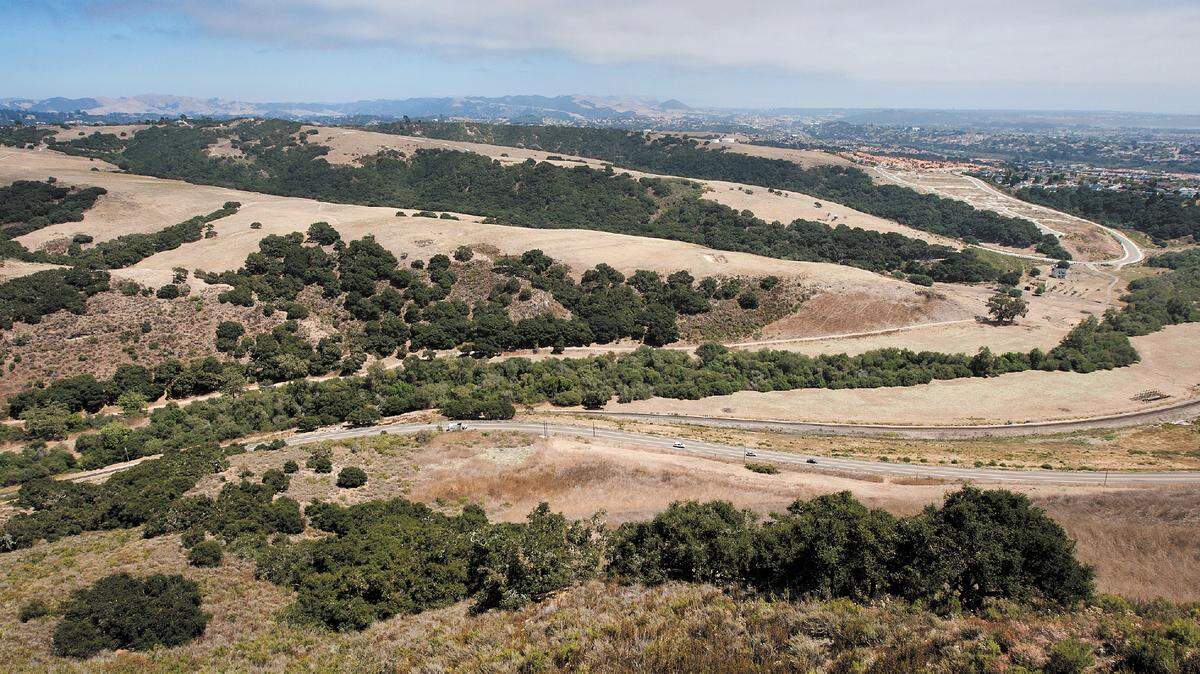
Large hotel and housing developments proposed for hundreds of acres on either side of Price Canyon Road — a bucolic area outside city limits but in an area that could one day be annexed to Pismo — prompted nearly 1,000 residents to sign a petition specifying what types of development could occur there.
“The reason we had to put this initiative on the ballot is because the City Council was reckless in their support of development in Price Canyon,” Guthrie said at a Sept. 11 candidate forum.
The measure would only apply to projects seeking annexation into Pismo Beach and would not impact any properties developed under county regulations.
One project, Spanish Springs, proposed hundreds of homes, a 150-room hotel, a 10,000-square-foot conference center, and a nine-hole golf course on about 961 acres.
Dave Watson, a consultant for the Spanish Springs property owners, said they are waiting to see what voters decide before contemplating their next step.
Measure H would create a new land-use designation for 30 years called “watershed and resource management,” and amend the city’s general plan to allow dry farming, grazing, parks, trails, schools, public buildings and limited residential development on more than 1,100 acres in Price Canyon.
The minimum parcel size would be 40 acres, with no more than two homes allowed on each parcel.
If a project meets the standards set out in Measure H, it would go through the city’s normal planning process. But if the proposal includes land uses not allowed under Measure H — such as a hotel — then the plan would have to go to voters.
“There is no infringement on private property rights of parcels which are outside of the city limits,” Blake wrote in the argument in favor of Measure H. “Property owners are free to develop within the county.”
But opponents say it would be better for the city government to have control over what is built near its borders. Five residents signed the argument against Measure H, including former Councilmen Rudy Natoli and Ted Ehring (who died Sept. 3), as well as residents James Buttery, Tony Hyman and John Sorgenfrei.
“If Pismo Beach controls the planning process, we can require public open space, parks, trails, positive fiscal effects, traffic mitigation and new water!” their argument states.
The measure could encourage development “under more permissive county rules,” they said, and would burden city services, such as fire and police, if they have to respond to emergencies in the canyon under mutual aid agreements with the county.
“Do you want to see scattered development without infrastructure on the hillsides with no obligation for trails, parks and open space?” the argument reads. “More county-approved oil wells all along Price Canyon Road?”
Opponents are concerned that developers might think twice about trying to annex into the city if Measure H makes the process too onerous.
“They’ve written an initiative that makes it impossible to bring a realistic project into Pismo,” Watson said.
The properties in Price Canyon, which total about 1,140 acres, are currently zoned by the county for rural or agricultural uses. The parcel size could range from 20 acres to 320 acres depending on a number of factors, said Mike Wulkan, supervisor of the county’s long-range planning staff.
Measure H also requires all future annexations to provide new long-term water sources sufficient for the planned development — something that concerns Watson.
The water source requires “two to three years of sustained new production and quality analyses from the source.”
“Think about how practically that might work in Price Canyon,” Watson said. “Are they saying we need to drill wells and produce water for two to three years? That to me is an illogical waste of resources.”
The measure doesn’t set forth standards to gauge a new water source, City Attorney David Fleishman wrote in an analysis prepared for the council, which could open the city up to litigation.
But proponents argue that the water requirement isn’t anything new or different from current policies requiring developers seeking to annex into Pismo to bring their own reliable water supply.
Ultimately, any new annexations have to be approved by the county’s Local Agency Formation Commission, which maintains a policy that a project’s water supply must be adequate, reliable and sustainable.
“We go into a detailed analysis about each water supply and the (LAFCO) commission gets to make their call on whether they think it’s reliable or not,” LAFCO Executive Officer David Church said.
In the argument in favor of Measure H, Blake wrote that it ensures existing water supplies will be reserved for current residents and protects “existing watershed and groundwater assets essential to our standard of living.”
Opponents also argue the city will lose out on millions of dollars from hotel revenues and taxes if such projects are prohibited from being built there.
But, Blake noted, no future revenue will be lost if the measure passes.
Fleishman’s analysis confirms this; it states that the city doesn’t rely on anticipated revenue generated on land outside its city limits.
Measure I, sales tax
Pismo Beach voters also will consider a second measure: a 12-year extension of its half-percent sales tax increase, called Measure I.
Pismo Beach voters first approved a half-percent sales tax increase in 2008 with 55.8 percent of the vote (known as Measure C).
The measure raised the city sales tax rate to 7.75 percent from 7.25 percent for 6½ years. (The sales tax rate was raised to 8 percent after Proposition 30, a statewide tax measure, passed in 2012.)
With the measure set to expire on March 31, 2015, city staff went to the council earlier this year with a recommendation to extend the tax increase for 12 years.
Council members discussed a shorter sunset date — noting that it might be easier to persuade residents to vote for it — but decided the longer period would give them a more reliable income stream to finance larger projects.
Unlike the previous measure, Measure I includes a requirement that the city report quarterly on how the money is spent.
The half-percent sales tax was levied October 1, 2008; it has raised $6.5 million as of June 30 and is expected to raise about $8 million by the end of March.
More than $3.8 million has been spent on projects including seven miles of street paving, sidewalk repairs at 62 locations, storm drain maintenance and repairs, and maintenance of the Pismo Beach Pier.
Additional projects totaling about $4 million should be underway by 2015, including three additional miles of street paving projects.
City Manager Jim Lewis said about 70 percent of the Measure C revenue comes from tourists, based on information from a consultant who monitors sales tax receipts.
Officials say an extension could raise an additional $13 million to $15 million over the next decade and help fund long-term infrastructure projects such as putting utilities underground, improving parks and constructing new storm drains.
Two council members wrote an argument in favor of the measure. No opposing statement was filed.
“Remember, nearly all taxable purchases in Pismo Beach are bought by visitors,” Mayor Shelly Higginbotham and Councilman Erik Howell wrote. “As a result this tiny but helpful tax has truly benefitted our residents.”
Measure I requires a majority vote to pass. The money would go into the city’s general fund. City officials say the money is independently tracked and used solely for capital projects, but that use is not binding.
More information
Learn more about Measure H and Measure I at http://www.pismobeach.org/657/November-4-2014-General-Municipal-Electi.
This story was originally published September 17, 2014 at 6:39 PM with the headline "Pismo Beach voters to decide on sales tax extension, Price Canyon development."