
Los Osos developer Richard Otto built Baywood from ground up
Bankers today don't usually send a son half way around the world to investigate a risky loan.
Richard Otto spent a month in the Chinese court of General Wu Pei Fu evaluating a potential loan for his wealthy father.
The general was internationally known; on Sept. 8, 1924 his photo was the cover of Time Magazine. According to Encyclopedia Britannica, Wu Pei Fu was the most powerful man in Northern China in the early 1920s.
Otto denied the loan to Wu Pei Fu about 1920.
A year later Otto started buying property in a community he would rename Baywood. It had originally been called El Morro based on the name of the underlying original Spanish land grant, Rancho Moro y Cayucos, but that name led to confusion with with Morro Bay.
This obituary ran on the front page of the San Luis Obispo Telegram-Tribune March 12, 1966:
Developed Baywood Park Colorful Richard Otto dies in Santa Barbara Richard S. Otto, 68 who named and developed Baywood Park and for years was its most colorful and controversial resident, died Friday in a Santa Barbara hospital.A widely-known engineer, he ran unsuccessfully for U. S. Senator from California in a 1940 primary against the late Sen. Hiram Johnson.
Six years earlier, he managed Upton Sinclair's famous but unsuccessful End Poverty in California campaign for governor.
Mr. Otto moved to Montecito in 1964 after residing permanently in Baywood Park for 15 years.
But he had developed the community many years before, and had grown many of its Monterey Pines from seed in a Los Angeles apartment box-window.
Son of a wealthy, Eastern family, Mr. Otto was born March 24, 1897, in East Orange, N.J. He was educated in private schools in this country and in France, Germany and Switzerland.
During World War I, he worked with noted military inventor Carl Norden and later did the engineering for the Norden Bombsight.
It was considered one of the most significant Allied secrets and technical masterpieces of World War II.
About 1920, Otto was sent by his father, a New York banker, on a month-long mission to the court of Chinese warlord Wu Pei Fu, to discus a huge loan. He decided against granting it.
In 1921, realtor-historian Walter Redfield, long of Baywood Park, sold Otto his first Baywood Park lot for $165. Otto became interested in the San Luis Obispo County and became sales manager of Redfield's Los Angeles office.
Then Otto, with financial backing from his father, purchased all the remaining lots in the townsite.
Because of a conflict in the names El Moro and Morro Bay, Otto changed the name to Baywood Park and began development in 1924.
At one time, he owned about 1,000 acres in the community, but over the years had sold most of them. He still owned the Baywood Lodge and Restaurant, and the Cambria Quicksilver Mine.
In the early 1930's, Otto met Socialist Upton Sinclair—noted muckraking novelist and author—at a meeting of the Bellamy Society. He, Sinclair and others conceived the idea of the EPIC campaign, and all registered as Democrats.
Sinclair was defeated in 1934 by Frank Merriam in one of the most famous gubernatorial campaigns in California history.
When it was over, Otto bought an 85-foot yacht, the Coquet, and lived on it four years, making several trips to the South Seas.
As a Democrat, he was one of several unsuccessful candidates for U. S. Senator against Sen. Hiram Johnson in 1940.
Over the years, Otto published the Baywood Observer, a newspaper, "spasmodically", in his words.
Mr. Otto had undergone surgery in January, and had a succession of illnesses since. Arrangements are under the direction of the Channel City Funeral Society.
He had asked that in lieu of flowers friends donate to a peace organization.
His survivors include his widow, Mrs. Shirley Otto of Montecito; a son by a previous marriage, Henry Stuart Otto of Arlington, Va., and a sister, Countess Editha de Beaumont of New York City.
•••
•••
A sealed bid was revealed at $1.5 million for the whole 300 acres and the probate court would decide.
One realtor said the prices were crazy, he was offering a double lot at $3,500 across the street from a single auctioned lot that sold for $5,200.
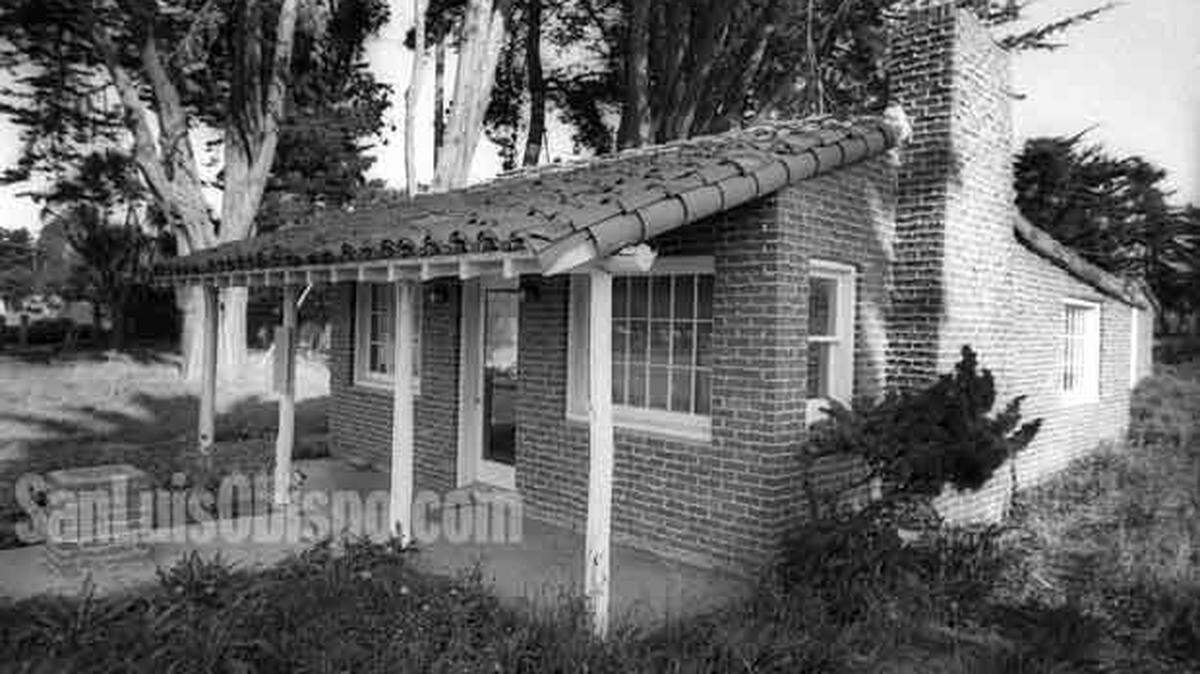
An August 15, 1983 Telegram-Tribune story said the developer who had had bought the 30-year-old 480 square foot Otto Building had razed it over objections of local historical activists.
Cyrus Saidi of Whittier wanted to build a 9,385 square foot, two-story commercial retail office space on the Second Street property.
Residents complained that Saidi would not compromise to save the Otto building. Saidi expressed his frustration:
"I am spending over a million dollars in their community. I don't know what the community wants from me.
"I was stupid enough to be a good-hearted guy and listen to their objections for three years.
"I lost my chance at obtaining cheaper money to build, I lost money trying to satisfy them. Now when I go to build something, I have to call the sheriff to get people off my property."
This story was originally published September 25, 2014 at 2:29 PM with the headline "Los Osos developer Richard Otto built Baywood from ground up."