
Ex-Cal Poly fraternity president pleads no contest to drug charge
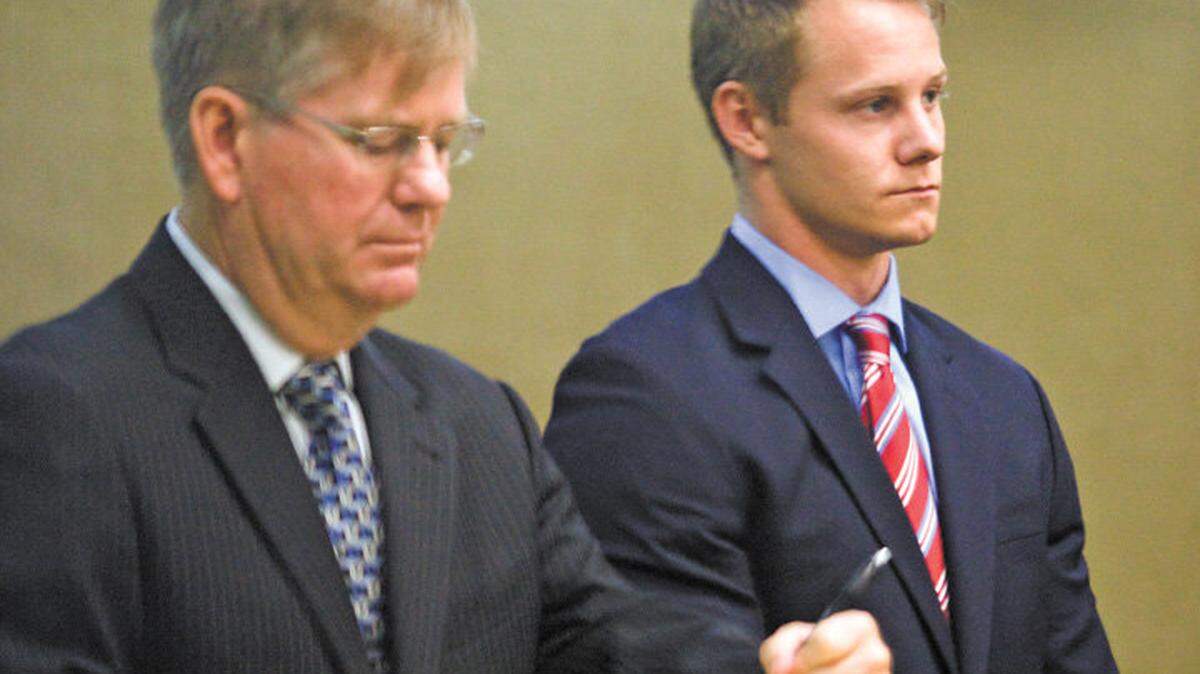
A former chapter president of a Cal Poly fraternity caught up in an investigation into the August attempted robbery of the Delta Sigma Phi house in San Luis Obispo accepted a plea deal in court Friday that could keep him out of jail.
Gear Thomas McMillan, 22, entered a no contest plea to a felony count of possessing marijuana for sale. In exchange, prosecutors moved to dismiss a felony charge of possessing a controlled substance — unidentified prescription pills — for sale.
As a result of the deal, McMillan could face a maximum of one year in San Luis Obispo County Jail and a fine of between $300 and $10,000, and will have to register with the state as a drug offender.
San Luis Obispo Superior Court Judge Michael Duffy scheduled McMillan’s sentencing for April 17, though he told McMillan that he would allow 45 days between the sentencing and surrender dates so that McMillan could apply for alternative sentencing options such as home detention.
McMillan declined to comment following the hearing.
Deputy District Attorney Kate Seacrest said only that she was glad McMillan accepted responsibility and that the case was moving to conclusion.
Police arrested McMillan about three weeks after five members of the Cal Poly football team allegedly conspired to rob the fraternity house Aug. 10. Those criminal cases remain ongoing.
Though McMillan was not home at the time of the attempted robbery, some players and other witnesses later told investigators that drugs were the target.
Following the attempted robbery, McMillan told The Tribune in a phone interview that drugs played no role in the incident and that there was no ongoing drug activity at the house.
“It’s a shame because we were the ones who were held up at gunpoint; we were the ones in danger,” McMillan said on Aug. 11. “And the idea that this was somehow about drugs is shedding a negative light on us in the community.”
He added: “If anyone in our house was doing anything like that, we would all know.”
San Luis Obispo police raided the fraternity house on Sept. 4, and prosecutors filed charges against McMillan Sept. 17.
As a separate part of McMillan’s case, an attorney for Delta Sigma Phi filed a motion in San Luis Obispo Superior Court on Dec. 9 seeking to reclaim $2,700 of the $4,700 seized by officers from McMillan’s bedroom during the search.
Attorney Neil Levinson wrote in his motion that the amount was legitimate rent and deposit money collected by McMillan from other members as part of McMillan’s role with the fraternity, for which he was given discounted rent at the house.
The motion included written declarations by three fraternity members verifying they gave McMillan cash in the months preceding the search.
It was not made clear in court where the remaining $2,000 came from.
“The fraternity is essentially the victim here,” Levinson said in court Friday, noting that the District Attorney’s Office had not initiated asset forfeiture proceedings. “Seems for this amount of money, it doesn’t make a lot of sense to (proceed to asset forfeiture).”
Seacrest said in response that investigators could not substantiate how much, if any, of the cash seized was legitimately paid for rent.
“I feel bad for the fraternity, and they probably have a very good case for restitution,” Seacrest said, noting that investigators recovered thousand of text messages from McMillan’s phone that discuss drug purchases as well as rent collection. “Most members were paying rents with checks, so I’m suspicious of any member paying in cash.”
In a filing in opposition to Delta Sigma Phi’s motion, Seacrest wrote that it is “impossible to separate out possible rent/security deposits from drug monies collected by the defendant as a result of his rather sophisticated drug sales endeavor.”
In the document, Seacrest alleged that McMillan used a point-of-sale device so students could use credit cards to buy drugs, which would show up on credit card statements as “school materials.”
Superior Court Judge Michael Duffy said he would take the motion under consideration and issue a written ruling in the coming weeks.
McMillan will remain out of custody pending his sentencing April 17.
This story was originally published February 6, 2015 at 3:17 PM with the headline "Ex-Cal Poly fraternity president pleads no contest to drug charge."