
For Connie Gannon, new job at Greenspace is ‘like coming home’
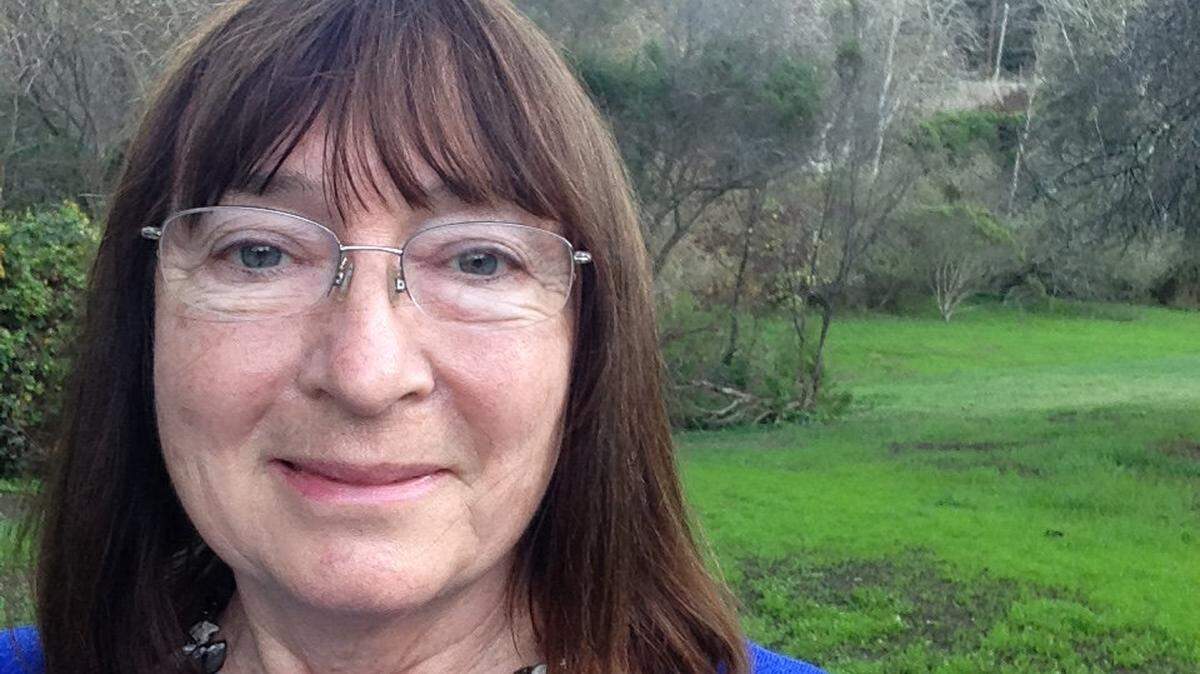
Although Cambria resident Connie Gannon is new to the job as executive director of Greenspace — The Cambria Land Trust, she’s far from a newcomer to nonprofits, environmental protection or the town she’s calling home, again.
Gannon’s job started Dec. 1, but by then she’d already begun introducing herself at various meetings, researching issues and tapping the institutional knowledge of Richard Hawley, who had held the post for 16 years and helped found the nonprofit 26 years ago. He’s to continue for a year or more as project director with Greenspace.
Gannon’s vision
When asked Monday, Dec. 8, what she sees in the future of the environmental nonprofit, Gannon said that under the direction of its board and with help from Hawley and volunteers, she intends to broaden its scope. Among the issues the nonprofit has long advocated and/or accomplished are:
- Environmental protection, research and advocacy.
- Watershed issues.
- Removing invasive species.
- Native plant restoration.
- Stream and water-quality monitoring.
- Working collaboratively with such entities as the Cambria Forest Committee and Beautify Cambria group.
- Maintaining 30 properties Greenspace owns, including those in Strawberry Canyon and the East Village Greenspace Preserve.
- And, of course, forest advocacy, studies and monitoring for which the nonprofit is perhaps best known.
Gannon intends to expand the nonprofit’s focus to include the “environmental and personal impact of healthful and locally grown foods,” with an emphasis on “shopping locally and buying from artists and growers who help preserve our rural and creative cultures.”
She also wants to ensure that Greenspace remains involved in “how Cambria can develop a sustainable water system that doesn’t harm our beautiful environment,” she said, and that the nonprofit continues to address controversial issues.
“We’ll be looking closely” at the environmental impact report for Cambria’s new water-reclamation project that’s in the works, she said, and “figuring out what mitigation steps will be needed.”
Gannon also wants to establish an endowment fund “to help stabilize our organizational structure and provide a base to move forward.”
The nonprofit is land-rich but has limited cash, which restricts what it can accomplish, she said.
“And we’re always looking for volunteers to help us with our projects,” she said with a smile.
Gannon’s background
Gannon is a fifth-generation coastal Californian “with more than 25 years’ experience in the nonprofit sector, including extensive background in developing and directing programs, grant writing, public speaking and outreach for both nonprofit and educational organizations,” according to Mary Webb, Greenspace vice president who introduced Gannon to the North Coast Advisory Council (NCAC) on Nov. 19.
Gannon is “an avid outdoorswoman, a Sierra Club member and longtime Nature Conservancy supporter,” Webb said. “She is committed to the welfare of our open spaces, wild lands and healthy agricultural communities.”
Gannon attended UC Santa Cruz, and received her doctoral degree in anthropology from the University of Texas at Austin.
After marrying Cambria contractor Pat Gannon in 2001, she became a program director for Cuesta College. In her five years there, she created and managed the grants program, securing $6.2 million in funds for a wide variety of educational and community service programs. She also taught anthropology there.
When Pat Gannon was diagnosed with early onset dementia at the end of 2004, the Gannons worked together on a variety of projects “so he could keep working,” Connie Gannon recalled.
They built fences and gates, an elaborate mantelpiece and worked on restoration projects.
In 2009, they moved to Santa Fe, N.M. Pat Gannon died in 2013.
But, as Connie Gannon told NCAC members, her recent return to the North Coast and her beloved Cambria “feels like I’m coming home.”
This story was originally published December 11, 2014 at 12:50 PM with the headline "For Connie Gannon, new job at Greenspace is ‘like coming home’."