
Can Diablo Canyon's desal plant help ease SLO County's water crisis?
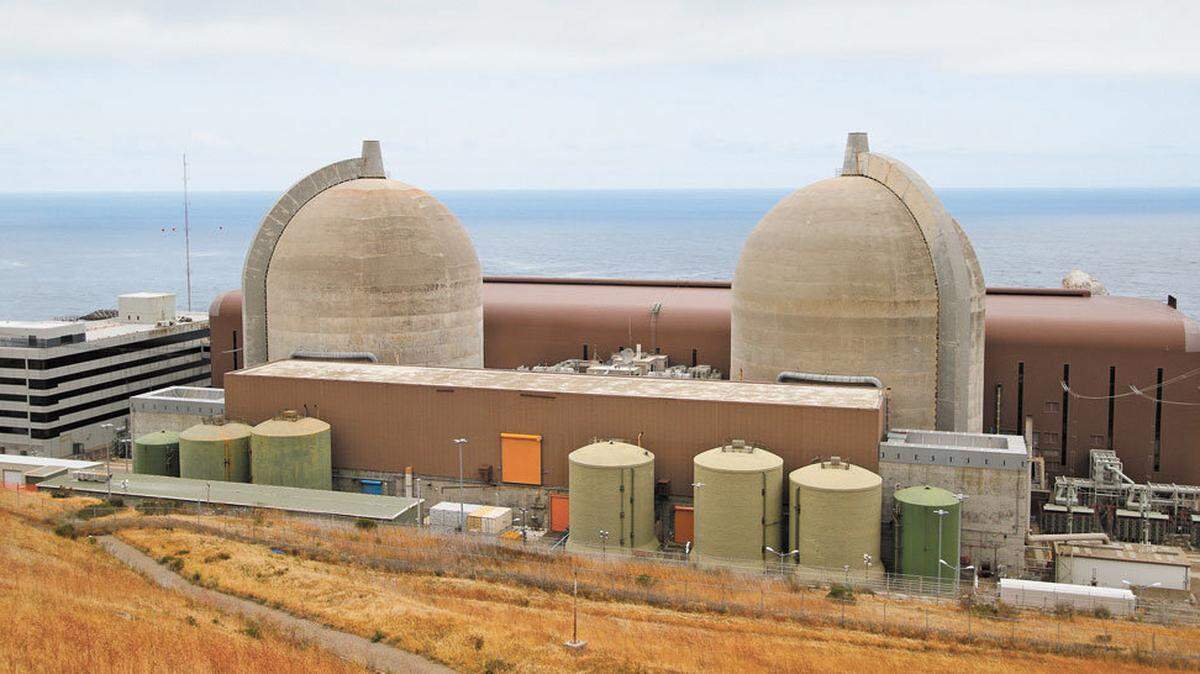
Sitting atop rocky bluffs overlooking the Pacific Ocean, Diablo Canyon nuclear power plant’s ocean desalination plant is the largest facility of its kind on the West Coast.
With an average output of 675,000 gallons a day, the Diablo Canyon plant will hold that distinction until at least November, when a 50-million-gallon-per-day commercial desalination plant in Carlsbad is scheduled to begin production.
The Diablo Canyon desal plant is a collection of powerful pumps, large tanks and a series of long, white reverse osmosis filtration tubes. The filters in those tubes are so fine they can remove even the microscopic salt particles that give ocean water the name saltwater.
Isolated along 14 miles of coastline, Diablo Canyon depends on the desalination plant as its sole source of fresh water. It supplies not only the water needed for the plant’s two nuclear reactors, it also supplies all the water used by its employees for drinking and other needs.
For the first time in Diablo Canyon’s 30-year history of operation, its desalination plant has become the object of intense public interest because of its potential to serve neighboring communities.
The plant is licensed to produce as much as 1.5 million gallons a day, even though Diablo Canyon only uses 675,000 gallons daily.
As the county reels from its fourth consecutive year of drought, the San Luis Obispo County Board of Supervisors is eyeing that 825,000 gallons of potential production as a new source of supplemental water.
That amount of supplemental water could be significant.
For example, San Luis Obispo residents typically consume 108 gallons of water per day. Expanding Diablo Canyon’s desalination plant could produce enough water for more than 7,600 of the city’s residents daily.
For its part, owner Pacific Gas and Electric Co. is willing to work with county officials to maximize production of the desal plant.
The county’s Drought Task Force and PG&E will spend the next four months studying the feasibility of installing a pipeline that could connect Diablo Canyon to the South County.
Jearl Strickland, the plant’s director of nuclear projects, said a window of opportunity to install the pipeline will open later this year or next year when PG&E digs up and upgrades telecommunications lines that run along the plant’s main access road, connecting Diablo Canyon to the outside world.
“I don’t know exactly how big a pipeline would be needed, but I’m thinking a 12-inch pipe should be about right,” he said.
It is unknown at this point how much an expansion of Diablo Canyon’s desal plant would cost and who would pay for it. Those are several of the many questions the county Drought Task Force and PG&E will answer over the next four months.
How it works
The desalination plant is the domain of manager Terence East, a General Electric employee. That company runs the desalination plant for PG&E.
Clad in a hardhat, East strides energetically through the desalination plant, explaining how it works. First, ocean water is pumped up from Diablo Canyon’s cooling water intake cove and stored in tall white tanks.
It then goes to large green tanks where the largest particles of impurities are filtered out. The water then passes through three separate sets of reverse osmosis filters and is stored in a 5-million-gallon pool behind the nuclear plant.
About 52 percent of the ocean water that enters the desalination plant is turned into fresh water. The remainder is super-salty water called brine that is returned to the ocean.
The water in the 5-million-gallon pool is piped throughout Diablo Canyon for various uses. Ironically, the water that goes into the plant’s potable water system must have lime and calcium added back into it to make it safe and healthy to drink, said Doug Hyak, a technician at the potable water plant.
The water that comes out of the reverse osmosis filters is so pure that it lacks nutrients, called electrolytes, which the human body needs to function properly. “Plus, it probably wouldn’t taste very good either,” Hyak said.
If the plant were called upon to produce its maximum 1.5 million gallons a day, some upgrades would be needed, East said, such as installing more reverse osmosis filters.
This could be readily accomplished, East said. The desalination process is highly modular, meaning that components can be added easily to expand production. The only limiting factor is space, and there is plenty of that at Diablo Canyon.
“If we have space, we can make water,” East said. “We can build up, and we can build out.”
The challenges
Although the supply of ocean water is limitless, its use as a source of drinking water is uncommon because desalination is expensive and faces some environmental challenges.
Pumping water from underground aquifers and storing water in reservoirs — which is how the Central Coast gets most of its water — is far less expensive than desalination, East said.
There are several reasons for this. First, desalination uses far more electricity. The hard plastic reverse osmosis filters are so fine that they require 900 pounds per square inch of pressure to force water through them. That means lots of big, energy-hungry pumps are part of every desalination plant.
Experts say that electricity accounts for at least half the costs of operating a typical desal plant. The cost of electricity is less of a concern for PG&E because it will be producing the water at its own power plant.
Also, the reverse osmosis filters themselves are expensive. East would not reveal how much a single filter costs, but he said that one can last for many years if used properly.
Desalination plants also face other environmental concerns. One of those is how to safely dispose of the brine.
Diablo Canyon discharges the brine back into the ocean, which the company says quickly dilutes it. But environmentalists say the practice changes the ocean habitat around the outfall, and that issue has been a concern for the California Coastal Commission reviewing applications for new desal plants.
The commission also has delayed some desal plant applications over concerns about the seawater intake pipes, which can suck in and kill small ocean organisms.
Despite desalination’s challenges and warnings that it’s not a panacea, interest in it has increased as California’s drought continues. In addition to the massive Carlsbad plant coming online, Santa Barbara is evaluating whether to restart its shuttered desalination plant, and plans for a desal plant in Marina, by Monterey Bay, are also being developed.
“If California’s drought persists, interest in desalination is only going to increase,” Strickland said.
The desalination process
This story was originally published June 3, 2015 at 3:53 PM with the headline "Can Diablo Canyon's desal plant help ease SLO County's water crisis?."