
Court ruling could affect County Jail rules for attorney-client meetings
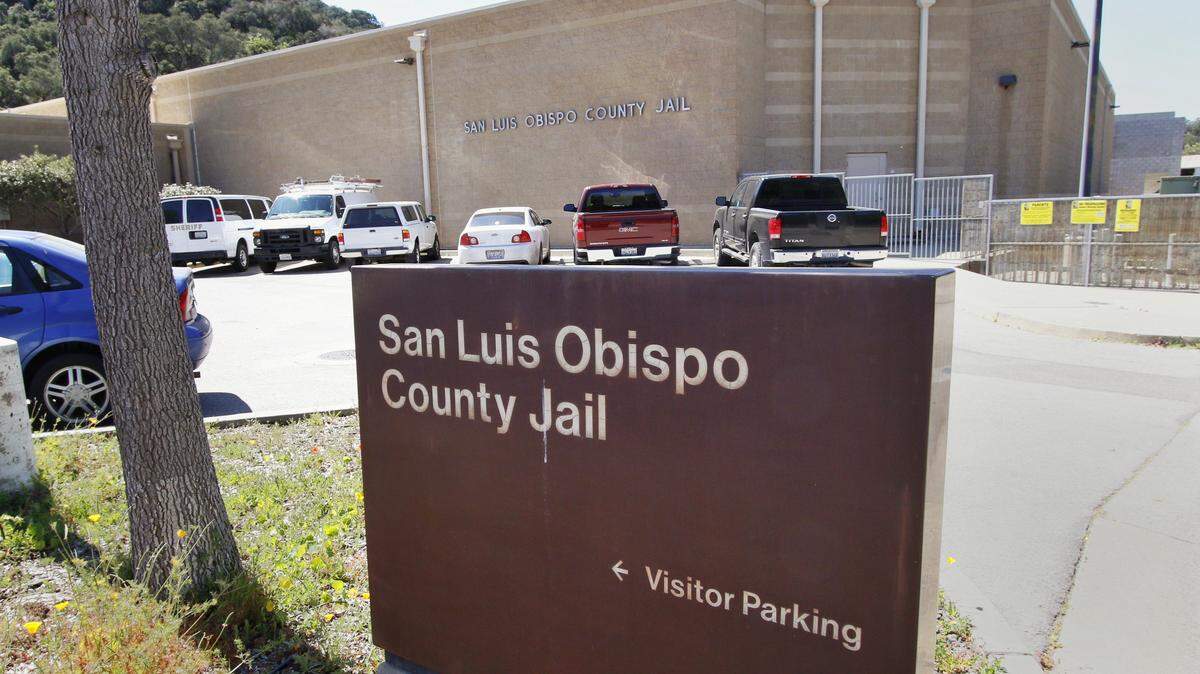
An appellate court ruling in a case brought against Nevada County over its policy of barring attorneys from physically meeting with their jailed clients may have ramifications for the San Luis Obispo County Jail, some local attorneys say.
In April, California’s Third District Court of Appeal — San Luis Obispo County is part of the Second Appellate District — upheld a ruling barring the Nevada County jail from requiring most inmates to meet with their attorney in rooms where they are separated by a glass wall and communicate via telephone. The arrangement prevents them from being able to share legal documents or for the inmate to be able to sign a document.
The San Luis Obispo County Jail uses similar partitioned visiting rooms, with one room available for pre-scheduled contact visits. The SLO county counsel said her initial interpretation is that the ruling was specific to Nevada County, but at least one local attorney said the case could open up SLO County to a challenge.
The case in Nevada County came after the sheriff there notified attorneys in 2013 that they would no longer be able to meet face-to-face with their jailed clients and installed new glass-partitioned booths. The county justified the policy by citing safety concerns in light of surging jail populations and reduced staff.
Several attorneys and inmates sued and a trial court found the jail must allow for attorney-client contact visits but stopped short of telling the jail how to accommodate the visits. The court ruled that a general safety concern was not reason enough to keep the parties separated.
The county appealed, joined by the California State Sheriffs' Association and the California Peace Officers Association.
In upholding the ruling, the appellate court noted that its opinion was not “set in stone” due to the shifting landscape involving jails and prisons.
In response this week, the San Luis Obispo County Sheriff’s Office, which operates and maintains the local jail, said it is aware of the ruling and is waiting to hear direction from County Counsel.
“Preliminary findings by County Counsel indicate the justices of the Third District Court of Appeal clearly emphasized that its (ruling) was based on the specific facts of that particular case and did not necessarily apply to all county jails in the state,” the Sheriff’s Office wrote in a prepared statement Tuesday.
Namely, the Sheriff’s Office said Nevada County is different from San Luis Obispo in that the original challenge was brought after the abrupt elimination of a long-standing policy and contact visits were selectively allowed for teachers and clergy.
The Sheriff’s Office said that County Counsel is still analyzing the ruling.
“As soon as that office releases a legal interpretation of this decision, the Sheriff’s Office will make whatever changes the law requires,” the statement reads.
But a San Luis Obispo attorney said the ruling opens the door for a local court challenge.
“Partitions and needing to ask for special permission for a contact visit chills the ability of an attorney to meet and adequately represent their client,” Stewart Jenkins said.
Since it was built about 40 years ago, the San Luis Obispo County Jail has used glass-partitioned visiting booths and other barriers between inmates and legal counsel, Jenkins said. One room is available to have a contact visit but lawyers have to jump through hoops to pre-schedule and jail staff is required to monitor those visits, he said.
Jenkins said he is also waiting to see how the county responds and if no action is taken he is considering locating clients and possibly bringing a civil action against the Sheriff’s Office.
“This (ruling) defines what the law has always been,” Jenkins said. “We’ll see if the Sheriff will reform before a lawsuit is brought.”
The San Luis Obispo County Public Defender’s Office did not respond to requests for comment but several local criminal defense attorneys said visiting clients at the County Jail is cumbersome, though none could say definitively whether the facility is violating inmates’ Constitutional rights.
Without slots in glass partitions, attorneys must catch a correctional deputy’s attention and have the deputy physically walk legal documents to a client, potentially breaching attorney-client privacy, lawyers said.
Sheriff’s Office spokesman Tony Cipolla noted there are rooms available at the San Luis Obispo Superior Courthouse for attorneys and clients to meet.
San Luis Obispo County is not alone. Santa Barbara County’s Santa Maria Jail, primarily a holding facility, does not allow contact visitation and requires deputies to transfer documents, said Santa Barbara Sheriff’s spokeswoman Kelly Hoover. The main jail does allow pre-scheduled contact visits but a deputy still must transfer documents between two parties.
Hoover said a new North County facility opening in 2018 will have contact visitation accommodations.
Two groups, the National Association of Criminal Defense Lawyers and California Attorneys for Criminal Justice, filed third-party briefs in opposition to the glass barriers.
Eric Schweitzer, co-chair of the CACJ, said the Nevada County case is important for the rights of the accused.
“Criminal justice is an adversarial system and you have little effect as counsel without the guarantee of absolute privacy,” he said. “If you have to yell at somebody through glass when the phones barely work, what good is that?”
San Luis Obispo County Counsel Rita Neal said via email that as of Friday the county had not finalized a legal opinion, but she reiterated her initial interpretation that the ruling was fact-specific to Nevada County.
She added that the county will likely not publicly release its legal opinion it provides the Sheriff’s Office due to attorney-client privileges.
“In the event that changes are made at the jail, a determination will need to be made as to what can safely be released to the public without sacrificing security at the jail,” she wrote.
This story was originally published May 30, 2015 at 7:44 PM with the headline "Court ruling could affect County Jail rules for attorney-client meetings."