
Study of South County sewage plant will look for mismanagement
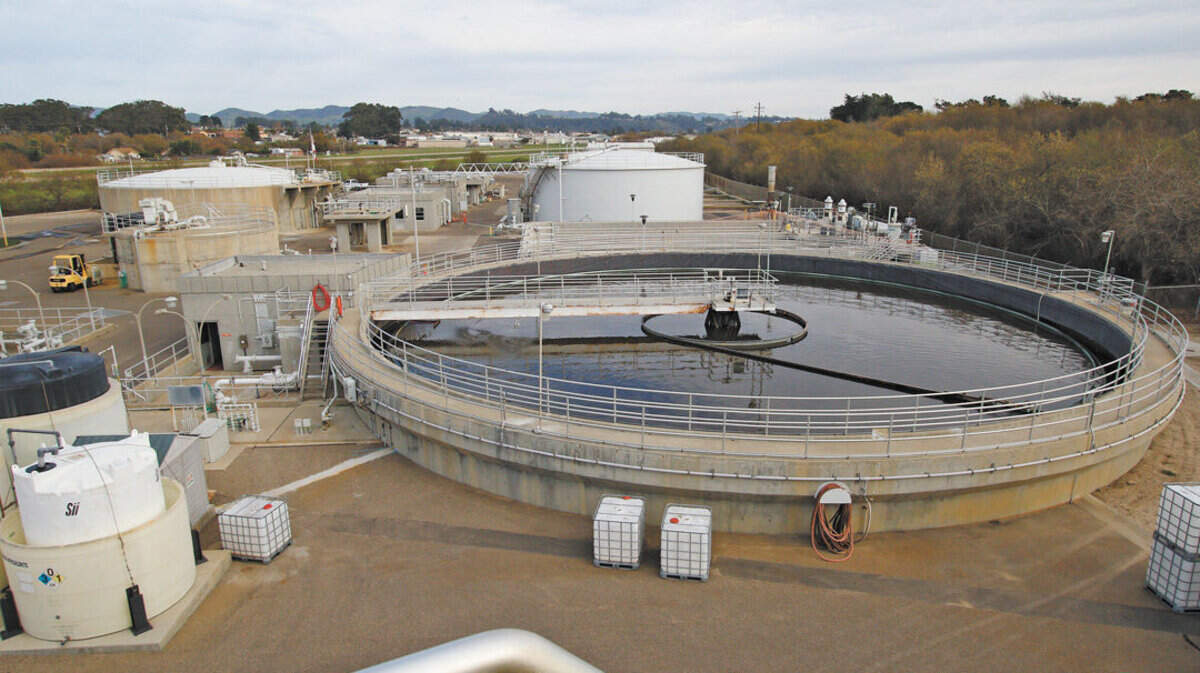
The board overseeing a South County sewage treatment plant is launching an in-depth study of operations to determine whether there was mismanagement at the plant that could have cost the public agency — and ratepayers — thousands of dollars.
The South San Luis Obispo County Sanitation District board voted unanimously Wednesday, at the urging of a crowd of residents, to pursue hiring a consultant to analyze operations at the plant under previous Administrator John Wallace to let the public know where its money was spent.
“I think this board and this organization has a big black cloud hanging over its head,” said Arroyo Grande Mayor Jim Hill, one of three members of the district board. “In years past there was little to no sharing of information with the public or with the board.”
The district has been plagued with controversies over the years, including lawsuits filed by former employees, notices of violation from state regulators and a massive sewage spill in 2010 that resulted in a $1.1 million fine, which the board appealed.
Lately, though, the district is in a better position, with a new management team that has slashed costs, cutting spending on chemicals at the plant by more than half. The bright news, however, has been clouded by lingering public concerns that the district had been mismanaged for years.
The sanitation district serves about 37,000 residents in Arroyo Grande, Grover Beach and Oceano. The board has a new configuration this year, composed of Hill, Grover Beach Mayor John Shoals and Oceano Community Services District director Matt Guerrero.
Wallace stepped down in 2013 as the plant’s longtime administrator. His firm, the San Luis Obispo-based Wallace Group, had provided engineering services to the district under one contract for 25 years — an arraignment that was criticized by the San Luis Obispo County Grand Jury in 2011 as being a conflict of interest.
The sanitation district board later split the contract into two separate agreements.
Now the plant has a new manager, a new superintendent and a new district engineer, who in 2013-14 put in place the first balanced budget in years, Guerrero said.
Plant operators have cut spending on chemicals to treat the wastewater from about $600,000 a year in past years to roughly $200,000 a year now, said part-time district Engineer Shannon Sweeney, who also works as Santa Maria’s water resources engineer.
“The plant was struggling for a long, long time,” Sweeney said. “The operators were trying all of the things … to fix the plant. The problem was that they had put so many of these fixes in that it wasn’t operating very well and the treatment plant was having very common violations.”
One part of the problem was that the chemicals being used under Wallace’s tenure were actually stripping away nutrients needed for bacteria to grow and work properly in the treatment process.
“I don't think it was malfeasance,” she added. “I think they were trying to run the plant. This is not the first treatment plant that I’ve turned around.”
Some residents and local officials are concerned that Wallace may have assigned projects to his engineering firm that could have been done by outside firms for less money.
“How were finances handled under Wallace and did he enrich himself more than he should have?” said Tim Brown, an Arroyo Grande City Council member and one of about 30 people at Wednesday’s meeting.
Several speakers asked the board to conduct a forensic audit.
“As a ratepayer, I do want to see where the dollars have been spent, and if there was anything done inappropriately, I want the people in charge to be held accountable for it,” said Grover Beach resident Andrea Seastrand, a former state Assembly member and U.S. congresswoman.
Reached Thursday by phone, Wallace said that he and his firm would cooperate with whatever the district board wants to do. He said he believed the district had been transparent with the board and the public through the budget review process, by completing regular audits and by reviewing expenditures at every board meeting.
Also, he noted, the district’s costs may have been higher in some recent years because of two large projects undertaken at the plant, each costing more than $2 million.
“All the projects that we handled through either the operations staff or bid out were necessary projects and they were reviewed or approved through the budgeting process,” Wallace said.
In regard to the chemical costs, Wallace said that each plant superintendent working under his tenure did their best to make adjustments to help the plant run more efficiently.
At one point Wednesday, the board struggled to define what type of investigation or audit to pursue. “One of the questions I have is, ‘What question are we trying to answer?’ ” Guerrero said.
In response, Hill said, “I'm trying to answer the question ‘Are public funds properly accounted for?’ ”
Sanitation District Manager Rick Sweet said he will bring a draft request for proposal to the board with a list of items the board wants addressed. It’s unknown how much the evaluation could cost.
Sweet described the evaluation as a management review — a review of operations and expenditures that goes beyond a legal or accounting analysis.
In the meantime, the board has pursued legal action against its insurance carrier, Special District Risk Management Authority, a not-for-profit public agency, to recover legal defense costs related to the $1.1 million fine as well coverage of the fine.
In December, the district board directed legal counsel Michael Seitz to seek a mediated settlement with the water board as quickly as possible. That process is ongoing.
This story was originally published January 22, 2015 at 10:09 AM with the headline "Study of South County sewage plant will look for mismanagement."