
SLO County lake levels still low despite December storms
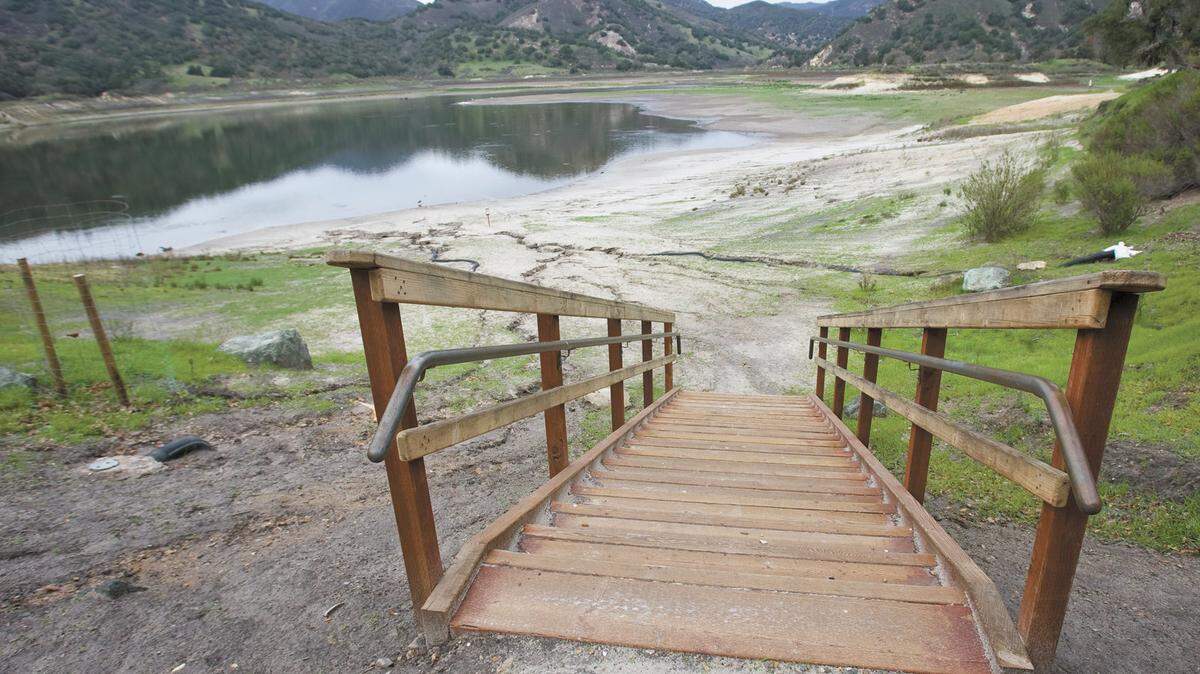
Now that we’ve had some rainfall, how are San Luis Obispo County’s lakes and reservoirs looking?
In a word: Low.
While a few areas of the county have received as much as 20 inches of much-needed rain since the start of the rain season in July, the deluge hasn’t done much to fill the storage basins that some communities rely on for drinking water.
The hillsides may be green, but local lakes are not much fuller than they were about 10 months ago. In a few areas, reservoir levels have dropped further.
“Our reservoirs are at historic low levels,” Arroyo Grande Public Works Director Geoff English said. “Despite the recent rains, the runoff has not been as significant as it could be even later in the year.”
Thanks to a series of December storms, nearly all San Luis Obispo County locations have already recorded more rain than all of last season, according to PG&E meteorologist John Lindsey.
But in some areas, the ground was so parched that the water soaked into the earth instead of running into reservoirs. In the meantime, water is still being pulled out of some reservoirs to serve cities and communities, and small amounts continue to be released for environmental reasons.
Mandatory water restrictions are ongoing in communities across the county, and local officials are urging residents to keep saving as much water as possible.
“The message is ‘continue to conserve,’ ” said Dean Benedix, San Luis Obispo County’s Public Works utilities division manager. “It’s going to take significant additional rainfall beyond average to get us out of this thing.”
North County lakes
Lake San Antonio, which straddles northern San Luis Obispo and southern Monterey counties, is by far the most depleted at only 4 percent full.
But the low water elevation — currently about 648 feet, the lowest it’s been since construction in 1967 — is due to several factors, not just the drought, said Robert Johnson, assistant general manager for the Monterey County Water Resources Agency.
More water than usual was released from Lake San Antonio in the summer of 2013, while some emergency repair work was done at the power station below the Nacimiento Lake dam.
Normally, more water is released from Nacimiento, which fills up three times as fast as San Antonio.
“San Antonio’s watershed is the second ridge in from the coast, so it receives less rainfall, and the geology has more sands and soils instead of hard rock, so the rainfall seeps into the soil,” Johnson wrote in an email.
Nearby, Nacimiento Lake is now 23 percent full. It fills up faster for several reasons, Johnson said; the watershed is closer to the coast, so it captures more of the initial rainfall that comes from storm clouds lifting over the mountain range.
The watershed is also hard rock, which does not have the ability to absorb rain, so it runs off into the reservoir.
Several communities receive water from the lake through a pipeline, including Atascadero, part of Cayucos, Paso Robles, San Luis Obispo and Templeton.
But the water delivery system has been shut off for more than five months, and the county has spent hundreds of thousands of dollars to investigate leaks in a rural segment of the pipeline located deep below the Nacimiento River crossing near San Miguel.
Other reservoirs
San Luis Obispo gets some of its drinking water from Whale Rock Reservoir, near Cayucos, and the Salinas Reservoir, also known as Santa Margarita Lake.
Currently, Whale Rock is 45.7 percent full, and Santa Margarita Lake is at 20 percent, according to San Luis Obispo County Water Resources. Last February, Santa Margarita Lake was 38 percent full.
Lopez Lake, which serves the communities of Avila Beach, Arroyo Grande, Grover Beach, Oceano and Pismo Beach, is about 41.7 percent full. Last February, it was at 56 percent of capacity.
Since then, the communities have continued to pull drinking water from Lopez Lake, and some water was released downstream for environmental purposes, Pismo Beach Public Works Director Ben Fine said.
“We’ve already received more rain this year than last year,” Fine said. “But it has to come in faster than it’s going out.”
Benedix said about 4,350 acre-feet a year — about 14.1 million gallons — go to South County cities and communities. (An acre-foot is equal to about 325,851 gallons.) An additional 4,200 acre-feet are normally released downstream to irrigate agriculture, recharge the aquifer and ensure there’s enough water in the creek for fish.
Earlier this year, South County communities each considered a response plan that could be enacted should Lopez Lake have less than 20,000 acre-feet in storage. The lake is currently at 20,643.8 acre-feet.
The goal of the response plan is to reduce the amount of water released from the reservoir to preserve it for three to four years under continuing drought conditions, according to English, Arroyo Grande’s public works director.
If the amount of water in Lopez Lake drops below certain levels, less water would be delivered to the local communities or released downstream. If the lake drops below 15,000 acre feet, the municipalities would see their water deliveries cut by 10 percent.
If it falls to 5,000 acre feet, then deliveries would be cut by 35 percent — leaving enough to supply 55 gallons of water per person per day for an estimated 47,696 people.
“We’re hoping to never have to go there,” English said.
“It’s critical that people continue to conserve,” he added. “Now is more important than ever, because we want our reservoirs to fill.”
Looking ahead
When asked how much water is needed to fill local lakes, Benedix said the county needs much more than average rainfall.
“Average rainfall will just keep us where we are, which is really low,” he said.
For example, Lopez Lake averages about 20 to 23 inches of rain a year, tracked annually from April through the following March.
“We need almost 30 inches to really put additional storage in there,” Benedix said. “Almost 150 percent is what we really need to see additional storage.”
This story was originally published December 26, 2014 at 11:42 AM with the headline "SLO County lake levels still low despite December storms."