
Atascadero park for special needs kids set to break ground next year
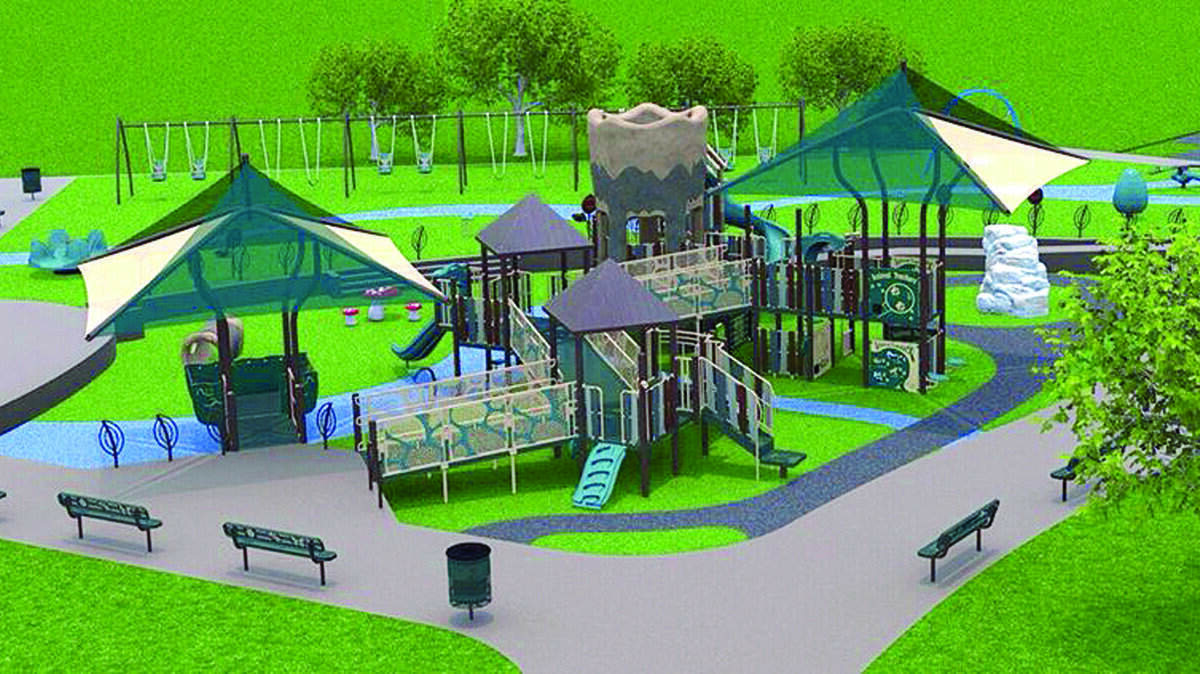
A special-needs park with a magic forest theme, which cleared its last major hurdle recently when the City Council unanimously approved its design, is set to break ground in Atascadero next year.
“When the council came down to that last ‘Yes’ vote, we started crying,” said Sarah Sullivan, park co-founder. “That’s what we were waiting for.”
Frustrated by access issues that traditional playgrounds can pose to children with conditions such as cerebral palsy and autism, a group of local parents took action last year. They sought to build a playground open to everyone but tailored to children who struggle with muscle coordination and sensory functions.
“Making relationships with other children is a necessity for all children to thrive in life,” group member Sarah Martinez said in a written statement. “This is an opportunity for all of our children to become better acquainted with each other. It shows children and adults alike that disabilities are not inabilities.”
Headed by Sullivan, a Templeton resident, and Atascadero resident Jenell Allen, the group formed the nonprofit organization Parents for Joy, submitted a proposal to the city and secured land at Atascadero’s Colony Park Community Center off Traffic Way.
Today, the organization has a core group of about 15 parents who meet monthly plus about 50 members overall.
In San Luis Obispo County, parents of special-needs children have limited options to safely play in public spaces.
The only other special-needs park in the county is being developed on the Nipomo Mesa through the nonprofit group Jack's Helping Hand.
In the North County, Parents for Joy “spent hours researching the equipment,” making sure to accommodate as many different special needs as possible, according to its website.
The city-approved design includes a fenced-in park with no sand or woodchips, just rubber groundcover throughout; a wheelchair-accessible tree house structure, a merry-go-round feature with seatbelts and a rocking toy with six seats and a spot for a wheelchair to lock in place while riders sway back and forth. There will also be sound and sensory boards and an arch swing with a large flat disc to lie down on for park-goers who can’t sit up to swing.
The group also chose several types of materials for its slides, including stainless steel so children with hearing devices don’t experience the problems they say plastic slides create from static interference.
So far, the group has raised $55,000. Admittedly still far from their $500,000 goal, Sullivan said they have received several offers from professional contractors to do work for free.
“We know that overall cost will come down once we get things donated like construction and materials,” Sullivan said.
The group also hopes that the majority of the money will come from grants. GameTime, an Alabama-based company that’s making the park’s special-needs play equipment, has a matching grant program the group is applying for.