
Governor signs bill to create Paso Robles water district
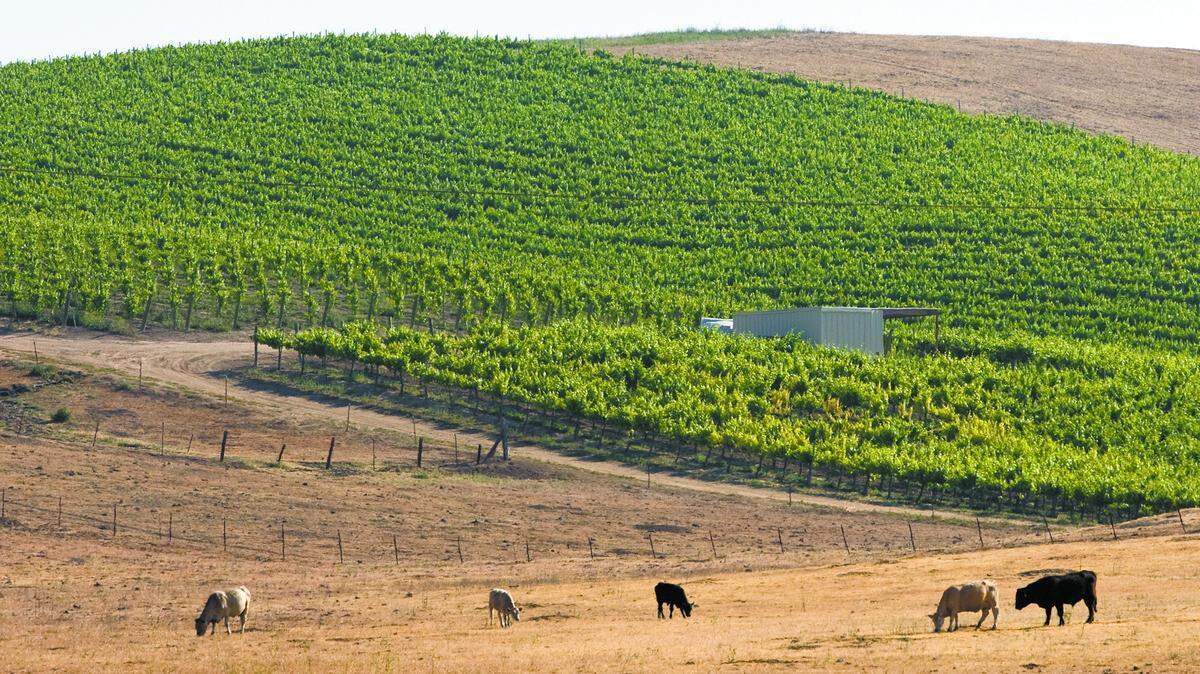
In a historic step for the North County, Gov. Jerry Brown on Tuesday signed a bill that allows the creation of a water management district in the depleted Paso Robles groundwater basin.
The signing of the bill caps a year of effort to agree on the basic governing structure of the proposed district and to shepherd it through an uncertain political process in the California Legislature.
The effort now shifts to the local work of actually forming the district.
Assemblyman Katcho Achadjian, R-San Luis Obispo, sponsored the legislation called Assembly Bill 2453, which allows the formation of a groundwater management district with a board of directors composed of a combination of basin residents and property owners.
"Over 300 wells went dry in a five-month period this year,” Achadjian said in his author’s statement about the bill. “Therefore, the need for this legislation is immense."
The next step is to petition San Luis Obispo County's Local Agency Formation Commission to form the water district. The petition can be submitted either by 10 percent of landowners within the proposed district or by a resolution from the county Board of Supervisors.
Supervisor Bruce Gibson, chairman of the board, said he will propose having the supervisors make the petition to LAFCO as the quickest and easiest way to move forward.
“This is an issue of countywide importance,” he said. “Having been given the authority, it’s quite reasonable for us to step up and petition LAFCO.”
The bill will go into effect Jan. 1. Gibson said he would like to have the petition to LAFCO by then so that agency could begin the process of forming the district as soon as possible. The deadline for forming the district is the beginning of 2019.
“Governor Brown’s signature on this legislation is the culmination of very lengthy discussions on how to manage the Paso Robles groundwater basin,” Achadjian said. “It is only with leadership from the Board of Supervisors and the city of Paso Robles that we were able to create a framework for the water district that will now go before the public through the LAFCO process.”
Brown signed the Paso Robles water basin bill along with other legislation that revamps groundwater management statewide. That package of three bills requires local agencies, such as a Paso Robles basin water district, to devise sustainable groundwater plans according to local economic and environmental conditions.
The hybrid board of directors enumerated in his bill will "ensure that all stakeholders in the basin are represented," Achadjian has said.
The Paso basin bill was the result of yearlong negotiations between two North County groups and has the backing of the county Board of Supervisors and Paso Robles City Council.
The hybrid board of directors was the result of a compromise between the Paso Robles Agricultural Alliance for Groundwater Solutions, a group of mostly vintners, and PRO Water Equity, a group of basin residents. Both groups praised the passage of Achadjian’s bill.
“This is a big step,” said Jerry Reaugh, PRAAGS chairman. “We are moving forward.”
Both of these groups support the idea of having county supervisors submit the formation petition to LAFCO. Neither of them has the resources necessary to gather the signatures of the required 10 percent of property owners, they said.
“The supervisors doing that is the most efficient way forward,” said Sue Luft, president of PRO Water Equity.
Support for the district is not unanimous among North County residents or the Board of Supervisors. Supervisor Debbie Arnold has consistently withheld her support of the water bill. Gibson said he expects a lengthy and spirited debate when the board holds a hearing on petitioning LAFCO to form the district.
If formed, the water district will have the challenge of managing a water basin that covers nearly 800 square miles and is the primary supply of water to the North County. The county planning department estimates there are more than 8,000 wells in the basin.
Since 1997, water levels in some areas of the basin have gone down by more than 70 feet, causing hundreds of wells to go dry. Property owners with dry wells must pay to have new, deeper wells drilled. Some have water trucked in.
Once LAFCO receives the petition for the district, it will hold public hearings and decide the boundaries of the district and the powers it will have. The water district must then be approved by a majority of the landowners within the district.
A Proposition 218 vote must also be passed that would provide funding for the operation of the district. Finally, the board of directors must be elected.
This story was originally published September 16, 2014 at 12:10 PM.