
Plans for Tank Farm property near SLO include open space, business park
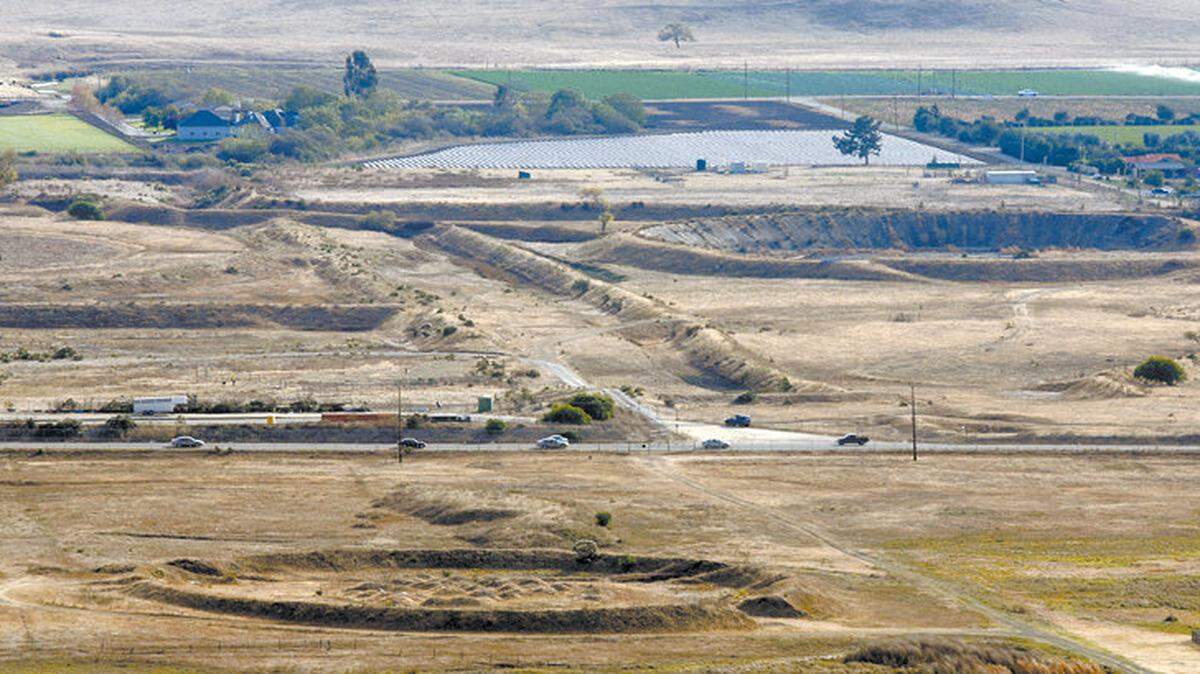
The long, barren stretch of land owned by Chevron along Tank Farm Road at the southern edge of San Luis Obispo will be revitalized into open space and commercial development over the next two decades.
The San Luis Obispo City Council voted unanimously Tuesday to certify the required environmental study that will dictate how future development occurs on the 332-acre Chevron Tank Farm property.
The first step — which is likely to begin in June — will be to remediate past oilcontamination on the property. The former Unocal petroleum tank farm was the scene of a massive explosion and oil fire in 1926 that left the site heavily contaminated with oil.
Chevron, which purchased the site from Unocal, has been working on a plan to make the site usable since 2009.
“We have 332 acres on the south side of San Luis Obispo that are no longer needed for the purpose of supporting oil operations,” said Bill Almas, project manager for Chevron. “We want to ultimately exit from the property, and in doing that we want to be sure that we leave it in a fashion that is responsible.”
Plans for the project include 27 acres of business park development at the northeastern part of the property and 26 acres of commercial development on both the east and west sides of the site.
More than 250 acres will remain open space. Project planners envision hiking and biking trails, privately owned ball fields on 15 acres north of Tank Farm Road and an area dedicated for a possible fire station.
Development of the property, which will be part of the city once it is annexed, will also bring long-sought road improvements and other infrastructure upgrades.
However, those improvements — such as widening Tank Farm Road to four lanes, a roundabout at Santa Fe and Tank Farm roads and other street connections — are still years away. Bike lanes expanding access for cyclists at the southern end of the city will be built first, once development begins.
The first phase of work that Chevron plans to embark on will be to make the site safe for public access and to restore vulnerable natural habitats.
For nearly a century, the Tank Farm property was used as a large storage area for crude oil from the Central Valley before it was shipped out of Avila Beach to refineries in Southern California.
In 1926, the storage ponds full of crude oil were struck by lightning and overflowed, sending rivers of flaming oil down San Luis Obispo Creek.
Use of the property for oil storage was discontinued in the late 1990s. The last oil storage tank was removed in 2000.
The environmental remediation will be done through the county. The council’s certification of the environmental impact report allows Chevron to pursue permits, both from the county and multiple environmental agencies, to begin the remediation work.
Almas said work will likely begin by June.
“Our focus now is really on the remediation and restoration,” Almas said.
The cleanup will be a combination of excavating and removing the contamination and capping other areas to prevent exposure of the oil to wildlife. Wetlands and habitat for rare plants and animals would also be improved.
Almas declined to state how much money was being spent on the environmental restoration but did say it was in the tens of millions.
The city’s plans to annex the property are included in the Airport Area Specific Plan adopted in 2005.
On Tuesday, the council also voted to amend the specific plan to correspond with the project, adjusting areas of designated land use on the property to meet the environmental requirements defined in the environmental impact report.
Residents and business owners who spoke at the council meeting said they supported the expanded business and commercial space in the city and the jobs it would bring.
Ty Safreno, owner of Trust Automation, which specializes in consulting for motion and machine control, said a statewide effort to grow manufacturing businesses in California was
hindered by a lack of large buildings to expand to.
Safreno and his wife, Trudie, have a 49,500-square-foot facility on Suburban Road. He said he would like to grow the business and provide more head-of-household jobs. But he cautioned that adding exorbitant development fees to construction in the airport area would be an impediment.
The annexation will be considered by the City Council, along with a subdivision application, some time next year.
A development agreement between the city and Chevron will also be discussed in the future. The developer is seeking the rights to develop the property over a 25-year time frame and to be reimbursed for infrastructure costs it will pay beyond what it is required to fund.
The project would be responsible for a large share of the infrastructure costs in that area, with other developers building in the Airport Area Specific Plan paying a portion as well.
“The infrastructure burden on the initial development is a heavy one,” said resident John Evans on Tuesday. “I encourage the city to continue to negotiate with Chevron in good faith.
If you have an approved project but can’t afford to build it, it is not really doing anyone any good.”
Almas told the council that the gap between what Chevron is required to pay in infrastructure costs and what it will be paying initially is something that has to be resolved before the project could move forward.
“You can’t beat a deal where the money is interest free,” Almas said.
The council did not give specific direction to staff regarding the development agreement Tuesday, instead opting to wait until the city’s update of the general plan is complete to have a clearer picture of other future developments in that area.
This story was originally published September 3, 2014 at 6:03 PM with the headline "Plans for Tank Farm property near SLO include open space, business park."