
Paso Robles has a rough road ahead
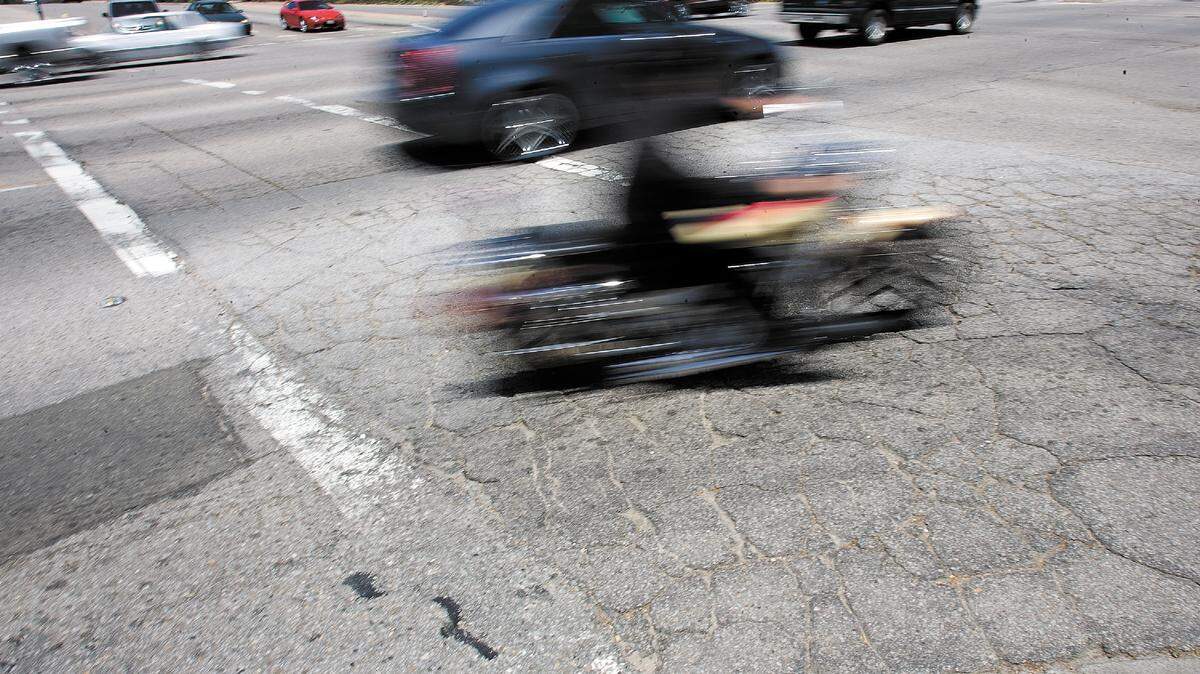
When Paso Robles residents Les and Lue Baty drive to the grocery store or downtown for lunch, they say the poor condition of the city’s roads are all-too noticeable.
“They’re cracked, split, and there are bumps,” Les Baty said. “They just need to be redone.”
The Batys are not alone. Discontent over shabby streets is paramount among residents who have spoken out at City Council meetings as Paso Robles has cut back maintenance, among other services, during the recession.
But Paso Robles can’t afford to repave its streets without increased revenue.
Former Gov. Arnold Schwarzenegger all but obliterated Paso Robles’ road maintenance budget in 2010 with his decision to borrow most of the sales tax revenue that all cities got from gasoline sales to help fill the state’s deficit, Paso Robles Public Works Director Doug Monn said.
The state Legislature doesn’t make it clear how or when cities will get that revenue back, Monn added.
“I don’t have a crystal ball, but what it comes down to is how long will it take for the state to overcome its shortfalls. It’s going to be years before this balances out,” Monn said.
The gas tax change dropped Paso Robles’ road fund from nearly $400,000 a year for fresh coats and seals to a mere $38,000 annual share from the city’s general fund, and that figure fluctuates depending on the year.
Today’s revenue is just enough to patch potholes two to three days a month, he said.
Without a new topcoat and oil seal every five years, asphalt becomes porous under the weight of hundreds of thousands of daily trips from vehicles and the impacts of rain, he added.
“It (the asphalt) peels up and has potholes like Union Road is now,” Monn said.
Union Road, a major connector in eastern Paso Robles, has degraded significantly, he said.
The other roads in town, on average, were in less-than-ideal shape six years ago, according to a city study. Road quality is worse today. “We haven’t had the money to go in and slurry the road, so it’s accelerated the decay,” Monn said.
Money woes have been a key issue in Paso Robles. The city has cut its budget by 29 percent since 2009.
While Paso Robles has $10 million in reserves, it is not spending that money on regular maintenance work. Rather, it is kept for financial emergencies.
Public Works, which has seen a 49 percent cut in staff since 2009, has determined that in order to bring the roads up to 80 percent new — the council’s goal — it would require a one-time payment of $80 million. After that, an additional $3.2 million would be needed in annual upkeep.If the economy recovers as expected, the city’s overall revenue could increase by about $1.3 million over the next five years.
But there’s great demand for those dollars because cuts have hit all departments, including police and fire.
That’s why the City Council earlier this year opted to add a half-cent sales tax increase to the November ballot. Like other California counties and cities, Paso Robles receives 1 percent of the 7.25 percent sales tax that local shoppers see on their receipts. Since the new revenue would go to specific purposes rather than general uses, the increase would require two-thirds voter approval under state law. The City Council identified roads and police as its key recovery areas.
But some residents, like the Batys, aren’t sure about increasing taxes. They’re also concerned that the city is spending money on other construction projects around town.
“You just wonder why some of it can’t go on the street because they are bad,” Lue Baty said.
But the city’s current construction projects are paid through state grants, which Monn said he realizes can be confusing to the public.State grants don’t exist for road maintenance, he said, but staff does seek out the extra money for items like road striping.
The City Council on Tuesday approved about $168,000 worth of grant work to restripe about six sections of main roads throughout the city.“I think it’s critical,” Councilman Ed Steinbeck said at the meeting, adding that road markings are a safety issue when it rains and someone makes a turn and can’t see where the line ends.
“It’s the least we can do to help the streets a little more here in town,” he said.
This story was originally published May 17, 2012 at 11:13 PM with the headline "Paso Robles has a rough road ahead."