
Why SLO County has so many bicycle accidents
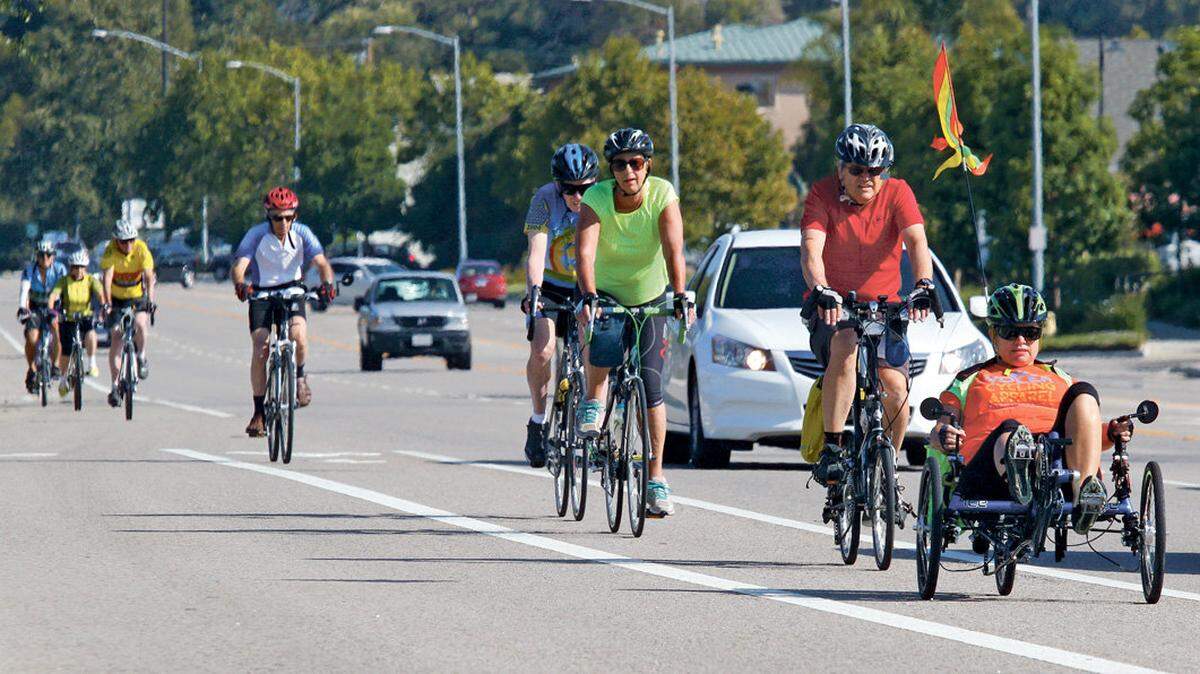
San Luis Obispo resident Skip Amerine doesn’t remember much about the May 1, 2013, bike crash that sent him to the hospital with a concussion, compressed fracture of a lower vertebra, a broken collarbone and nasty cuts and bruises.
But his video camera was knocked off his helmet after Amerine was hit by a driver on Highway 1 in Morro Bay. The video captured him flying through the air, showing California Highway Patrol officers that he was riding appropriately when he was hit, according to an opinion piece his wife, Lea Brooks, wrote for The Tribune a few weeks after the collision.
Amerine, a founding member and past president of the San Luis Obispo Bicycle Club, was fortunate not to be paralyzed or killed. He still rides but can’t manage the mileage he regularly pedaled before the crash — an average of 40 miles a day.
“The farthest I’ve gone since the accident is 60 miles, and I’ve paid big for it,” he recalled recently.
In 2013, Amerine was one of 558 people in San Luis Obispo County who went to local emergency rooms for bicycle accidents, according to data from the California Office of Statewide Health Planning and Development.
The data shows the number of emergency room visits for bicycle accidents increased dramatically over a five-year period, to 650 visits in 2009 from 372 in 2005.

The number has dropped since then, to 545 visits countywide in 2014 — or about 19.5 visits per 10,000 residents (based on U.S. Census estimates).
Statewide, 53,606 Californians went to an emergency room for a bicycle accident in 2014, or about 13.8 visits per 10,000 residents.
There also were four bicycle fatalities in San Luis Obispo County in 2014, according to preliminary information from the county Sheriff’s Office. That’s the highest number of fatalities in more than 10 years.
The exact reasons for the high number of emergency room visits in San Luis Obispo County are unknown, but some bicycle advocates suggested that it’s likely because more people are riding bikes, which in turn leads to more accidents.
The reasons that more people may be using two wheels to exercise, commute or run errands also vary: better bike infrastructure, the economy and higher gas prices, and increased bike safety education.
“There really is a push by cities and the county and SLOCOG (San Luis Obispo Council of Governments) to improve our bicycle infrastructure, and as that is improved, it will attract more riders,” said Dave Abrecht, bicycle advocate for the San Luis Obispo Bicycle Club.
Lots of commuters
The American Community Survey’s five-year estimate for 2009-13 found that 2.1 percent of county residents bicycled to work (based on a survey of workers age 16 and older).
That’s more than three times the national average of 0.61 percent, said Ken McLeod, legal and policy specialist for the League of American Bicyclists.
In the county’s seven cities, San Luis Obispo has by far the highest percentage of bicycle commuters, at 7.4 percent. The city’s updated circulation element promotes alternatives to driving, so that by 2035, 20 percent of all resident trips are made by bicycle (with only 50 percent in vehicles).
“This is a huge bicycle touring area, and with Cal Poly there are a large number of cyclists,” Abrecht said. “All those things come into play. There are a lot of people who ride bikes here, and I think the numbers are going to go up as there are more cyclists on the road.”
Estimates of bike commuters were lower in other cities, according to the American Community Survey: 1.3 percent in Arroyo Grande, 0.5 percent in Atascadero, 1.7 percent in Grover Beach, 1.4 percent in Morro Bay, 2.9 percent in Pismo Beach, and 0.4 percent in Paso Robles.
Bike accident trends
The state accident data shows how many people visited each of San Luis Obispo County’s four hospitals: Arroyo Grande Community Hospital, French Hospital Medical Center, Sierra Vista Regional Medical Center and Twin Cities Community Hospital. The data also breaks down the bicycle accident visits by age.
It shows, for example, that Sierra Vista had more bicycle accident visits than the three other hospitals, in part because the San Luis Obispo hospital is the county’s trauma center. Almost anyone badly injured in the county is sent there, including bike crash victims.
“We’ve had some awful car-versus-bike accidents that have stood out,” said Scott Bisheff, medical director of Sierra Vista’s emergency department.
“But,” he added, “the data shows us that most bike injuries in San Luis Obispo County are just bike crashes — cyclists who are riding down Highway 1 and hit a rock and go over the handlebars as opposed to being hit by vehicles.”
Data provided by the county’s Emergency Medical Services Agency shows that only 33 percent of the 1,182 bicycle accidents from 2006 through 2014 that prompted an ambulance response involved motor vehicles. The rest, about 67 percent, were categorized as falls from bikes.
(The county’s data does not include walk-in hospital visits, so the totals are lower than the state data.)
The county data, also broken down by age range, shows that the highest number of bike accidents with an ambulance response were people ages 16-25 and 41-60 years old.
“I think we have a higher number of recreational riders who tend to be in the 30- to 60-year-old age group,” Interim EMS Director Kathy Collins said. “We’re fortunate that we have some beautiful places to ride.”
Don’t be afraid
Local cycling advocates don’t want the number of accidents to scare anyone away from riding their bike. In fact, getting more people to ride bikes for everyday transportation will have a larger social benefit, said Dan Rivoire, executive director of Bike SLO County (formerly the San Luis Obispo County Bicycle Coalition).
With more people riding, drivers are more accustomed to seeing bikes on the road and become more comfortable sharing it.
“San Luis Obispo has high enough numbers of people riding that drivers are sensitive to bikes,” he said.
Advocates are also continuously promoting better bike infrastructure, such as colored bike lanes or better striping, and educating riders about safety. Bike SLO County has provided bike education to 10,000 people since 2001, Rivoire said.
“The education is great; maybe we’re demonstrably having a positive effect here,” Rivoire said. “But we still have infrastructure where bike riders are next to cars all the time, and that continues to make people scared and lead to collisions.”
Bike SLO County plans to launch a Vision Zero campaign on the Central Coast this fall. The initiative, adopted in numerous cities across San Luis Obispo County, calls for zero traffic deaths or serious injuries and targets all road users, not just bike riders.
Safety comes first
But bike riders remain vulnerable, so Abrecht, the San Luis Obispo Bicycle Club advocate, takes extra precautions when he rides: He makes himself visible, establishes eye contact with motorists and follows the rules of the road.
A bit of safety education happens before each club ride, and leaders are asked to be more assertive when they observe bad riding behaviors, he said.
“The number of (bike) riders on the road creates awareness for motorists but also some frustration,” Abrecht said, such as when cyclists aren’t riding single file.
But at the same time, many bike riders are frustrated and concerned when they see drivers talking or texting on their cell phones.
A 2014 report by the League of American Bicyclists that studied bicycle fatalities found that of 238 fatal crashes where an additional factor was reported for the driver, 42 percent were reported to be operating their vehicle in a careless or inattentive manner. Another 12 percent were under the influence of alcohol or drugs.
Among 94 fatal crashes where an additional factor stood out for the cyclist, 23 percent were reported to be riding the wrong way; 17 percent failed to yield the right of way; and 9 percent were riding on the sidewalk.
Busier roads
For Amerine, a longtime bicycle advocate and rider, his serious bike crash changed his life. He and his wife used to tour by bike in the U.S. and abroad but haven’t done any trips since the collision. He now wears two video cameras: one facing forward, the other capturing what’s happening behind him.
He and his wife continue to push for better bike facilities around the county. The couple attended an Arroyo Grande City Council meeting July 28 to lobby for better bicycle lanes along Fair Oaks Avenue near Arroyo Grande High School (the council voted unanimously to reconfigure the road to improve bike lanes).
Amerine is also working on an update to the county’s bikeways plan as part of the county’s bicycle advisory committee. The draft plan calls for 20 percent of trips to be taken by bicycle by 2035.
Over the years, he’s seen changes made at the state and local levels to improve bicycling facilities even as more cars get on the road.
“The number of cyclists has gone up, vehicles have increased — that means more chances to cross paths,” he said.
Safety tips for bicycle riders on public roads
Bicycle riders on public roads have the same rights and responsibilities as motorists and are subject to the same rules and regulations, the California Department of Motor Vehicles says.
The DMV offers these tips for motorists: Respect the right-of-way of bicyclists because they are entitled to share the road. Look carefully for bicyclists before turning left or right, merging into bicycle lanes, or opening doors next to moving traffic.
Check out a few more safety tips at www.letsgetvisible.org.
The DMV offers these basic bicycling tips for cyclists:
- Maintain your bicycle. Ensure your bicycle is the right size and properly adjusted to fit you, and inspect it regularly to make sure it is in good condition.
This story was originally published August 7, 2015 at 11:48 AM with the headline "Why SLO County has so many bicycle accidents."