
Groups win lawsuit to stop home proposed for Morro Bay's Cerrito Peak
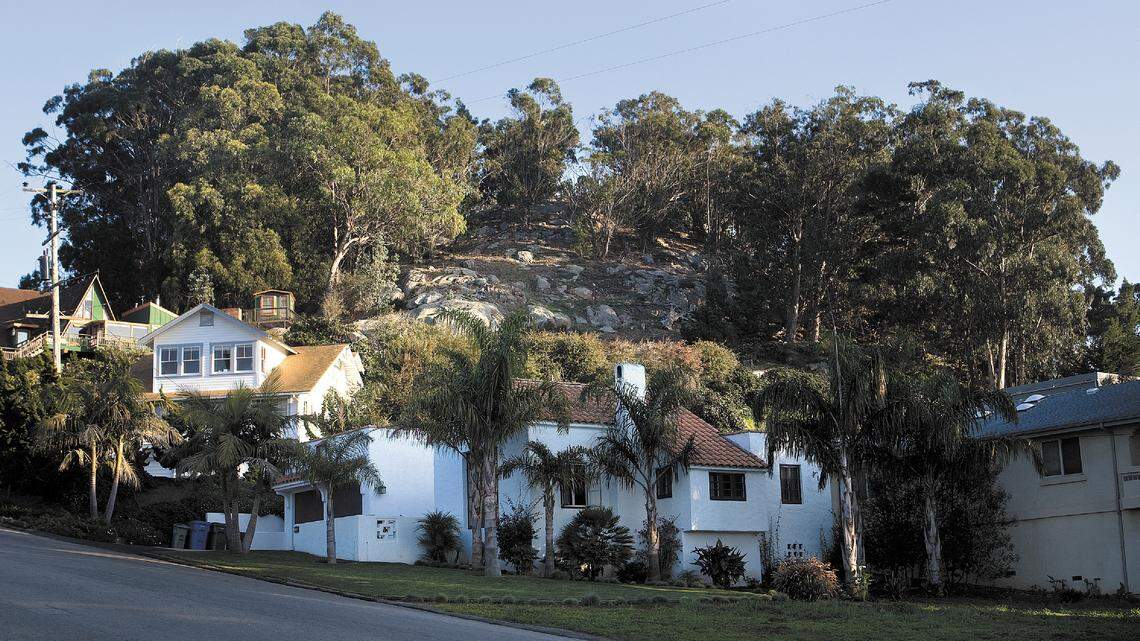
A local nonprofit has prevailed in its years-long lawsuit against the city of Morro Bay over plans the city approved in 2011 for construction of a house on Cerrito Peak, a rocky promontory and scenic destination in a residential neighborhood.
On July 17, the city was served a mandate signed by San Luis Obispo Superior Court Judge Jac Crawford stating that the city must revoke its previous approval of the project’s use and coastal development permits and an environmental report, which the plaintiffs said lacked proper review.
The lawsuit filed by a Morro Bay group called Save the Park and Xerces Society, a Portland-based wildlife conservation group, argued that the city violated numerous state and local laws when the City Council denied several appeals to the plan to build a two-story home on the slope of the eucalyptus-covered volcanic peak also known as Eagle Rock.
The property is owned by the trust of late Morro Bay real estate agent Dan Reddell, who died in June 2013. Reddell’s wife, Janne Reddell, successor trustee of the trust, is named as a real party of interest in the case.
The lawsuit cited the peak as a scenic landmark in the city, a sensitive monarch butterfly habitat and the site of archaeological remains of spiritual significance.
The peak, a historic Native American ceremonial site overlooking the bay and sandspit, is listed in the Native American Heritage Commission Sacred Lands Inventory.
Morro Bay City Council members in December 2011 voted 4-1 to deny four separate appeals of a decision by the city Planning Commission approving the project. At the time, community members cited a number of issues, including the lack of additional environmental studies and written concerns from the California Coastal Commission about the project.
Council members said they would prefer to keep the peak undeveloped but approved the home out of respect for Reddell’s property rights.
Though public access is permitted around the peak, the peak itself fell within the Reddell property. Dan Reddell stated publicly, however, that he would allow recreational public access to the peak.
In his June 5 judgment, Crawford expressed concerns over the cultural significance of the peak and public safety issues such as falling rocks caused by development.
Future applications for development at the site will be required to address those potential impacts.
“We’re pleased that even after the extended lawsuits it’s come to a successful conclusion,” Betty Winholtz, former city councilwoman and executive director of Save the Park, said Wednesday.
“(Crawford) basically told the city to pull permits and do what’s right.”
The judge did, however, deny a few of the group’s assertions. He ruled that there was no evidence that archeological deposits reside at the site, that a wall and fence the city approved for construction partially within the public right-of-way constituted a gift of public property or that a proposed driveway violated state streets and highway code.
Morro Bay City Attorney John Pannone and Reddell could not be reached for comment Wednesday.
This story was originally published August 5, 2015 at 7:32 PM with the headline "Groups win lawsuit to stop home proposed for Morro Bay's Cerrito Peak."