
‘We’ll never forget them’: SLO County doctor couple offers a look inside the pandemic ER
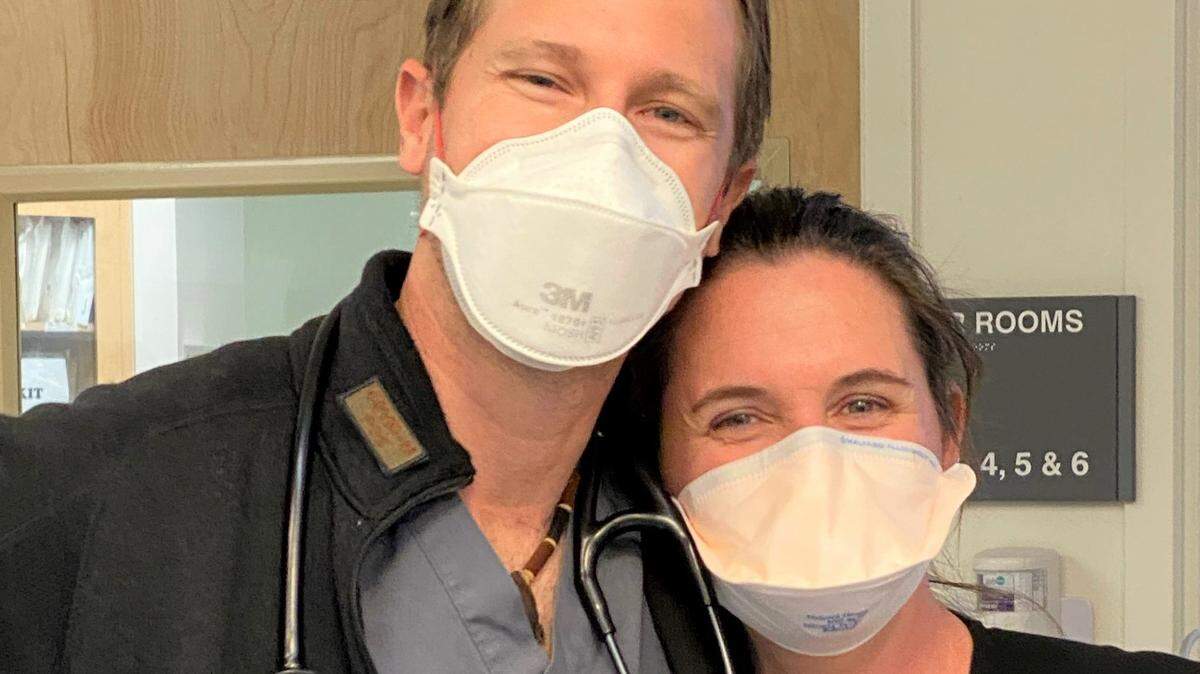
Before the COVID-19 pandemic upended the world, doctors Brad and Oma Knox were settling into the San Luis Obispo County lifestyle as relatively new Central Coast residents, having moved from Los Angeles a few years before.
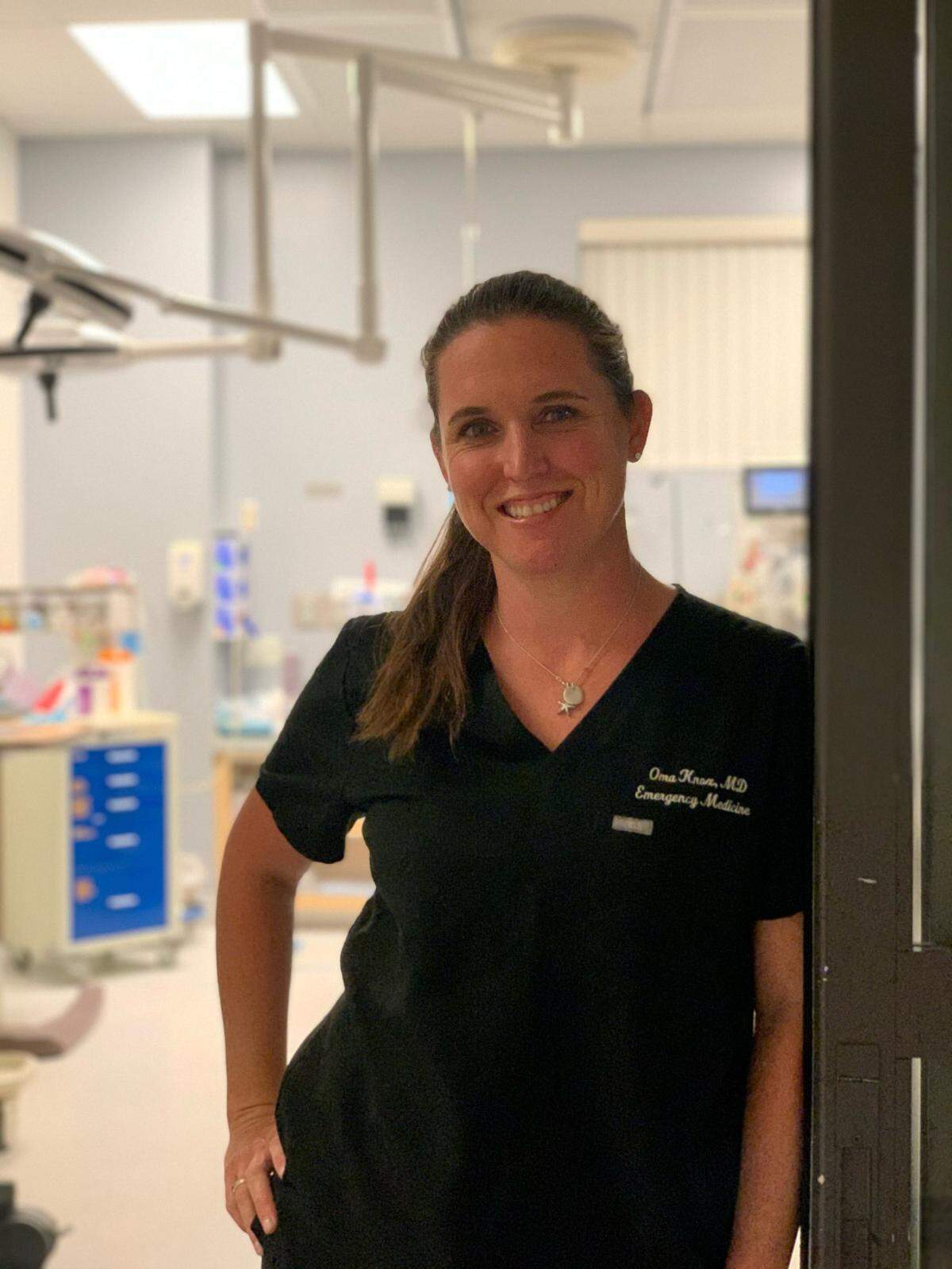
The Knoxes — who met in medical school in Chicago and married in Hawaii in 2011 — are emergency room physicians at Sierra Vista Regional Medical Center in San Luis Obispo and at Twin Cities Community Hospital in Templeton, both Tenet Health Central Coast hospitals.
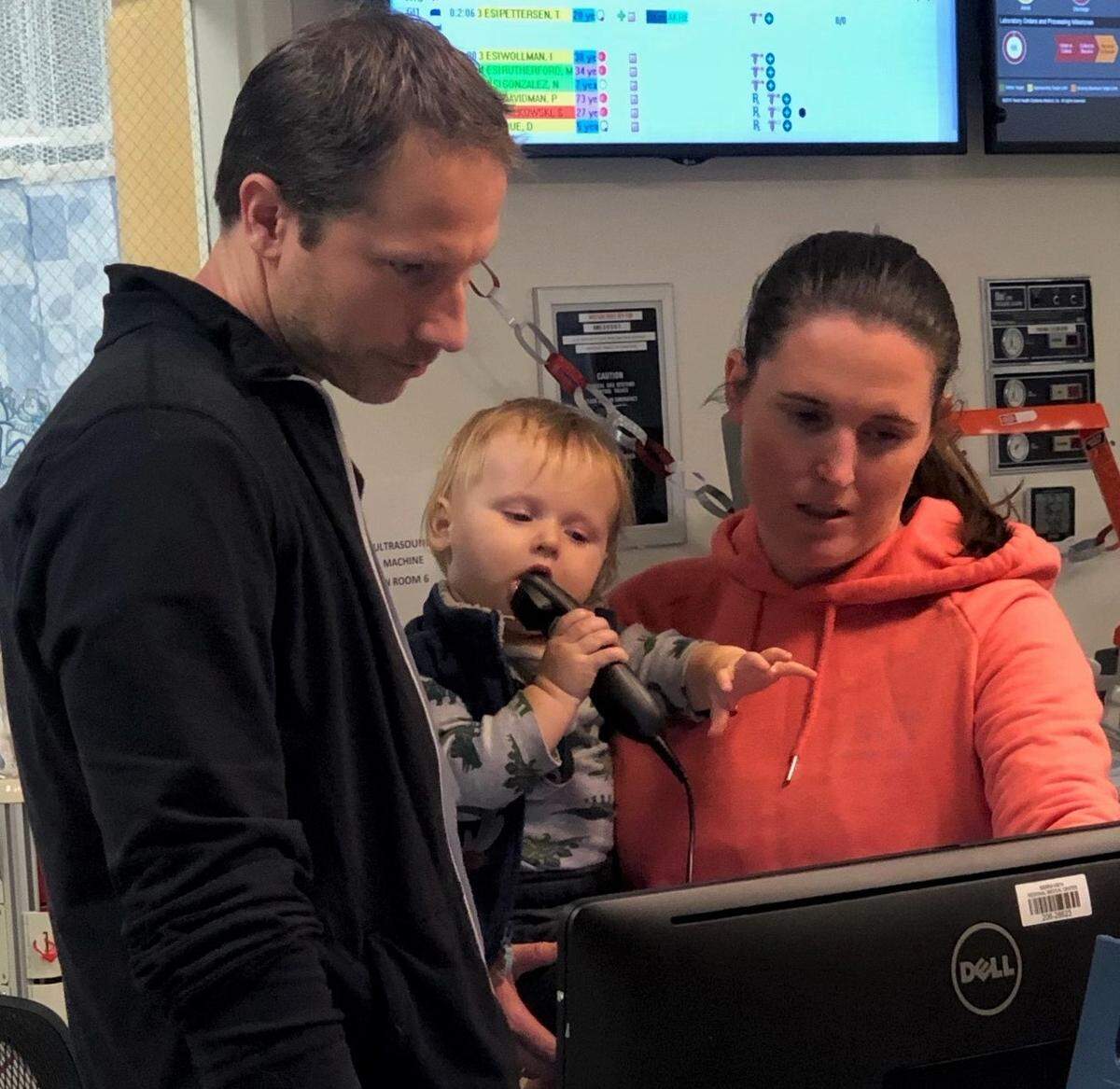
Pre-pandemic, they were handling the typical flow of ER patients, along with parenting duties caring for their first child, a baby boy, Tully, who’s now 2.
A regular day for Brad, 39, and Oma, 36, might have included treating a wide range of patients, from geriatric people with chest pains to injured people with head, limb, and other types of trauma to kids with fevers, cough and gastrointestinal illnesses.
In their off time, they enjoyed surfing Central Coast waves to relieve stress and take in the natural beauty of SLO County.
Having last worked in Los Angeles County, where urgent health care matters are often dire and the volume of patients is massive, they felt well-prepared to serve in SLO County, they said.
“By emergency room standards, things were pretty normal for us,” said Brad Knox, chair of Emergency Medicine at Sierra Vista. “Then the pandemic came, and things changed dramatically.”
.jpg "Dr. Brad Knox in front of Sierra Vista ERb (1).jpg")
COVID-19 hits hard
As the months of 2020 dragged on, the volume of COVID-19 patients started to climb.
Initial statistics of one or two new daily coronavirus cases a day grew to 10 or so, then into the 40s and 50s, followed by days with hundreds of patients by winter.
December 2020 was marked by 4,086 COVID cases in SLO County, including a record 576 new cases and eight deaths on a single day, Dec. 30, followed by 7,437 cases in January.
ER physicians learned to assess people quickly as “sick or not sick,” Brad said, and many patients began to show up pale, breathing quickly and fighting for their lives with blood oxygen levels dipping to life-threatening levels.
Normally, a person’s arterial oxygen level is between 95% and 100%, but COVID often would cut that amount to below 88%, considered “severe.”
Sometimes they’d admit patients with oxygen levels as low as the 30% range, which is “absolutely life-threatening if left untreated,” Brad said.
By all definitions, many patients were very sick, and the gravity of the situation was daunting.
While there are some remedies to treat COVID-19, there is no cure.
So, they’d recommend plenty of rest, having patients sleep on their stomachs, also called “proning,” to increase oxygen levels.
They’d have them drink plenty of fluids or take medicines such as ibuprofen or acetaminophen to reduce fevers, body aches and headaches associated with coronavirus illness.
They saw healthy, active people in their 30s and 40s, bedridden in the grips of illness, as well as older patients struggling to survive.
Some didn’t recover.
“It was the volume of patients that made our jobs so difficult,” Brad Knox said. “The vaccines can prevent someone from getting sick. But there’s no given treatment yet for COVID that doctors can prescribe, so stopping people from getting the illness (through vaccines) is incredibly important.”
Emergency room doctors deal with death
More than 21,200 San Luis Obispo County residents have contracted coronavirus and 260 have died.
ER doctors do their best to prevent death. But the tragedy they’ve witnessed has been devastating.
Oma Knox said doctors interact with patients and their families on a personal level, and that makes it even harder.
They’d get to know patients by name, talk to their families during some of the most difficult moments of their lives, and develop human connections.
“You might be holding someone’s hand when they died,” she said. “You’ll never forget them. In the job, at the moment, you have to compartmentalize and keep on treating other patients. But on the way home, it really hits you.”
Oma and Brad said they supported each other emotionally to help get through trying days.
“It’s really hard when deaths are back to back to back to back,” Oma said. “Most (ER deaths) don’t overlap. Being a doctor is a huge privilege, but that part of the job emotionally is really hard. On a bad day and after a bad case, we lean on each other and our staff, and vice versa.”
Brad said that the seriousness of the virus makes a convincing case for people to get the vaccine.
“There is misinformation out there,” Brad said. “I remember treating a really sick patient, a young person about 18, who was diagnosed with COVID but still didn’t believe the virus exists. He think it’s a hoax.”
But thanks to widespread administration of vaccines, hospitals have seen huge declines in hospitalizations and deaths, he said.
“The virus is not a hoax, and vaccines are working,” Brad said. “Stopping people from getting the illness is incredibly important.”
Brad called the vaccine development the “single biggest” impact on reducing the spread of the virus and a “medical miracle” given the speed and effectiveness of the immunizations.
.jpg "Tenet Health Central Coast Discharge Parade (3b).jpg")
Dating in the medical field
One of eight SLO County emergency room doctor couples at Tenet Healthcare, Brad and Oma met in medical school as students of Loyola University Chicago Stritch School of Medicine, from which he graduated in 2010 and she in 2011.
He arrived at medical school as a surfer from Southern California. She was from Hawaii, coming off a stint as an emergency medical technician in Chicago.
They met at a summer social event at Navy Pier to welcome new students, and Brad was a year ahead of his future wife, who was just embarking on her studies to be a doctor.
He was wearing a cowboy hat, and she made a crack about whether he knew how to do actual cowboy work or was just wearing the hat.
“Right away, I knew she had some attitude,” said Brad.
They started dating, and the fit seemed natural.
As the demands of medical school set in, they grew as a couple, later relying on Skype dates as he conducted his residency at Los Angeles County/USC Medical Center, where he served from 2011 to 2015.
“Your days as a resident doctor are pretty full, pretty much all the time,” Brad said. “We’d have to find a window here and there where we could chat on Skype.”
A year into his residency, Oma followed him to serve her training hours at a Los Angeles County ER with 132 beds and tertiary care that Brad described as “far more intense than working up here in SLO County, particularly being located in an underserved area of L.A. County.”
They’d treat patients admitted due to horrific car accidents, gang-related shootings and stabbings, drug and alcohol issues, and infectious and travel-related diseases associated with the indigent population. Some refer to Los Angeles County ER work as the “closest thing to get to combat without a combat situation,” Brad said.
They discovered San Luis Obispo County after their wedding a decade ago, when they honeymooned in Paso Robles wine country.
Brad later was recommended for a position on the Central Coast by a doctor he knew in the area, and they moved here in 2015.
“Los Angeles is a great city, but the lifestyle wasn’t great for us,” Brad said. “SLO County was a place to decompress.”
Marriage amid the pandemic
As two doctors who were in contact with COVID patients on a regular basis, they took careful protocols to prevent illness, donning personal protective equipment and avoiding contact with each other upon arriving home in Atascadero, where they would shed their clothing in a patio area before showering immediately.
They were careful to keep their toddler safe and to avoid any risk of him contracting the virus, Oma recalled.
Once COVID hit, they stopped taking him to the hospital for childcare hand-offs as they changed shifts, as they used to.
“At first, we knew how afraid people were of the virus,” Brad Knox said. “As ER doctors, we sign up for the job. You’re on the front lines. This all just added another level to the video game of life.”
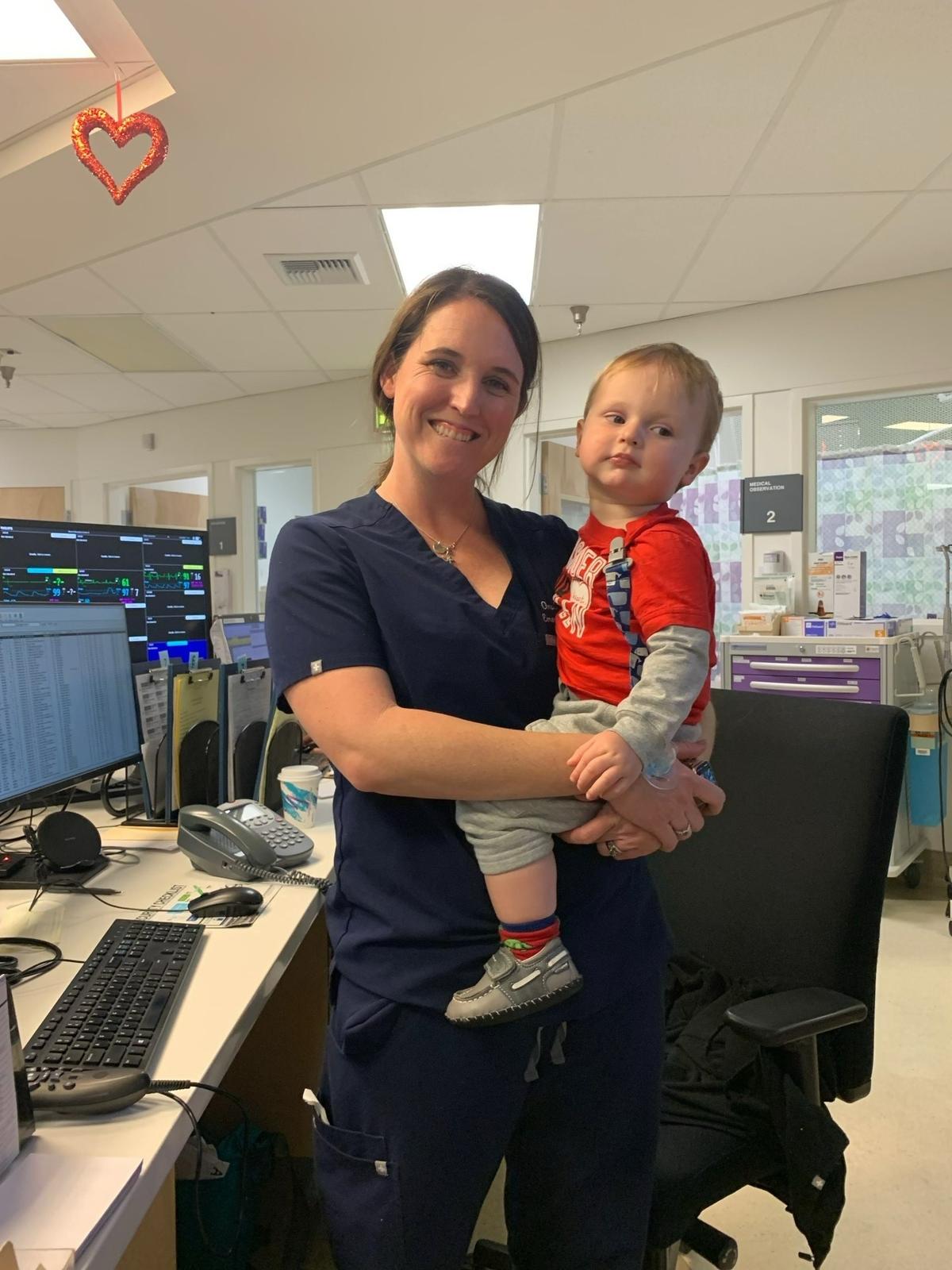
Their respective mothers came up for a period to help out with the childcare, and they were able to spend some more time together.
After months of caution, now fully vaccinated along with more than 64,000 people in SLO County (more than 32,000 have been partially inoculated), according to Public Health Department stats, Brad said that the community is in a good place to get back to life as normal, adding that “we can’t just live in our homes.”
“Let’s get the economy opened up,” he said. “Let’s get the world moving again and functioning as it should again.”
Still, Oma said those lost to the virus should be a reminder to all that a “a lot of people didn’t get healed.”
“We’re very much aware of that,” Oma said. “That drives us forward to do better, and we’ll never forget them.”
This story was originally published May 11, 2021 at 5:00 AM.
%20Cropped.jpg)