
Oscar winner David Stone on the art of sound editing
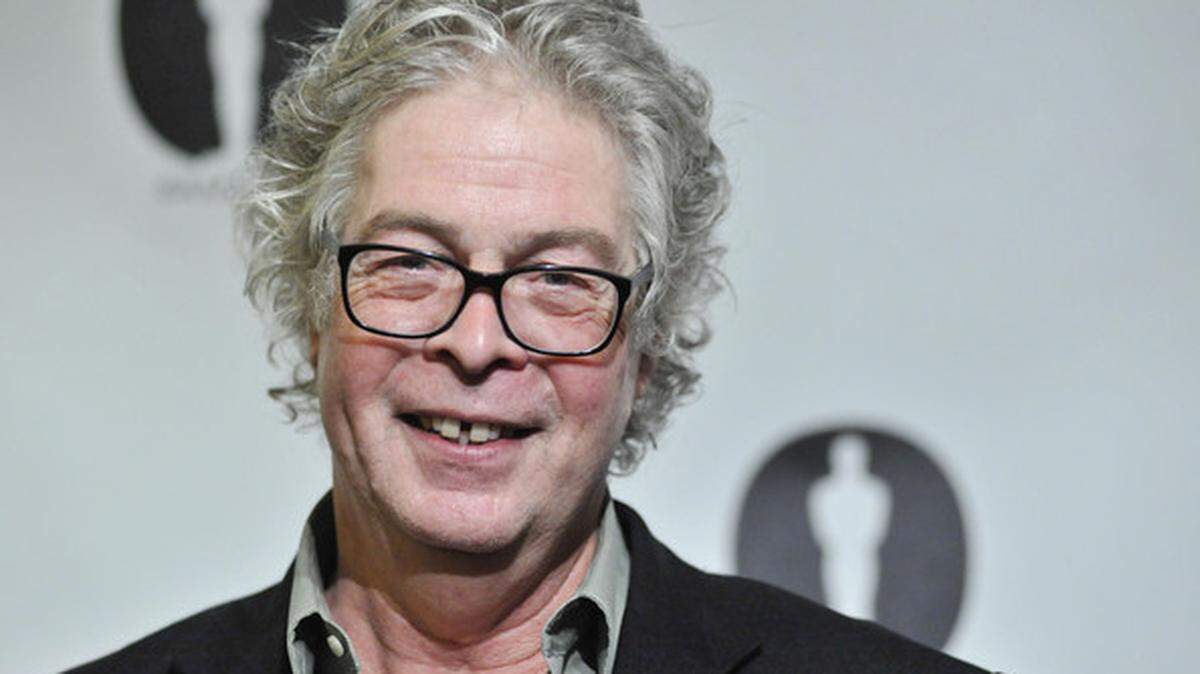
Footsteps clacking across a kitchen floor. Special forces soldiers crashing through a Central American jungle. Jet fighters soaring in the sky.
“Everything you think you hear that’s on the movie screen has been fussed over and added to and subtracted from by specialized craftspeople” working in cinematic sound design, explained David E. Stone, an Academy Award-winning sound editor with more than 100 film and television credits to his name. “Those sounds … describe the action and give a deeper level of meaning to it.”
Stone, 68, will share stories from roughly three decades in Hollywood as part of the San Luis Obispo Jewish Film Festival.
On Saturday, Stone will receive the festival’s Lifetime Achievement Award, presented annually to a member of the Jewish community who has made an outstanding contribution to the film industry. The award ceremony, held at the Palm Theatre in San Luis Obispo, will be paired with a question-and-answer session and a screening of “City Slickers II: The Legend of Curly’s Gold.”
Stone, who grew up in the suburbs of Philadelphia, never set out to work in sound.
In fact, he dreamed of becoming a cartoonist. (His late brother, Richard Stone, was a composer and music editor whose credits included animated shows “Animaniacs,” “Pinky and the Brain” and “Rugrats.”)
After earning a bachelor of fine arts degree from Cornell University in Ithaca, N.Y., where he majored in printmaking, “I decided it was time to go to L.A. and take a big chance and be an animator,” Stone said.
He landed a job at Hanna-Barbera Productions Inc.
“I also fell in with the fellows across the hall who were … making funny sound effects,” he recalled. “I had an instinctive understanding of what they were doing.”
That was Stone’s introduction to the world of sound editing, a field that encompasses dialogue, music and sound effects. (The latter includes foley — everyday noises such as swishing clothing and creaking doors.)
“Music in a movie creates the emotional setting, and sound effects work creates the concrete setting of the story,” he explained, adding another dimension to the images on screen.
Ironically, he added, the better sound editors do their job, the less moviegoers notice their work.
"Because of the mechanical construction of sound in filmmaking, there's a great deal of invisible craftsmanship through a number of hands," he said. "That's the thing the audiences must never realize."
From animated series starring Scooby-Doo and the Flintstones, Stone worked his way up to live-action television shows and feature films. A glance at his resume reveals collaborations with some of the top directors in the industry, including Steven Spielberg (“Indiana Jones and the Last Crusade”), Quentin Tarantino (“Reservoir Dogs”), Joe Dante (“Explorers,” the “Gremlins” movies) and Steven Soderbergh (“Sex, Lies, and Videotape,” “Ocean’s Eleven”).
“Nobody thinks the sound effects man is there to add artistry to the (movie). People assume you’re just some kind of technician,” he said, but that couldn’t be further from the truth. “When you’re on the mixing stage with (a director) … you’re there to make their sound beautiful. You’ve added another dimension to their storytelling, and they appreciate it.”
When Stone teamed up with Tim Burton on “Beetlejuice,” for instance, he initially fretted about using cartoon-like sound effects in the scene in which a recently deceased couple, played by Alec Baldwin and Geena Davis, meets Michael Keaton’s title character, a ghost with an irreverent streak.
At the end of the scene, the sound editor said, Keaton grabs his crotch “as if to say ‘Eff you’ to them.” Stone added the sound of a bulb horn similar to the one used by Harpo Marx.
“To me, that was the comic button,” he said, and Burton, a former Disney animator, agreed. “I felt so validated that my taste was what he wanted to hear — no more, no less. That really gave me confidence.”
“If you get intuitively or intellectually what the (filmmaker) is doing with the story at that moment, then when you present your sounds, (he) feels supported and understood,” said Stone, who also worked with Burton on “Edward Scissorhands” and “Batman Returns.” “All of a sudden, you’re playing jazz together.”
Stone found a similar camaraderie with Francis Ford Coppola while working on “Bram Stoker’s Dracula.” He and fellow supervising sound editor Tom C. McCarthy shared an Oscar for their work on the film, which took place at a time when most production companies were transitioning from Moviola film editing machines to digital audio workstations.
“We were dealing with every conceivable recording and sound editing technology, trying to knit them together,” he recalled.
Stone’s favorite filmmakers to work with “had a real respect for the post-production sound skills our guys had and weren’t trying to control us,” he said. “They were just trusting us to do the best work we could.”
Stone retired from Hollywood about a decade ago. (His final screen credit was 2004’s “Ocean’s Twelve.”) He now teaches sound design at SCAD, formerly known as the Savannah College of Art and Design, in Savannah, Ga.
“These kids … grow up being media consumers in every conceivable way. I think we can do a lot to enlighten them about living in that world,” he explained.
He also hopes to impart his passion for sound editing.
“The little spark of fun that comes from putting a funny sound or a gross sound or a perfect, delicate sound in a film … that never goes away,” he said. “If you love (sound), the fun is always there.”
David E. Stone
7:15 p.m. Saturday
Palm Theatre, 817 Palm St., San Luis Obispo
$12
426-5465 or www.jccslo.com/slojff.html
This story was originally published January 8, 2015 at 7:00 AM with the headline "Oscar winner David Stone on the art of sound editing."