
Cal Poly eliminated in first round of Big West Championships. What now?
The faces of defeat filled the postgame press conference after a late-season surge carried Cal Poly (14-19, 10-11 Big West) to the Big West Championships, only for its run to end in the first round.
A different approach in the final moments might have changed the outcome, but the Mustangs were left to reflect on missed opportunities after a 72-69 loss to UC San Diego (23-10, 12-8 Big West) on Wednesday night.
With seven seconds remaining, Hamad Mousa drove into the paint and finished a layup that cut the deficit to one, 70-69. But with the season on the line, a look from beyond the arc would have given Cal Poly a chance to tie the game.
Instead, the Mustangs settled for two and never got the opportunity to attempt the three they needed to stay alive in the Big West Championships.
A statement dunk from UC San Diego after Mousa’s layup slammed the door on Cal Poly’s hopes, and the Mustangs were unable to escape the first round.
The Mustangs watched the game slip away after holding control for a while. Cal Poly led by as many as 11 points in the first half and carried a 9-point advantage into halftime, appearing poised to close it out.
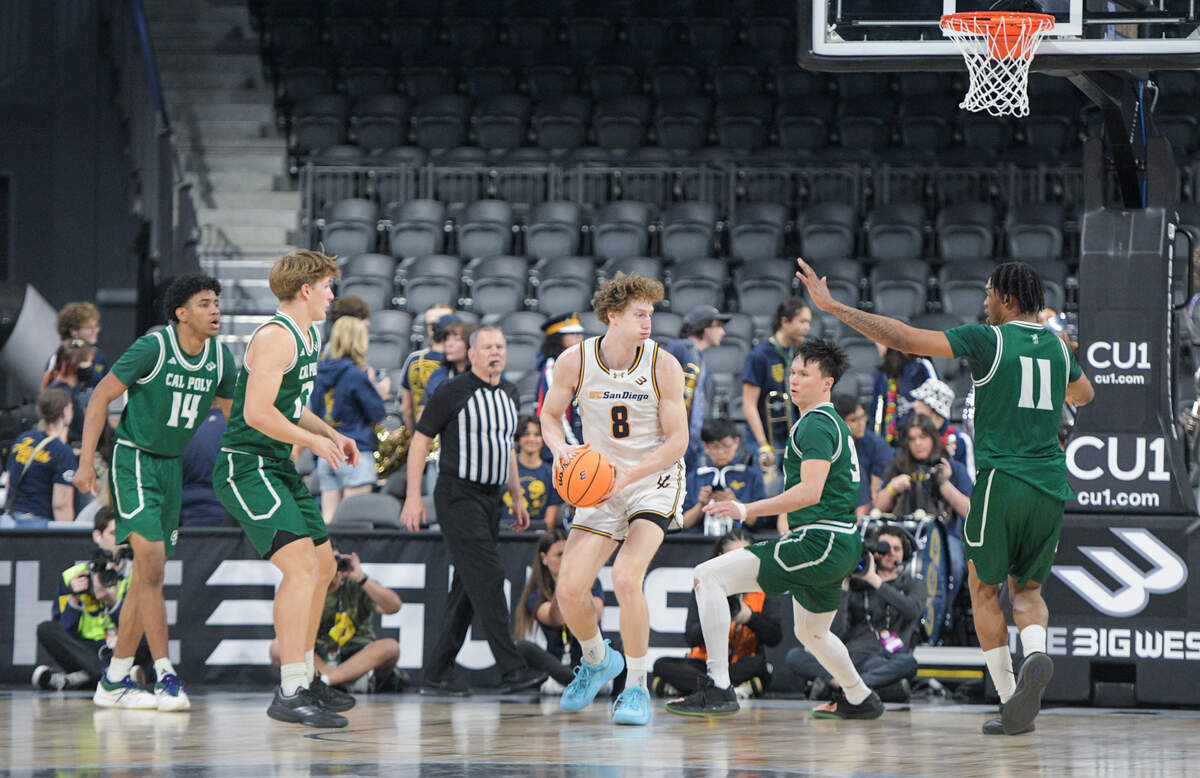
Turnovers, which plagued the Mustangs in their previous meeting with the Tritons, were not the deciding factor this time. Even with improved ball security, Cal Poly could not hold off the Tritons down the stretch.
More importantly, they had difficulty getting shots to fall.
A key difference came from UC San Diego’s Hudson Mayes. The freshman had seven points in the first half but caught fire after the break, pouring in 16 points in the second half to help swing the momentum and finish with a game-high 23 points.
“He’s a really good player and really aggressive getting to the rim,” Cayden Ward said in the postgame press conference. “I think we played with force, though.”
While Mayes’ surge gave the Tritons a lift, Cal Poly’s shooting struggles told the bigger story. The Mustangs shot just 38% from the field and 19% from three-point range.
Those numbers are difficult to overcome for a team that often relies on its perimeter shooting, especially in a postseason setting where every possession can determine whether a season continues or ends.
“We got some good looks in that second half,” Head Coach Mike DeGeorge said. “We had two of 15 threes. Sometimes it just doesn’t fall.”
Big West leading scorer Hamad Mousa also struggled from deep, finishing 0-for-6 from three and scoring just five points in the first half. Even as contributions came from different parts of the lineup, Cal Poly could not find a consistent rhythm offensively in that second half.
Guzman Vasilic briefly provided a spark, leading the Mustangs with seven first-half points before leaving with an apparent injury and not returning after halftime. His absence removed another option from Cal Poly’s rotation that could have helped in the second half.
Mousa led the Mustangs in scoring with 21 points, followed by double digits from Ward with 13.
This loss marks the end of Cal Poly’s season, which saw a late-season surge get Cal Poly into the Big West Championships in the first place.
UC San Diego now moves on to the quarterfinals, where it will face the No. 4 seed CSUN.
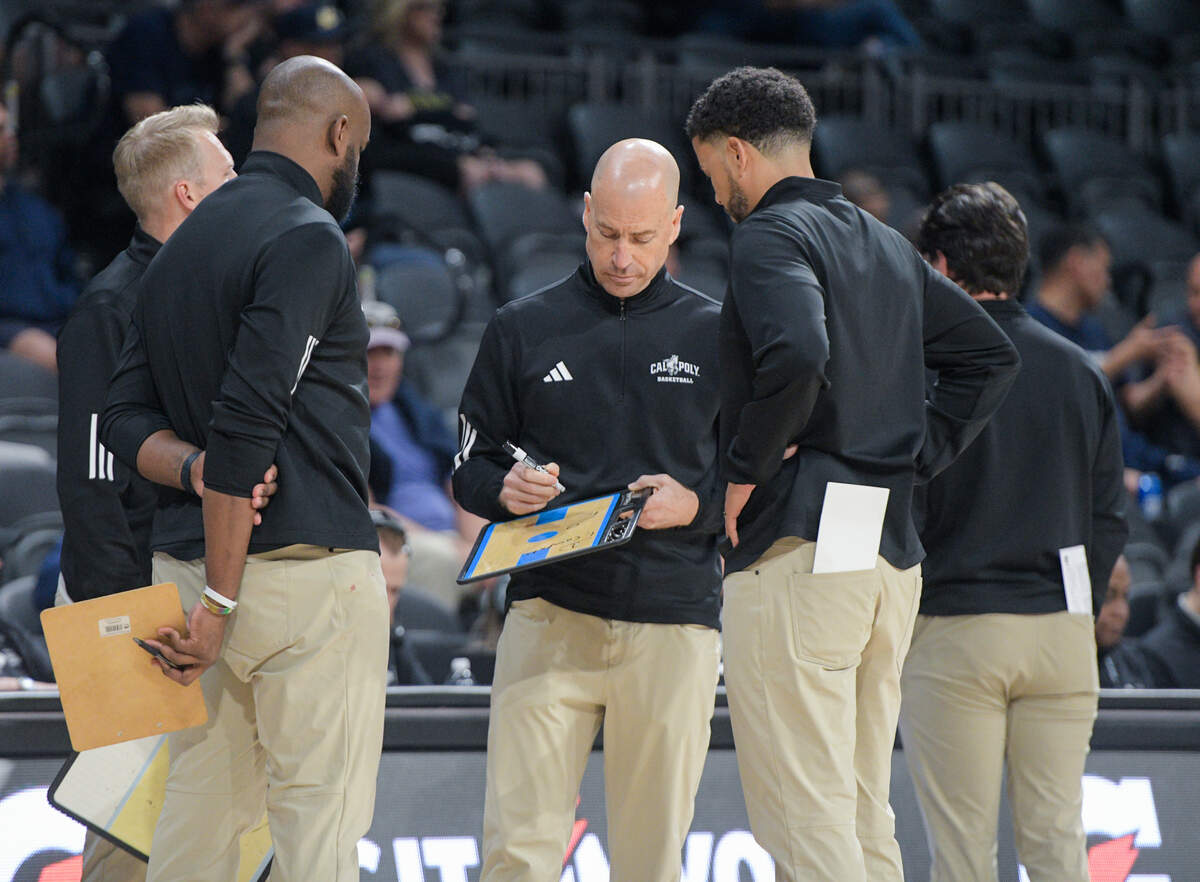
What’s next for Cal Poly
Now, Cal Poly goes into the offseason with no guarantee of a familiar returning roster due to player movement becoming a reality since the creation of the transfer portal.
With the landscape of college athletics rapidly changing, DeGeorge is not oblivious to the fact that money is a major factor in player retention.
Mousa, one of the top players in the Big West, earned first-team Big West honors and has become the first Cal Poly player to reach that status since 2013. Performances like his have likely caught the attention of other programs.
“We’re in a different world now, and one of the difficult things is, these guys are constantly inundated with people telling them how much money they can make, and agents constantly reaching out to me,” DeGeorge said. “So it’s just this whole new world.”
With the NCAA House settlement being approved last summer, Cal Poly is now allowed to share revenue with its athletes. As a mid-major, however, Cal Poly lacks financial resources compared to larger programs. That factor alone continues to remain a challenge in retaining talent.
DeGeorge said the plan moving forward is to sit down with each player and talk about what comes next, whether that future is at Cal Poly or elsewhere.
“At the end of the day, it becomes a financial decision for these guys,” DeGeorge said. “We’d love to have the group back, and if they come back, I think we have a chance to be a really special team.”
This story was originally published March 12, 2026 at 1:26 PM.