
Cal Poly coach was 12 when his mother vanished. 41 years later, his DNA helped find her body
Paul Wulff was 12 the last time he saw his mother.
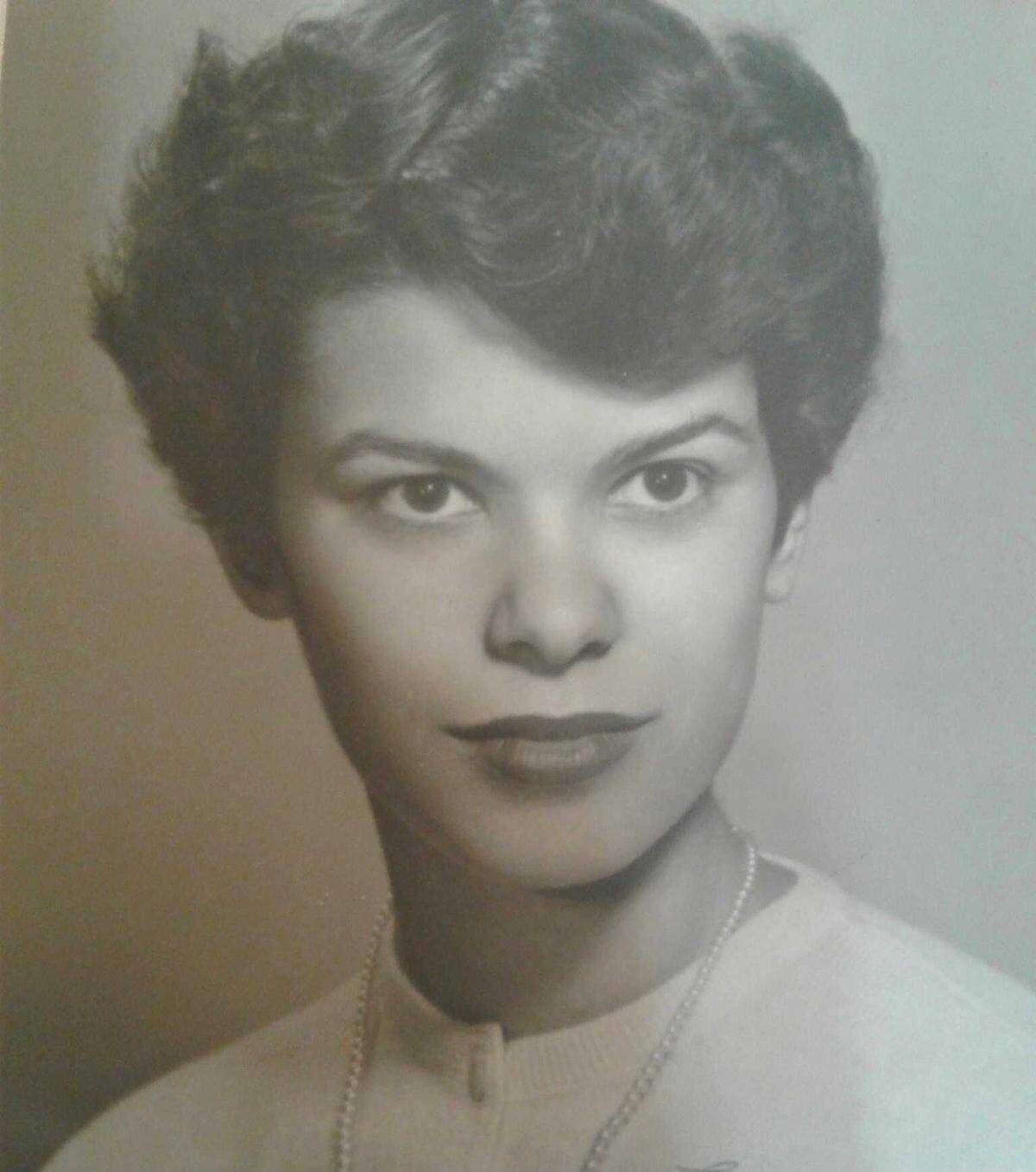
He was the youngest of four kids, the baby, and the one that most resembled Dolores Wulff — the smile, the eyes, the expressions, the kindness.
“That last day,” Cal Poly’s first-year offensive line coach said last week from his football office, pausing to collect himself, “I’ll never forget it. She spoiled me rotten. She took me to my uncle’s house for a sleepover. Loved those. She called me “Teddy Bear.” She got in her light-blue Cutlass and slowly drove down that gravel road. I waved. I couldn’t wait to see her again.”
That was July 31, 1979.
Late that night or early the next morning, Dolores Wulff vanished just outside Woodland on a country estate on the outskirts of Yolo County. What happened to her? How does a 45-year-old woman — who loved her children, her siblings, her friends and her job as a secretary at Woodland High School — just disappear?
Or did she?
Wulff and his siblings had their theories, all of them sinister, pointing to their abusive and alcoholic father, Carl Wulff. It was a case that gripped local law enforcement and shook a small town not accustomed to such horrors.
”It haunted me from the start,” said Ron Heilaman, the lead detective on that case, last week. He is now retired and lives in Grass Valley. “It just ate at me.”
It consumed Wulff. He turned to football as a teenager, emerging as a star offensive lineman at Davis High School as a 6-foot-4, 270-pounder. He channeled his hurt, his confusion and his profound anger at his father into action.
“What I was going through was not normal, and people thought I was a loner or just different when, really, I was just hurting,” Wulff said.
But the start of every season reminded Wulff more of who wasn’t there to see him. Football training camps start in late summer, an anniversary reminder that was always mixed for Wulff.
No matter where he coached, questions lingered, including head-coaching stints at Eastern Washington of the Big Sky Conference and Washington State of the Pac-12, with assistant coaching stops with the 49ers, and of late, at Sacramento State and UC Davis.
All of those football seasons — 38 total — and no answers as to what happened to his mother. Today, the 53-year-old Wulff is a coach without a season as football is on hold due to COVID-19. But he is finally a coach with answers. He is finally a man at peace.
Dolores Wulff was found earlier this fall through the magic of DNA and dogged detective work. On Thanksgiving, Wulff and his family will light a candle in their Pismo Beach home, a reminder of a mother who is only there in spirit.
”It’s time for my mom to truly be next to all her family,” Wulff said. “Forever, I didn’t want to let anyone down, and that’s why I worked so hard in high school as a player, so hard in college, and as a coach. I’ve always been extra motivated. I feel I owed people who cared about me, and I owed my Mom.”
Vanished from rural Woodland
Wulff said his mother was scheduled to pick up him and other siblings after the summer sleepover. He waited by the front door. She did not arrive.
No calls. No one had heard from her. So Wulff stayed another night, enjoying the farm life at the home of his uncle Matt Rocha, his mother’s brother. Then another night. The Wulff kids — Paul, Tom, Carl Jr. and Anna Marie — never lived with their father again.
Each sensed and feared that their father was behind their mother’s disappearance. A local businessman, Carl Wulff told law enforcement his wife simply left their home, seeking a different life.
The problem with that story was Dolores Wulff left everything behind: her kids, her wallet, purse, glasses, medication, jewelry and clothes. And her car.
“Mom never would have left us like that,” Wulff said. “She disappeared, or was killed, in the middle of the night. Mom was afraid of the dark. She basically stayed to protect us, knowing she could die. I spent two years looking every time that front door opened, hoping it would be her.”
Wulff recalled how his older brother Tom confronted their father about their mother’s whereabouts two days after she disappeared.
“He told us that she’s not coming back, that she left, and Tom stood up and said that was BS,” Wulff said. “I believed it was BS. We believe he killed her. I heard him a couple of times say that to her.”
So did Matt Rocha, Dolores’ brother and the man who raised Wulff as his own child.
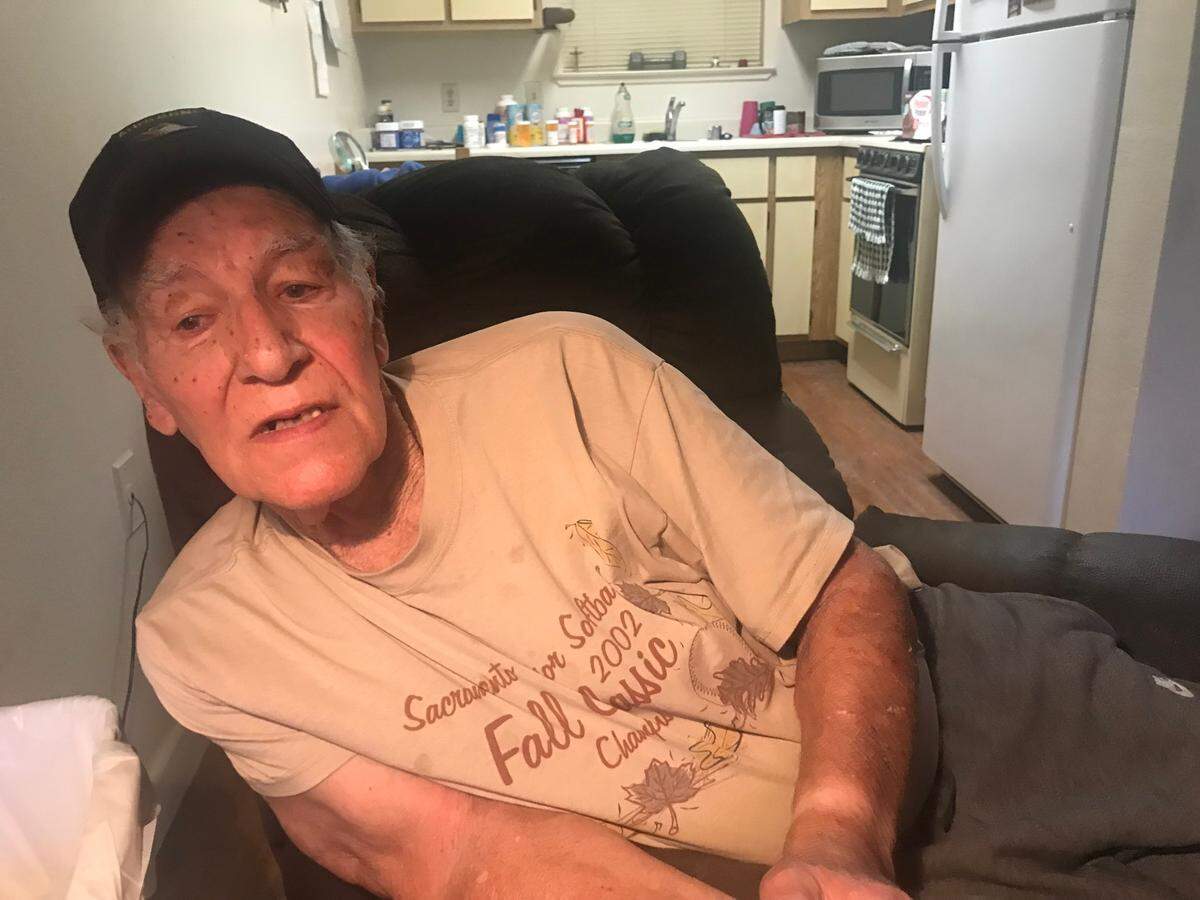
Still living in Woodland, Rocha spoke glowingly about his sister, their bond and her kids. Rocha is a man who has lived, who has experienced hell most never experienced. He was part of the 101st Airborne Division of the Army, assigned to “covert ops across the world,” he said.
“I was trained to kill, and I wouldn’t have thought secondly about killing Carl Wulff, because in my heart, all of our hearts, he did it,” Rocha said. “Dolores had left him before for a day or two, but he would always come to get her. This time? He didn’t even get in his car and drive to the end of the road.”
Rocha added, “I confronted Carl Wulff. Called him and said he had 24 hours to tell us or police where Dolores is or I’d cut his throat. Then he told police I was threatening him. Imagine that. A killer going to the police for protection.”
Now 83, with limited hearing after mortar shells from Vietnam damaged his ear drums, Rocha eyed photos on his walls. They include images of his own three kids, of all the grandchildren, his certificates of appreciation from those in Woodland for 31 years of Little League and girls softball coaching.
”I miss my sister every day,” Rocha said. “We were so close, so tight. She was my best friend. We made a deal that if anything happened to either one of us, the other would raise the kids. At worst, I thought maybe a car crash, but never, ever murder.”
Grisly discovery but no body
It wasn’t just the family’s fear that Carl Wulff was responsible for his wife’s disappearance. Heilaman, the lead detective, believed it as well.
“I knew pretty quickly who was responsible,” Heilaman said. “Carl Wulff had a bloody blanket in the trunk of his car. He said it was Kool-Aid from camping. Really? We tested it. It was blood. We didn’t have the DNA testing we have now. That would have helped.”
Heilaman added, “What really got me, what really haunts me, was under the lip of the trunk, inside, were four distinguishable finger marks, like sliding to push the latch open, a 6-inch line. I believe Dolores Wulff was put in that trunk alive in the middle of the night and tried to get out. You don’t forget details like that.”
But without a body, there was not enough evidence to arrest Carl Wulff. He also declined a polygraph.
”I remember how he never said he didn’t kill her,” Heilaman said. “He’d only say, ‘I didn’t do anything wrong. I have nothing to be ashamed of.’ That’s how in his mind he could justify it.”
The search
Throughout August 1979, dozens of people — law enforcement, family, friends, volunteers — combed the Woodland countryside to find Dolores Wulff. Psychics were brought in by the family to help. Heilaman didn’t think much of paying $200 for a stranger to guess where a body might be found. But people cling to any hope in a desperate search.
”We looked everywhere,” Rocha said. “Ditches, creeks, the hills. We dug and dug and dug. Felt like millions of acres. Nothing. One psychic told us that she’d be found in the water, and that her husband killed her. I believed that.”
As the weeks and years dragged on, the only suspect was the last person to see Dolores Wulff alive — Carl Wulff. He stuck to his story that she simply walked out as he slept.
”We had enough probable cause to make the arrest, finally,” Heilaman recalled. “We did it, mostly to satisfy the family, but we knew it wouldn’t stick without a murder weapon or a body.”
In 1985, the Yolo County grand jury indicted Wulff on murder charges. It was dismissed nine months later, ruled by a visiting judge that Carl Wulff would not have access to a speedy trial. Carl Wulff told reporters outside the Federal Court Building in Sacramento that his life has been “hell” since wife disappeared seven years earlier.
Nothing stuck. Not even a wrongful death civil suit filed in Paul Wulff’s name, also in 1985.
“When my dad was in jail, it was my freshman year at Washington State,” Wulff recalled. “We thought if I went there to talk to him, he might confess, or give something. He didn’t. I had no reason to talk to him again.”
Carl Wulff later counter-sued his family, a charge that was dismissed. He died alone and estranged from his kids in 2005 at 70.
”When I was called and told by doctors that he was dying in Los Angeles, I had nothing to say — nothing,” Wulff said.
Finding football and his cause
Wulff met the man who would change his life when he was 13. He was a big kid, but not strong or athletic.
Dave Whitmire, then the football coach at Davis High, saw Wulff on the middle school campus and urged him to get into football. Whitmire knew the Rocha family well and knew the anguish young Wulff was enduring.
Whitmire taught Wulff how to block, how to hit, how to snap a football between his legs 15 yards back to the kicker or punter, telling the lad he could land a college scholarship.
And Wulff found himself. He became a star player with scholarship interest from across the country. Big-name coaches such as Tom Osborne of Nebraska sat in his uncle’s living room to pitch their school. Wulff signed a full scholarship package with Washington State, where his star rose even more.
He played rival Washington his senior season in 1989, 18 days after having his appendix removed. That game occurred not long after he told The Bee in an interview about his mother, “I know she’s in heaven. I know she wouldn’t want me worrying about what happened. She’d want me to get on with my life.”
“Dave Whitmire saved me and football saved me,” Wulff said last week. “He grabbed me, steered me in the right direction. I would have gone down a bad path otherwise without that direction. That first year without mom was really hard, the worst year. Spent the whole time denying what had happened, a very dark period. just floundering, not a lot of hope, angry.”
Wulff went from a body in pads to a terror in one in short order.
“Long snapping allowed me to believe I could be a valuable player, a teammate, and then I decided as a sophomore that I didn’t want to be a punching bag on the field,” Wulff said. “I was going to be the hammer, the hitter. I craved it, the aggression. It changed me. I had a lot of anger toward my dad, a tremendous amount of fuel.”
Whitmire said Wulff is easy to root for.
“Paul needed football, absolutely, because his family had been torn apart,” Whitmire said. “Not only did Paul Wulff become a great football player, he became a great person and coach. He’s at the top of my all-time list. He’s had such great success. His communication skills are excellent, and so is his ability to relate to people. It’s great to think about him and smile.”
More Wulff heartache
Football also led Wulff to Tammy Allen in 1988. They married in 1993 after Wulff had a brief professional playing career in the World League of American Football.
In January of 1997, their world was shattered. Tammy was diagnosed with inoperable brain cancer.
She improved, but the tumor returned. She died in 2002 at 39.
Before her death, Tammy volunteered at an oncology clinic that included a nurse named Sherry Roberts. Tammy introduced Wulff to Roberts. It was Tammy’s hope that her husband would remarry and have a happy life.
Last week, Wulff and Sherry celebrated their 18th wedding anniversary in Santa Barbara.
Finding Dolores Wulff at last
On Sept. 17, 1979, boaters in the Carquinez Strait region, came across a lower torso that washed ashore, six weeks after Dolores Wulff vanished.
Because there were no teeth to identify through dental records and because there were no hands to provide fingerprints, the remains were a mystery. Who was it? The remains were buried in a Solano County grave as Jane Doe No. 12.
Through the nonprofit Doe Network designed to help police find missing persons, the Solano County Coroner’s Office went to work. Benicia Detective Kenny Hart started to look into women who went missing in San Francisco and Sacramento in 1979.
In September, Hart reached out to Wulff and asked for his DNA. Wulff was glad to help but he was leery.
“We’d had some hope before but nothing ever came of it,” Wulff said. “This time, we hit.”
Jane Doe No. 12 was exhumed. DNA was extracted from a femur bone. It was a match with Paul Wulff.
Wulff was sitting in his Cal Poly office when he got the call from Hart.
“Wow, wow,” Wulff said of his reaction. “The body was cut in half, probably from another boat with huge propellers, we think. I’m so thankful to the law enforcement people who did this. It took a long time, but we’re at peace now. I know where she is. I called my brother Tom in Montana, and my brother Carl in Washington (sister Anna Marie lives in Texas). I called Ron Heilaman, who worked the case years ago.
“And then I drove to Woodland to tell my uncle, Matt, who did so much for me. It took a village to raise me. I had to tell him in person.”
Wulff said the family will bury Dolores Wulff in Woodland, next to her parents. It will be a family reunion with siblings and aunts and uncles he never expected to see.
”I feel a tremendous amount of satisfaction that it’s finally over, that there’s verification that she’s found,” Wulff said.
Editor’s note: The Bee’s Joe Davidson first met Paul Wulff as a first-year reporter at The Davis Enterprise, when Wulff was a senior at Davis High School.
This story was originally published November 26, 2020 at 5:00 AM with the headline "Cal Poly coach was 12 when his mother vanished. 41 years later, his DNA helped find her body."