
A new port could help preserve San Luis Obispo County’s coastal way of life | Opinion
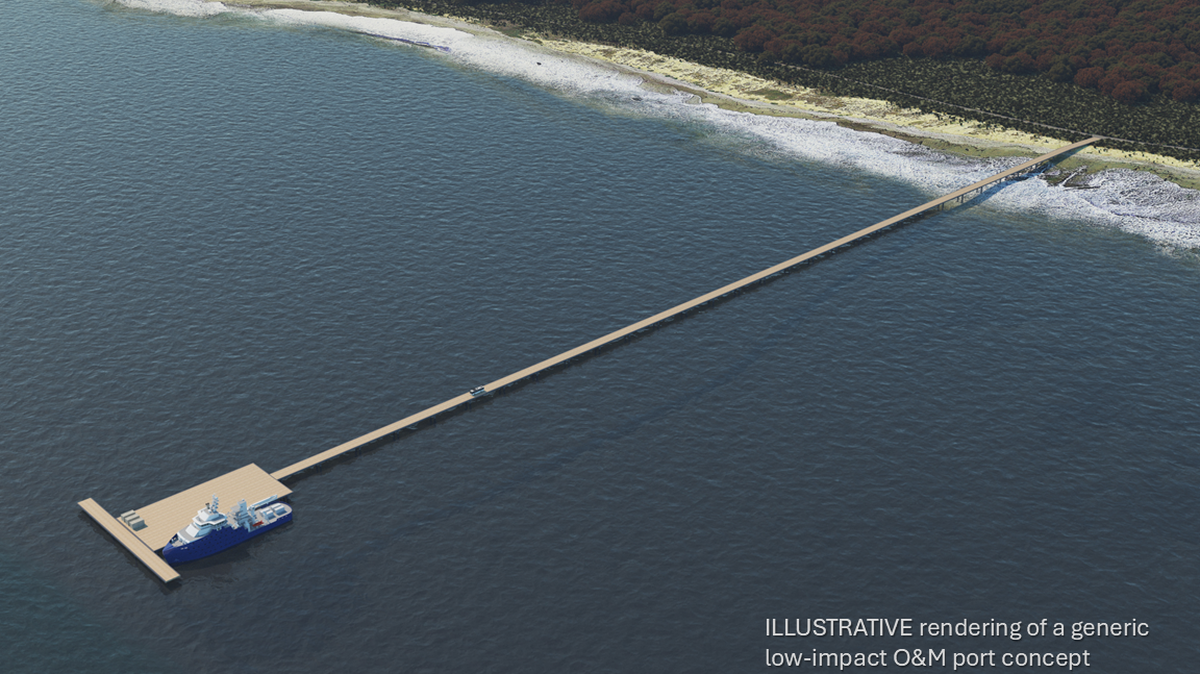
The Port San Luis Harbor District’s recent decision to collaborate with Clean Energy Terminals on an operations and maintenance port feasibility study is welcome news. Unlike most types of commercial ports, operations and maintenance ports have a modest footprint and less vessel traffic than a yacht club, and they will not impose significant new coastal access or vessel navigational limitations in San Luis Bay.
If feasible, an operations and maintenance port has the potential to ensure our community benefits from the wind projects off our coast for decades to come.
Unlike the massive staging and integration ports being built in Humboldt Bay and Long Beach, which require hundreds of waterfront acres, an operations and maintenance port typically requires no more than a few 300-foot-long deep-water berths and three to five acres of onshore warehouse and office space, which can be located inland. This type of port is not designed to store, assemble and/or manufacture over-sized components like blades, towers or nacelles.
Instead, operations and maintenance ports act as terminals to shuttle people, their tools and provisions back and forth to wind farms on service vessels which typically spend 13 of every 14 days at sea. To be clear, the project under study by the Harbor District will look nothing like the image of a 80-plus-acre staging and integration port that has been recently circulated.
Offshore wind also represents a once-in-a-generation economic opportunity for our coastal community. The industry is expected to create more than 16,000 jobs statewide by 2045. So while it is crucial that we protect San Luis Bay for recreational ocean users and ensure that our local fishing industry is able to thrive, we also need to ask ourselves how we get our share of offshore wind jobs and economic benefits while preserving SLO County’s unique character, livability and ecological richness.
Despite their small footprint, operations and maintenance ports have an out-sized economic impact. Routine maintenance for an offshore wind farm must be carried out on a recurring schedule for at least 20-30 years. This means stable, multi-generational employment opportunities. Beyond direct jobs, an operations and maintenance port would create indirect jobs and revenue opportunities for regional businesses, and support for educational, workforce development and research activities for our local institutions.
Climate change is by far the biggest threat facing marine, coastal and onshore wildlife. It is also a direct threat to our region’s coastal way of life. The way to enable our planet to start healing itself from the negative impacts of climate change is by reducing our overall greenhouse gas emissions.
The push for U.S. offshore wind is based on the substantial amount of clean power that these projects can generate. A project currently being installed off the coast of Virginia will power 660,000 homes — enough clean energy to power every household in San Luis Obispo County and Santa Barbara County two and a half times over. By 2045, California offshore wind projects will power 25 million homes: a game-changing amount of greenhouse gas emissions reductions. Put simply, offshore wind is a critical part of California’s plan to reduce emissions by 85% by 2045.
The climate benefits offered by offshore wind are compelling, and the opportunities offered by a local operations and maintenance port are clear. We should support the execution of the feasibility study to assess this project’s potential for our community.
This study is a starting point for Avila Beach residents — and all regional stakeholders — to meaningfully engage on how we can start saving both our region’s wildlife and coastal way of life.
This story was originally published August 28, 2024 at 5:00 AM.