
When it comes to housing policies, SLO County’s stuck in the Cold War era | Opinion
Many of us begin the New Year with depressing reviews of the resolutions we didn’t keep last time — money we wasted on a new set of dumbbells or a series of self-help books that gathered dust while we binged bad TV.
In a similar vein, I often wonder what our local leaders think of the goals they didn’t meet in the last election cycle.
Admirable goals are always on the other side of a hill made of our own decisions — whether it’s a New Year’s resolution or a campaign promise.
The money we’ve spent on workout DVDs doesn’t translate to washboard abs until we actually do the moves — consistently, for months, even when it’s uncomfortable.
Our vision for our community doesn’t become a reality without specifying the goals and spending time and money according to those values. Yet, that trade-off — exchanging bad habits for better health, or delayed gratification for a better future — is the only way to truly achieve those goals.
Any successful endeavor means finding the trade-offs between who we want to be and what it will cost to get there before we set ambitious targets, or at least finding innovative ways around those costs. The biggest pitfall of our modern era is believing we can innovate ourselves into a world without trade-offs.
We can be healthy without exercising or watching our portions.
We can save money without spending differently.
We can solve one problem without causing pain points somewhere else.
Housing and homelessness
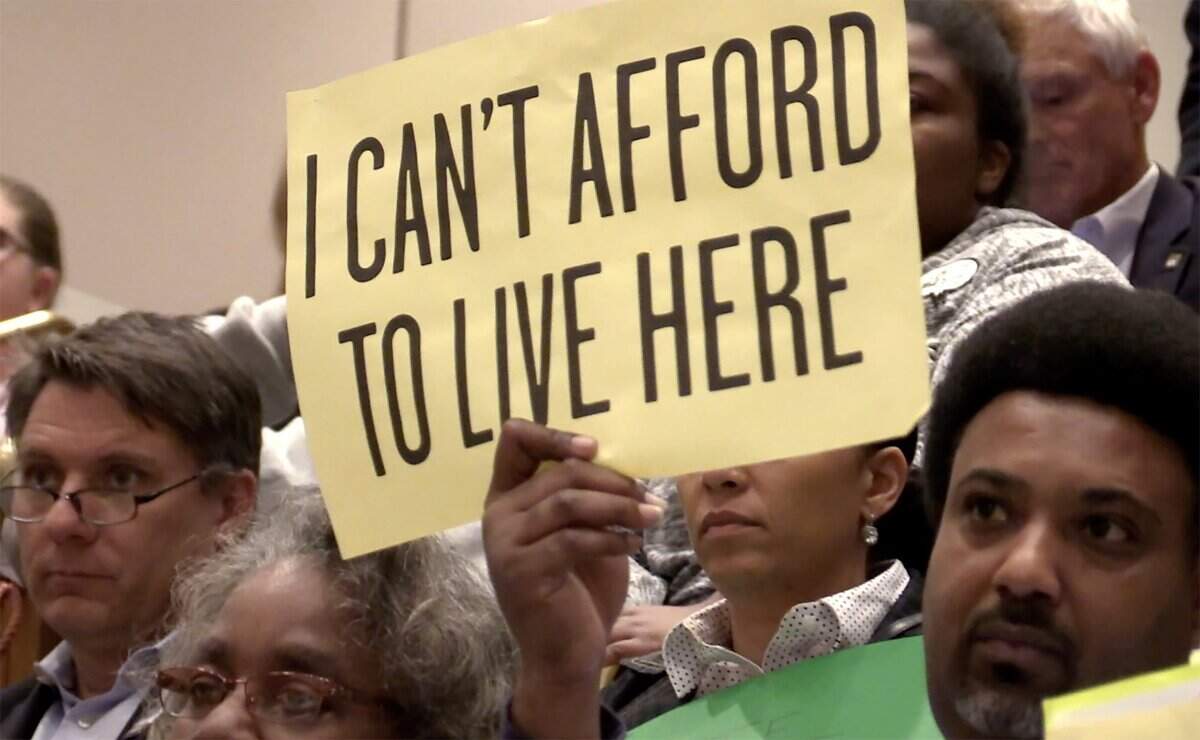
For me, the issue that illustrates this tension on a grand scale is housing and homelessness. Some in our community view it much the same way as their New Year’s resolution: a problem they want to solve without actually changing anything.
It’s hard to fathom the vast discrepancy between our region’s steady, if somewhat erratic, march toward the future and our simultaneous fervor to keep housing and transportation firmly in the Cold War era. I think of it as a textbook example of Peter Pan syndrome.
Paso Robles is poised to lease itself as a Space X parking lot, yet City Council can’t fathom the idea of duplexes over 16 feet high without their permission.
SLO city is focused on its ambitious carbon neutrality plan but still forces affordable infill housing projects to go through lengthy public reviews, as tens of thousands of workers drive into town each morning.
Morro Bay sits on the cutting edge of a wind energy revolution, yet it took almost seven years to decide that the downtown corridor should have a few blocks where buildings are allowed to be 37 feet tall.
All the while, elected officials trip over each other to claim they’re doing everything they can to address the cost of living, as rents still climb higher each year. It’s not that we don’t know the steps to get us the outcome we want; change is, simply, hard.
Curbing our addictions
Decades of hyper-localism must be shed in favor of regional planning, to whittle down our commutes and minimize the impact of high gas prices. The craving for lengthy, expensive public processes must be swapped with simplified, objective ones to get homes built as efficiently as possible.
We must wean ourselves from our addictions to “free” parking, big lawns, and single-family houses — ill-fated oddities borne in a mid-century mirage of endless cheap land and endless cheap gas. When applied consistently over time, this will lead to a healthy supply of abundant and affordable housing across the income spectrum — the only thing that will actually lower rents and reduce homelessness — not to mention the bonus of more than a few good-paying jobs.
The road to that outcome is not easy. In the spirit of New Year’s resolutions, let’s find a few ways to “cheat.”
To reduce demand, we can simply move Cal Poly to Bakersfield; dump nuclear waste into Nacimiento; or maybe convert Mission Plaza into a mountain lion refuge.
All of these strategies would make it much less desirable to live here, and drastically shrink the demand for “The SLO Life.” However, with shrinking demand comes the trade-off of plummeting home values, which homeowners and landlords don’t really want.
The other shortcut is to appoint a Citizen’s Population Committee with the exclusive right to decide who can live, work, reproduce and buy a home within the county borders. They would get to dictate if, when and where businesses can open, so that demand isn’t too concentrated without adequate housing supply. This would allow us to keep our high home values without the downsides of homelessness or traffic. Of course, it would mean the trade-off of an incredibly invasive government presence over the activities of private citizens. Do these shortcuts sound easier or harder than building apartments downtown?
I may sound facetious, but I assure you that real live neighbors have suggested some of these “solutions” to our housing problems in all sincerity, to my face. A few of them are holding elected office.
Solving our housing problem — like keeping New Year’s resolutions — doesn’t take innovation as much as it takes persistence and self-reflection.
If we start off looking for shortcuts, maybe we don’t want to succeed as much as we want to feel like we’re trying. In which case we should cut our losses, stop making that same resolution every election cycle, and admit that we don’t want to solve it at all. Or we can grow up, and do the hard work it requires.
Krista Jeffries is a lead organizer for SLO County YIMBY and a member of The Tribune’s Editorial Advisory Board. Learn how to fight for an affordable, sustainable community at slocoyimby.org