
Retired fire chief: We must require updated protection if Diablo Canyon stays open
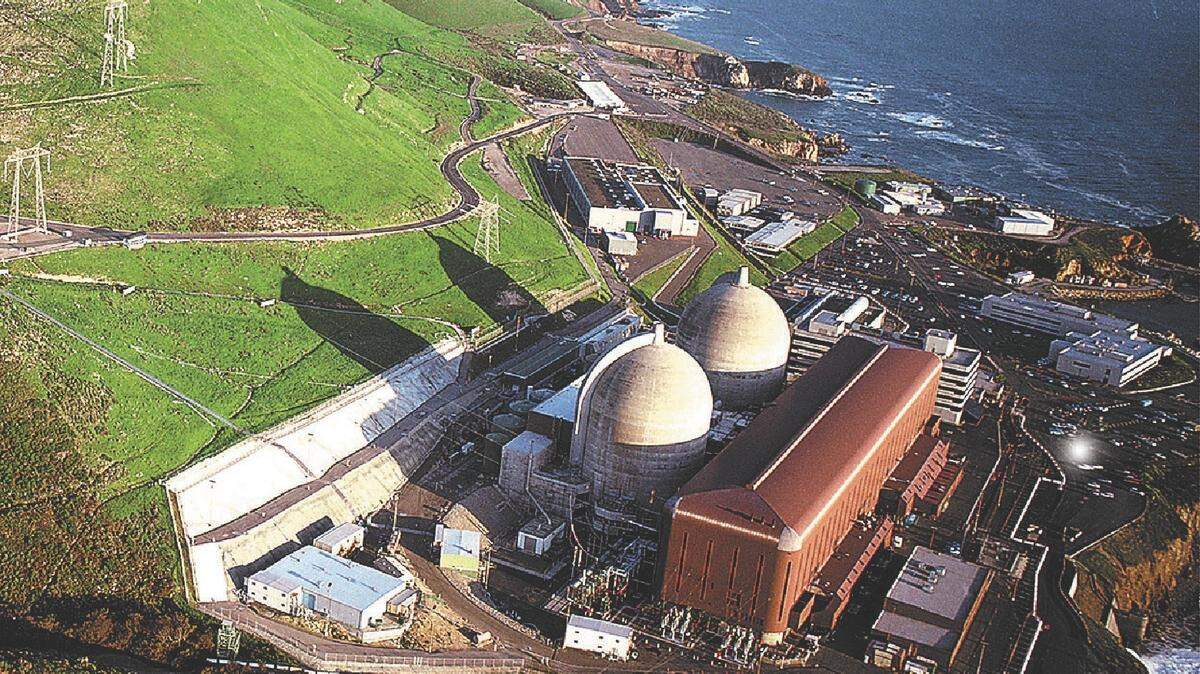
It seems that Diablo Canyon Nuclear Power Plant is now on a trajectory to keep its two reactors operating beyond the current licensing period of 2024 and 2025.
There is federal, state and local support for the plant remaining open until California has a larger supply of zero-carbon producing power generation.
If the plant is to remain open, identifying and updating the emergency protection systems and processes for this aging plant must occur to better protect our communities in the rare chance that a radiological release were to occur.
When the plant opened in the early 1980s, emergency planning was required. Diablo Canyon, the county and the cities were, and still are, required to participate in regular Federal Emergency Management Agency (FEMA) and Nuclear Regulatory Commission (NRC) radiological release training. Fire departments, public health, law enforcement and many other government agencies all have lead roles in protecting the community in the extraordinary event of a release. Even schools and school bus drivers are required to drill.
Following 9/11 in 2001, updated security was implemented at Diablo and a new wave of requirements was put in place. Around 2006, when the plant required local permitting to store nuclear waste onsite, the county required many practical safety requirements: training, improved secondary access to the plant, replacement of the onsite fire engine fleet, upgraded radiological monitoring devices and more.
Following the 2011 Fukushima nuclear disaster, the NRC and Diablo Canyon implemented many important technological, operational and procedural changes based on lessons learned from the Japanese catastrophe.
A decade has passed since Fukushima. It is time to once again look at emergency prevention/mitigation, preparedness, response and recovery in the event of a radiological emergency at the plant. It is time to provide and require the most current technologies, training and procedures for both onsite and offsite emergency managers and responders.
A team that includes local agencies should be formed to identify what needs to be done to ensure readiness and the safety of the community. The list could include the following requirements:
- Update the county’s emergency alerting system to match current technology used in other counties.
- Offer regular training for fire department personnel on providing emergency cooling water from storage reservoirs and the ocean should a Fukushima-like loss of offsite power occur.
- Replace the once-again aging fleet of fire engines at the plant.
- Develop a wildfire protection plan for land around the plant that includes aggressive vegetation management, particularly under power lines that provide essential offsite power.
- Require routine training for all local fire departments and law enforcement agencies at the plant on a variety of incident scenarios.
- Increase public outreach, including using social media, on what the public may be required to do in the event of a radiological release.
- Conduct emergency operations center training and exercises not just on the scenario of what to do during the initial emergency phase of a radiological release, but also on what to do over the many weeks, months and years to help the community recover from this type of catastrophe.
- Ensure the County Office of Emergency Services, County Fire, County Sheriff, Public Health, and school districts have adequate staffing to provide focused emergency planning for a radiological incident.
- Maintain the current staffing levels of the onsite PG&E fire department and security staff.
- Provide the highest level of personal radiation dosimetry for both onsite and offsite emergency responders.
- Evaluate and update the current community decontamination and evacuation procedures to ensure they are realistic and adequate.
No doubt there are other and more detailed requirements that should be mandated if the Diablo Canyon Power Plant is to remain open. We need to focus locally on what our community needs to ensure its protection if the state and federal government are to extend the plant’s license.
Robert Lewin is a former CAL FIRE/San Luis Obispo County fire chief, former director of emergency management for Santa Barbara County and current principal at Resolute Associates.
This story was originally published August 23, 2022 at 11:20 AM.