In this time of COVID, should homeless people be rousted out of sensitive habitats?
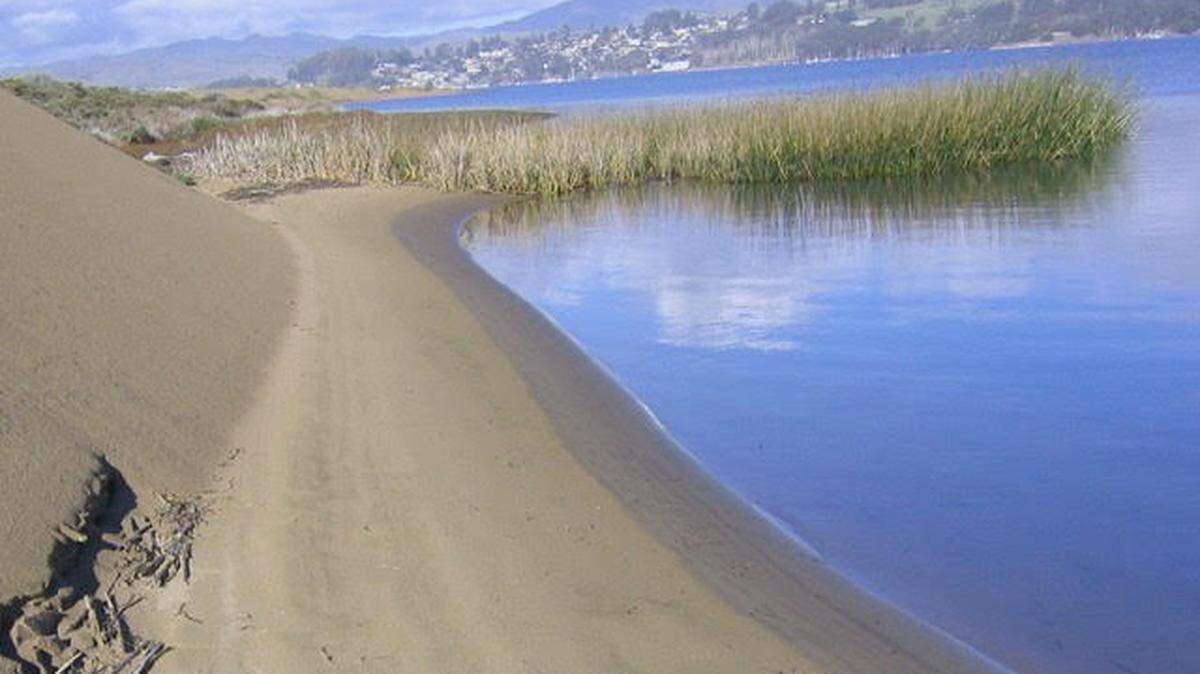
Probably the wildest area on California’s Central Coast is the Morro Bay Sandspit. Making a barrier between bay and ocean, the sandspit is roughly six miles long and a quarter-mile wide. It’s within the bounds of Morro Bay State Park, but has no road access. You get there by kayak or by walking north along the beach from the abutting Montana de Oro State Park.
The habitat of the sandspit consists of tall dunes, with contrails of sand whipping off in the wind, flower-decked chaparral and small hidden canyons. I’ve seen golden eagles and deer and the skittering tracks of small mammals. Sandpipers and egrets forage jerkily in the mud of the bay shore, while on the ocean beach snowy plovers camouflage their nests in plain view amid the wrack.
All in all the sandpsit is one of my very favorite places, a retreat in the time of COVID. But it seems everyone has the same idea. By my estimate, Morro Bay has seen a doubling of kayakers and stand-up paddlers over the past year or two.
More people than ever come to the sandspit. Environments all over the state are feeling the effects of what might be called COVID restlessness. Our coastline, parks, woods, deserts and other open spaces have been under pressure, not just from hikers and boaters needing to get out of the house but also from people who have no houses at all.
So I suppose it was inevitable.
Last summer, a homeless guy took up residence on the sandspit. I’d noticed a weather-beaten kayak chained to a tree, and I followed an illegal trail in the brush until I spotted his tent. On my next visit I met the man by accident. He paddled up to the bay beach just as I was putting a bag of his trash into my kayak. I stared at him. His daypack was full of supplies. Bearded and belligerent, the man asked if I had something to say to him. Twice as old as he, I did not. I shoved off quickly.
It’s a dilemma. On the one hand, homeless camps in urban creeks and vacant lots are unavoidable these days, even in relatively rural San Luis Obispo County. They are facts of life seen by all and made worse by the pandemic. I don’t like them, but I look the other way. On the other hand, here was a single person who had moved illicitly into a sensitive but remote environment, where the damage he was causing was nearly invisible.
As Bishop George Berkeley might have said, If a homeless person hurts the sandspit and no one is around to hear or see it, does the damage really occur? Or if so, does it matter?
It did to me. I reported the man to the rangers for the California Parks and Recreation Department. Expecting the authorities to act quickly, I was astonished when they didn’t. Occupied with their regular patrols, the rangers said they hadn’t the manpower. They didn’t have a boat to cross the bay, so they’d need to make the long drive down the beach in an ATV. But first they would have to assemble a team in case of trouble.
I kept complaining. At last State Parks organized an expedition, but though I provided the rangers with a map and directions, they weren’t able to find the man’s encampment. Weeks later, using a drone, they located his tent, but he was not at home. When they left a notice warning him to leave, the guy merely shifted his tent and cache of supplies. When they encountered him in person, he stood his ground, betting he would not be charged, and it’s a good bet. The district attorneys in California have not cracked down on unhoused people. It takes a series of steps— “protocols,” I was told — before rangers are even permitted to seize someone’s tent or derelict property.
So summer became fall, and then December arrived. My antagonist was still in residence on the spit, commuting across the bay on an irregular schedule. The rangers identified the man. According to the sector superintendent in our State Parks district, the fellow is resourceful, has a criminal record, and styles himself as an anarchist.
“Yes, he’s hurting the resource,” conceded the official, “but he’s not hurting people.”
I told myself the situation was just another cost of COVID — a cost our society was willing to tolerate because it had higher priorities and more grievous needs. The homeless man on the spit symbolizes something, but I’m not sure what. The man wants to be free, to be away from people, to be left alone. I like to be alone in nature too, and am able to pay for the privilege.
The story has a good ending. The day after my most recent complaint, when for the first time I waved my pen as a journalist, the rangers trekked out to the sandspit again.
State Parks tells me that the guy is gone, and that he has cleaned up his camp as directed. I’ll go out to check, and I hope not to see his kayak chained to the tree.
In a year or so the chaparral will overtake his trail. The sea wind that rakes the dunes will heal the rest. What will heal the rest of us?
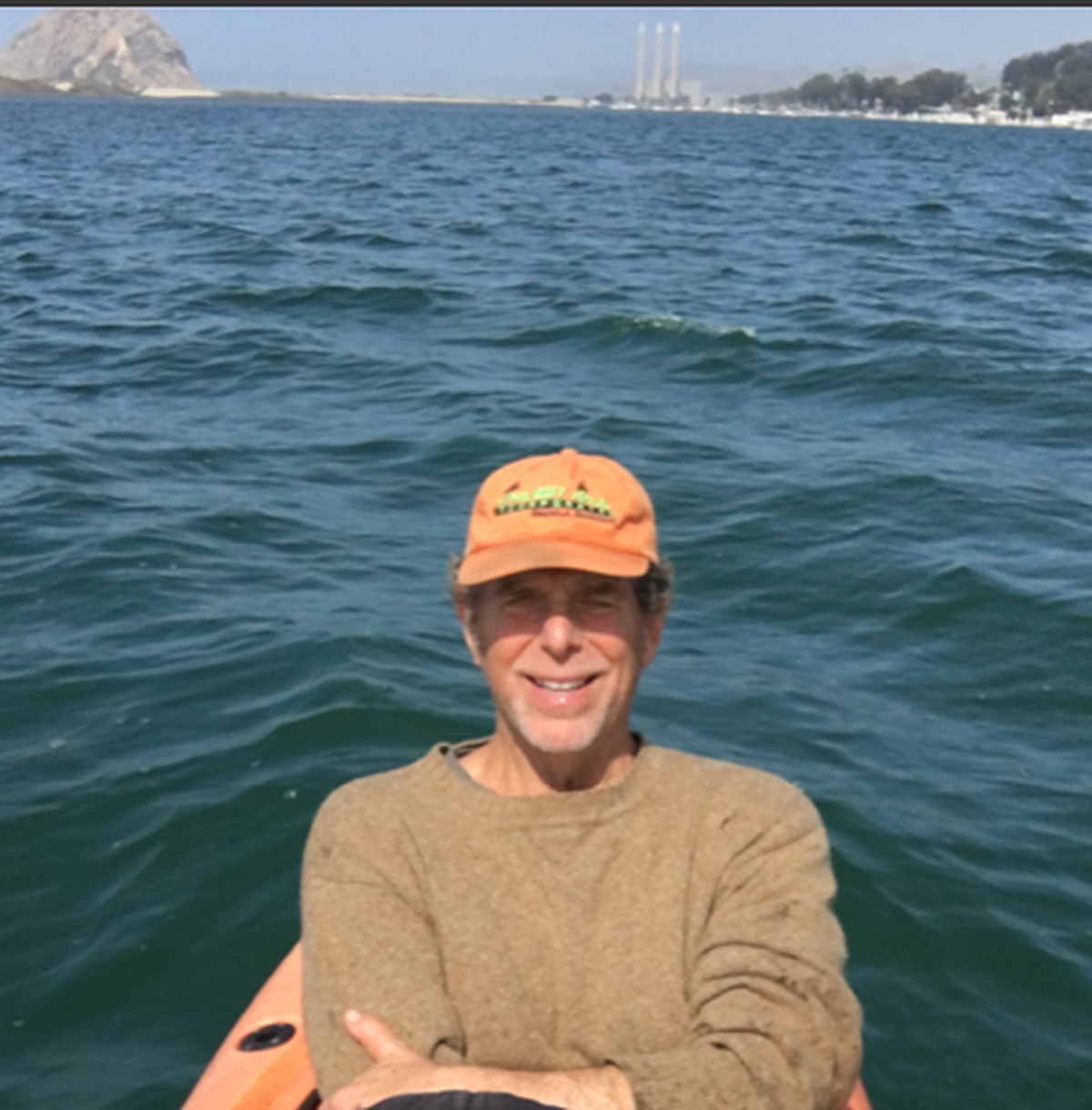
Jeff Wheelwright is a writer and a resident of Morro Bay since 1992.