
SLO History Center reexamines historic case of racial injustice; here’s how to learn more
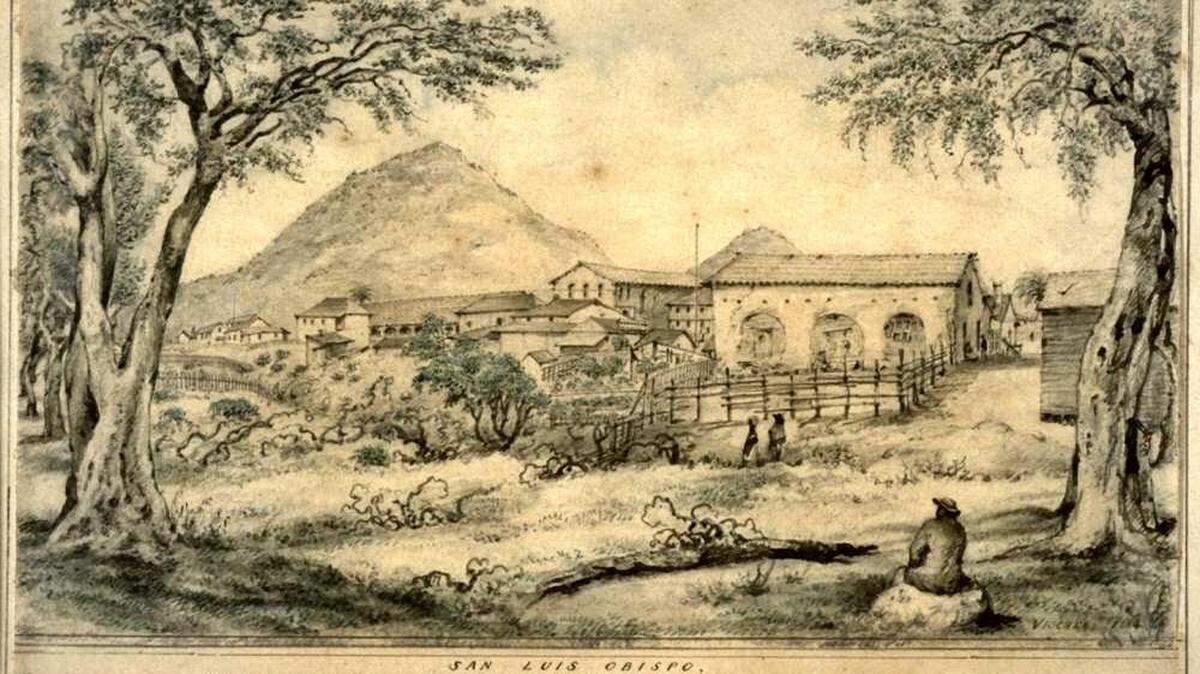
The History Center in downtown San Luis Obispo is about to reveal a new interpretation of a long-ago case of racial injustice and denial of due process.
In 1858, a violent mob apprehended seven persons of color, charged them with heinous crimes, and without a trial, vigilantes hanged each of them near the Mission.
Beginning this week, you can stroll through Mission Plaza and find temporary signs identifying five sites associated with the 1858 Committee of Vigilance and the spate of violence that led to these grisly executions.
Learn the story of the notorious “Powers Linares” gang, but go deeper, and consider the possibility that some of these hanging victims were not guilty.
Start at the first sign in front of the History Center at the corner of Broad and Monterey Streets, where you can pick up a free copy of our Self-Guided Walking Tour of Mission Plaza in 1858. Bring a cell phone and use the codes on the signs to learn more about this important history.
(We wish our trained volunteers could actually guide you, but let’s all get vaccinated first so we can offer that opportunity and reopen our County Museum.)
On Friday, March 5, at 5:30 p.m., join our History Center’s virtual Carnegie Lecture featuring local historian Pete Kelley talking about his new book, “The Quick and the Dead: Revisiting Resistance, Banditry, and Vigilance on the Central Coast,” which has inspired our self-guided walking tour.
Please go to our website, www.historycenterslo.org, to register for Pete’s lecture, and receive the link to Zoom.
We have expanded capacity for this Carnegie Lecture to meet anticipated demand. While there, you can order a copy of Pete’s book, as well as another book on the same topic by local history teacher Jim Gregory, “San Luis Obispo County Outlaws.” If you are 21 or older, you can also order a gift card to purchase a bottle of “El Pistolero” wine from Chateau Margene winery, whose winemaker Michael Mooney is a descendant of Pio Linares himself.
Who was Pio Linares, “El Pistolero”?
Find out! Sneak preview: His family had owned the Los Osos Valley and much of the Irish Hills and Pecho Coast before the arrival of the Americans, who carried Manifest Destiny in their heads and a grudge in their hearts against the native-born Californios like Linares. Although Pio Linares did not end up in a noose at Mission Plaza, there is an even more dramatic story of how the Vigilantes got to him. Check it out!
Why does the History Center want to remind us about this sordid tale of lynchings, crime, and “frontier justice” that occurred so long ago? We believe that an impartial understanding of the past provides the community with an identity and the power to control its future. The History Center plays a vital role in preserving, understanding, and appreciating our shared history.
Too often, we take for granted the institutions of criminal justice that we have built in the United States. For the most part, those institutions keep us all safe and secure while also respecting our rights and liberties guaranteed in our Constitution — but not always. Those due process rights were certainly forgotten in the hysteria of the vigilante uprising right here in the heart of our community in 1858. We must not forget them now, especially as we engage in our ongoing debate about structural racism and social inequality in San Luis Obispo County.
You can help achieve the mission of the History Center of San Luis Obispo County by becoming a member, or by renewing your membership.
John Ashbaugh is president of the History Center of San Luis Obispo County.