
What does Joe Biden’s religious faith mean for the nation — and for American Catholicism?
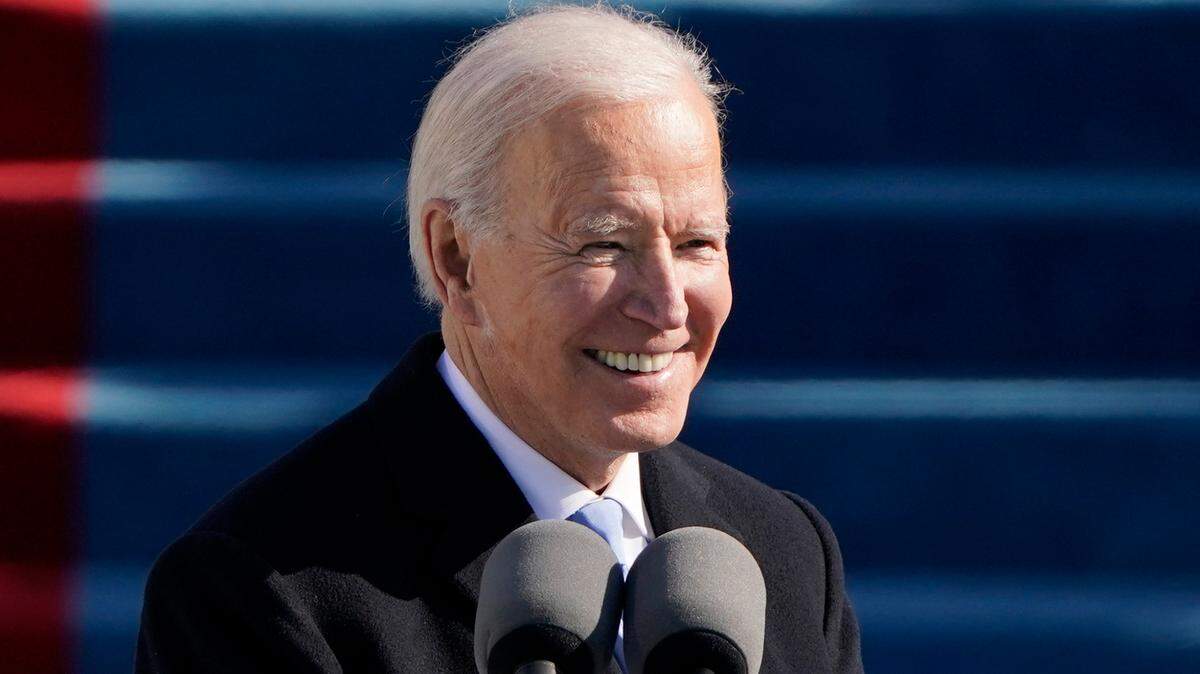
Last month, Joe Biden became only the second Catholic president of the United States, more than 50 years after John F. Kennedy overcame centuries of anti-Catholic discrimination to ascend to the presidency.
It is telling that little was made of Biden’s faith, in part because there were so many more important “firsts” that day with the election of Kamala Harris but also because political party has largely supplanted religious identity as the primary indicator of character for many Americans. Biden/Harris are Democrats first and foremost; their personal faith has receded in importance, even for those left who care.
The response to Biden’s Catholic Christian faith also reveals important divisions within American Catholicism. Shortly after the inauguration, an open letter penned by Los Angeles Archbishop Jose Gomez, a leader among the Pope Benedict Conservative wing of American Catholicism, chided Biden for his soft stance on abortion, as well as his embrace of gay marriage and rights for transgender Americans.
Quickly, the Pope Francis liberal wing of American Catholicism responded, highlighting Biden’s compassion for immigrants and the poor, his calls for loving unity, his pledge to seek peaceful diplomacy over war, and even the St. Augustine quote he employed in his inaugural address: “Many centuries ago, St. Augustine, a saint in my church, wrote that a people was a multitude defined by the common objects of their love,” Biden said.
Notice that he proudly attributed the quote to “his” church.
It seems the perception of Biden’s faith during the next four years is an open question that might shape American Catholicism as much as American government.
Despite the general apathy and ambivalence that has so far greeted Biden’s Catholicism, the prospect of a Catholic president highlights for me, a Religious Studies professor at a public university, the subtle anti-Catholic bias that still exists in America.
In reading thousands of spiritual autobiographies over the years, I have noticed that many students make a distinction between “Christian” and “Catholic,” such as a student essay I recently read that shared with me the fact that the writer’s evangelical high school had “mostly Christians, some Catholics (though Catholicism was discussed during the cult lesson alongside Scientology and Heaven’s Gate).”
The two parts of this description are related, for the designation of “Christian versus Catholic” is grounded in a centuries-long campaign by Protestants to delegitimate Catholic Christianity as a “cult” unworthy to bear the insignia of Christ. It represents a deliberate category error, where the label of Christian is reserved only for Protestants, despite Catholics having direct historical ties to the early church. The purpose is to weaponize language to subtly convey to a listener that Catholics are not “real” Christians.
Most Protestants (and some Catholics who repeat this category error) are not aware of the discriminatory history of this distinction and likely harbor naivety rather than malice. However, making a “Christian versus Catholic” distinction is the religious equivalent of suggesting that our society is comprised of Asian Americans, Hispanic Americans, African Americans and humans. Such a litany of America would reveal a shameful underlying racism. The repetition of “Christian versus Catholic” reveals a likewise sad lingering religious discrimination.
Let’s remember that Catholics, Orthodox, Baptists, Lutherans, Pentecostal, and nearly 50,000 other forms of Christianity all look to Christ for their inspiration and guide. They are all Christians. Let’s hope that throughout the next four years, Biden’s faith will inspire us toward a higher and more thoughtful unity alongside his politics.
Stephen Lloyd-Moffett is a professor of Religious Studies at Cal Poly, San Luis Obispo.