
A look at black history in San Luis Obispo: From ‘lily white’ to more accepting
When you’re a Black American in 1987 living and working on the East Coast and your company asks if you’re interested in working a two-year contract in a tiny little town in California called San Luis Obispo, that’s enough to make you stop and think long and hard about what you might be getting yourself into.
The black population at the time was 0.6%. Generally speaking, 0.6% of anything is not really very much. With a population of around 35,000, that means only 200 black people. That was telling me San Luis Obispo was about as lily white as they come.
So how do you make a situation like that work and turn it into a 32-year residency on California’s Central Coast? One word — family. Your first thought is likely family in the traditional blood relative sense. But going beyond that, any group that provides love and support to its members can be considered family.
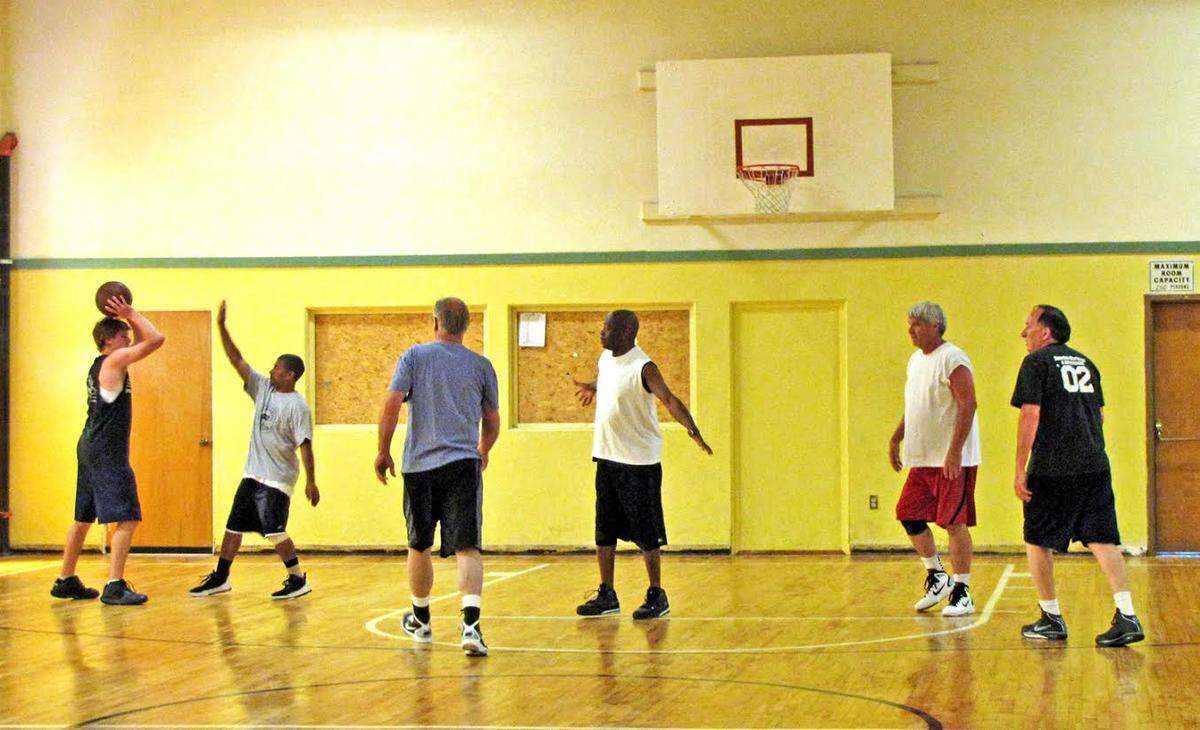
After accepting the position and making the move, the early years were challenging, to say the least. Arriving by myself in early 1988 without any friends or relatives I had to figure out how to deal with the loneliness and isolation that comes with the given situation. My first local family came from a sport I still love to play today: basketball.
Sports can be a great way of bringing people together from various ethnic and cultural backgrounds for the pure joy of doing something they love. Back in those days, Cal Poly allowed anyone to play pick-up games in Mott gym at various times throughout the week. Some of the friendships forged back then remain today.
Even more friendships have formed over the years playing pickup games at a local church. These games are usually followed up with a drink at Firestone. Of course more families.
James Family Reunion
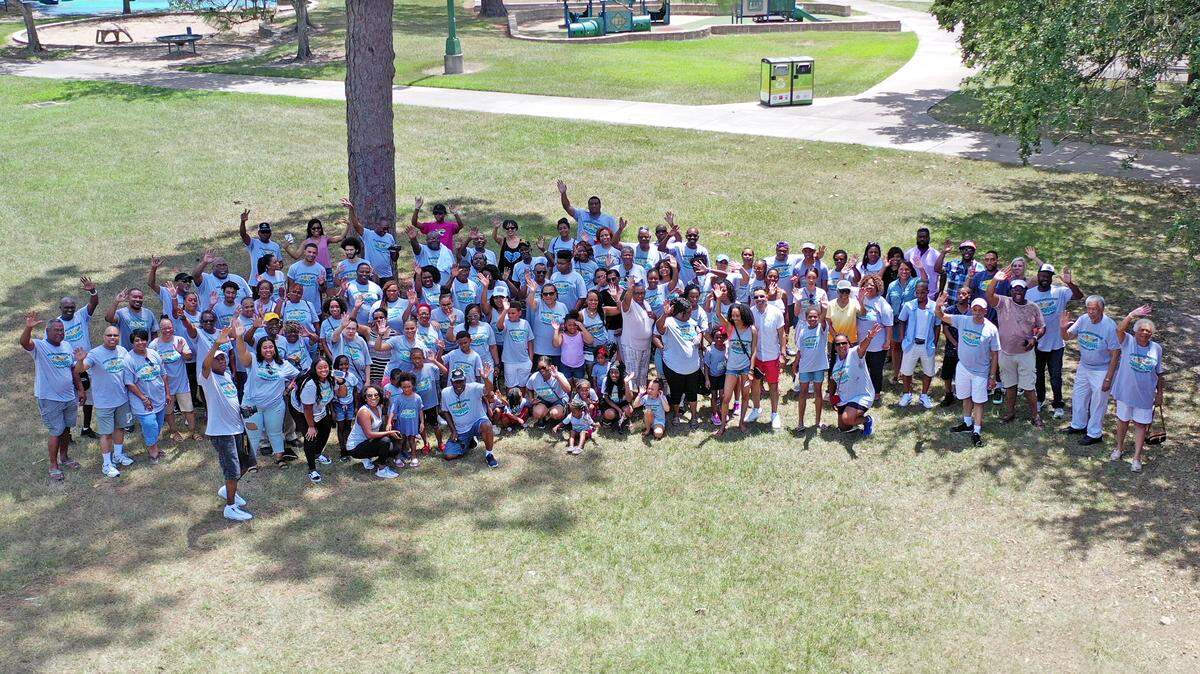
Even though I arrived here alone I brought with me an inherent sense of family. My mother’s family has been meeting regularly since the early 1970s. This gathering is officially called the James Family Reunion (JFR). As it is with many African Americans there are limitations in tracing our ancestry because of the impact of slavery. Census and other federal records were not kept on slaves in the same manner as immigrants.
Through stories passed down from generation to generation and names in a family Bible we know we are descendants of Lazarus and Luvenia James, whose earliest known residence was in Florence, South Carolina, circa 1860. In the 1960s, five James brothers gathered annually at the home of their father Alphonso Hansel James (grandson of Lazarus & Luvenia) in Robertson, Missouri. In 1971 they invited other family members to join and that started a biennial event that at times swells to 200 plus. Every odd year in August the James family gathers. These reunions have taken place in Chicago, Oakland, Atlanta, Milwaukee, North Little Rock, Dallas, Tulsa and Hawaii, to name a few. Next year, in 2021, we will celebrate JFR’s 50th anniversary by returning to its roots in Missouri.
So besides my basketball and JFR families, I had my traditional family, raising three kids on the Central Coast. Other strong relationships have been built around my years of working at Diablo Canyon, hanging out and having breakfast with my good friend Fred Thomas at Louisa’s, association with the House of Prayer and numerous others.
Starved for culture
My time on the Central Coast has not been without its trials and tribulations.
In the early days, I would be so starved for more culture I couldn’t go more than a few weeks before I would have to head down to LA to visit relatives. I would be overjoyed simply being able to drive down Crenshaw Boulevard in South Central LA.
I have had my share of profiling by law enforcement, primarily in the ‘DWB’ experience, AKA driving while black. The subtle prejudice shown by a store clerk refusing to greet me with the courteous “hello” she gave the white customer in front of me. The lady clutching her purse as I walk down the aisle near her.
At times as a black male it seems if I’m not being subjected to the undercurrent of discrimination, I’m dealing with the perception I need to be feared.
But all in all, my experiences have been overwhelmingly positive. I believe the world is filled with good and bad people of all different races and nationalities, with the majority being good. Even in this era of highly political divisiveness, I believe we still have more in common than not.
In many cases, if people would just take the time to sit down and talk about differences so many perceived conflicts might be resolved. And if not resolved, at least come to some degree of understanding.
So from 1988 to 2020 many things have changed in an area with a reputation of being the “happiest place in America.”
It may never be a utopia of diversity, but I see an area more open to and accepting of Blacks and people of color more so than ever before. The draw of the Pacific Ocean, mountain scenery, abundant sunny blue skies does give a sense of living in paradise. But it’s the collective small-town family atmosphere that holds it all together.
Maybe one day I will bring the James family clan to partake in the experience of the Central Coast family and bump that 0.6% mark up to 1.2% — if only for a weekend.
Stan Harris is a local photographer and resident of San Luis Obispo and a fifth generation descendant of Lazarus and Luvenia James. He wrote this for Black History Month.