What’s with SLO’s dark-colored exterior walls? They aren’t good for the planet — or us
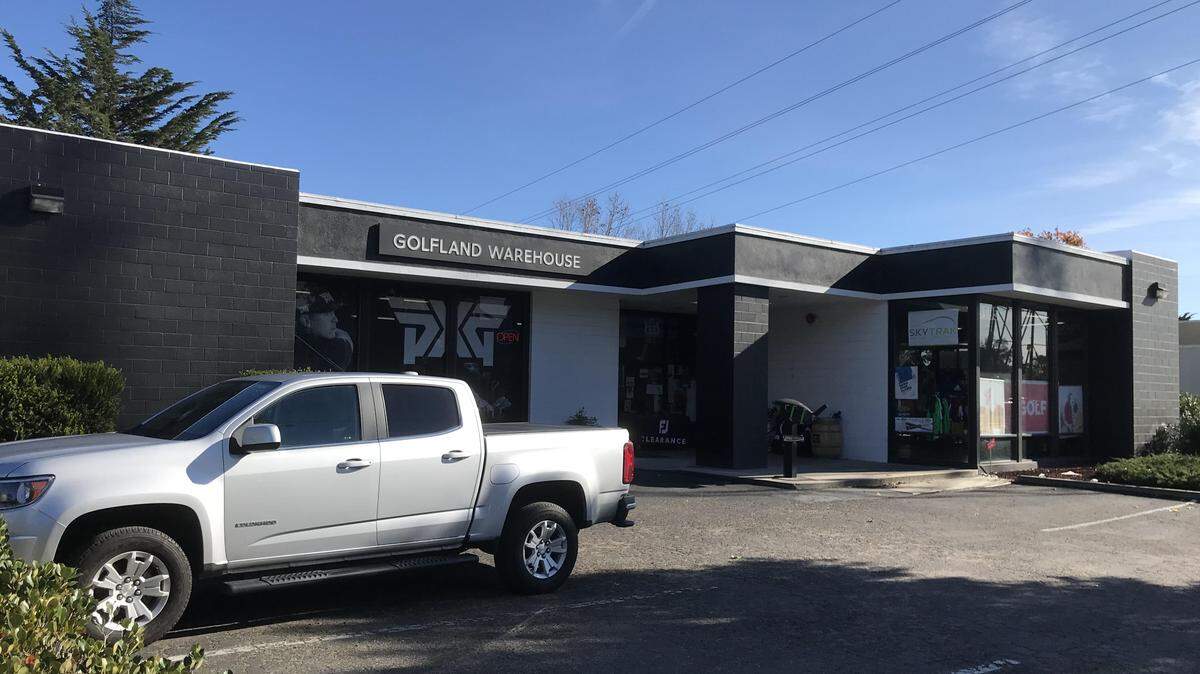
In San Luis Obispo and elsewhere, black buildings are the latest design trend. However, there are many practical drawbacks to painting the exterior of buildings black.
Sunlight can cause fast fading. Dark finishes are unforgiving when it comes to imperfections. And it can be difficult to touch up or paint over black buildings if the owners eventually decide to lighten up the color scheme.
The assumption that color is no more than decoration is absolutely false and counterproductive. Choices made for building exteriors and exterior flatwork are becoming increasingly more critical particularly as they relate to health, safety and welfare.
The application of dark colors causes adverse effects, including:
- Streets with darkly shaded walls and paving contribute to accidents, especially at night. Pavement coated with a light-colored material makes street signs and pedestrians easier to spot.
- Dark walls and paving also are associated with crime — real or perceived. Looking down a dark, canyon-like street may be quite intimidating for most pedestrians, significantly reducing much-desired foot traffic along retail store frontage.
- Dark-colored walls are associated with grief and death. Funereal colors can lead to depression.
- The energy-saving benefits of “cool” walls — defined as exterior surfaces that stay cool in the sun by strongly reflecting sunlight — are well known. Dark walls, blacktop parking lots and asphalt streets increase absorption of heat and result in the creation of urban heat islands. This is a significant problem, as it becomes necessary to use cooling systems to counter the heat. Because of this, in warmer climates walls are traditionally painted white or light colors; in cooler climates, colors can be slightly darker.
- Additional electricity is needed to compensate for darker, less reflective wall surfaces. Also, the higher temperatures of dark pavement can lead to more rapid deterioration of roads, according to a UC Berkeley study.
Benefits of going green
On the other hand, the effect that color hue has on us in nature can be quite positive.
Green, being the primary color in vegetation, has been found to have therapeutic effects on people. Also, green light has recently been demonstrated to relieve the debilitating pain of migraine headaches.
Add to this the additional benefits green vegetation, particularly trees, have in terms of carbon sequestration, aquifer recharge, soil retention, flood control, air purification, wildlife habitat and shade and you have a winning solution.
Counteracting climate change doesn’t have to entail complex solutions or involvement in large organizations. Each of us can identify opportunities for planting and/or preserving of trees and act accordingly — now.
So what else can be done at the local level?
We must also develop a better understanding of color, colored light and light reflectivity as it affects the world around us. Our primary objective should be the enactment of city-wide ordinances encouraging the use of cool walls and cool paving.
In the area of cool paving, Los Angeles is leading the way. No other city has employed reflective cool pavements on such a large scale, though there is a downside: While cool paving counteracts global warming by cooling the air, the reflected light is absorbed by pedestrians. This problem should be addressed by confining cool paving to areas used intermittently by pedestrians, i.e., parking lots and vehicular roads.
With regard to cool walls, the 2022 California Title 24 Codes and Standards Enhancements will be taking cool walls into consideration complementing current solar reflective, cool roof minimum standards and in line with the Cool Roof Rating Council (CRRC).
Soon, LEED Sustainable Sites will provide credits for cool walls. With regard to colored light, a primary objective should be the enactment of city-wide ordinances requiring significant increases in the number of trees along sidewalks and in open areas.
All the positive qualities of green trees can be employed to counter the drawbacks associated with existing blacktop parking lots and non-reflective building surfaces.
In summary, because climate change is accelerating at an alarming rate, cities like San Luis Obispo, must not wait for state-imposed codes and standards to address these issues.
The time is now for San Luis Obispo to take a leadership role in prescribing the following “reach codes” for both building renovation and new development: Enact ordinances requiring that developers install cool roofs (not just low sloping roofs); enact ordinances requiring cool paving; enact ordinances requiring cool walls; and enact ordinances requiring significant increases in the number of trees planted along sidewalks, within parking lots and in other open areas.
David Brodie of San Luis Obispo is a professor emeritus who taught at UC Berkeley and Cal Poly for over 45 years. Allan Cooper, also of San Luis Obispo, is a licensed architect, member of the AIA and a professor emeritus who taught at Cal Poly for over 34 years. Both have practiced in the fields of urban planning and architecture, and are founding members of Save Our Downtown.
This story was originally published January 16, 2020 at 11:32 AM.