Are SLO’s ‘condemned’ trees getting a fair shake? This peach man says no | Opinion
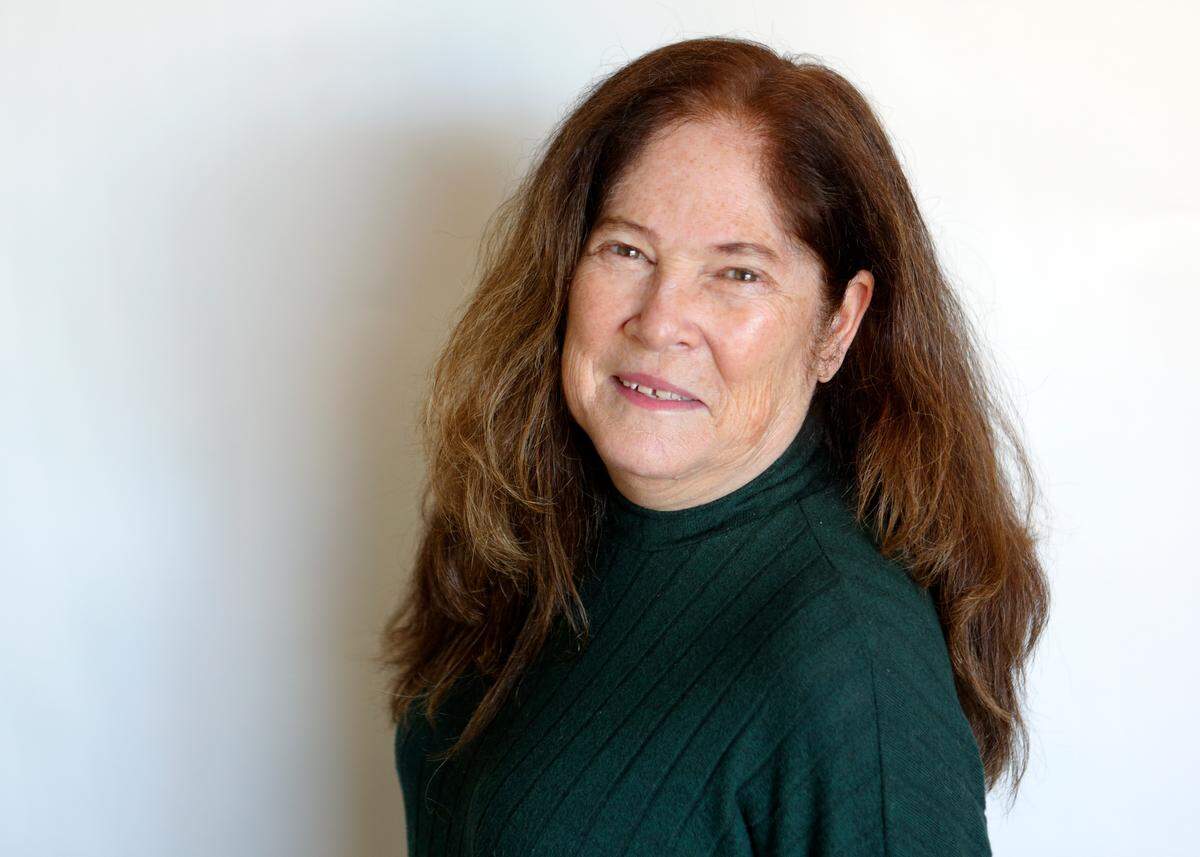
Fitzgerald Kelly is blessed with two good Irish names, a quick wit and — most impressive of all — a love and devotion to trees of almost every type. (He is no fan of the crepe myrtle.)
From time to time, his affinity for trees has put him at odds with the city of San Luis Obispo, even though their goals appear to be the same.
Kelly, who spent decades farming peach trees in the Central Valley, believes trees should be preserved, unless they are in an absolutely dire situation. Dead, for instance.
That appears to be in line with the city’s policy, at least on paper. It aims to “protect and preserve all desirable trees, wherever they are located.”
Except, if you delve deeper into the city’s municipal code, you will discover that the city is not quite as unbending as Kelly: “When reviewing requests for tree removal permits, the city shall discourage removing healthy trees that present no threat to people or property.”
Which brings us to Mitchell Park, which is in Kelly’s neighborhood.
In early March, he happened to spot a notice posted at the park, notifying the public that four trees — three carrotwood and a magnificent magnolia — were targeted for removal.
In the case of the magnolia, it’s easy to see why — the tree’s massive roots have damaged the nearby sidewalk — but the problem posed by the three carrotwoods is not so obvious.
Maintenance Superintendent Billy Harvey, who oversees city parks, explained why the carrotwoods have to go: The roots of those trees also are damaging, both to a nearby walkway next to the senior center and to underground sewer laterals.
On that basis, city arborist Walter Gualt approved the tree removal application from the Public Works Department. (Requests from the city go through the same review process as applications from private property owners.)
Kelly, though, wasn’t satisfied with the explanations he got from city staff.
He believes the trees can be saved. After all, sidewalks can be replaced and pipes can be relocated.
Besides, there are far worse examples of tree roots destroying sidewalks in other parts of the city, he says.
Kelly took his concerns to the city arborist and the Tree Committee and, finally, he spoke to the City Council during public comment to alert councilmembers to what’s happening.
But to get a proper hearing for the trees, Kelly would have had to file a formal appeal to the Tree Committee, and that costs money — $300.67, to be exact.
He believes the city is out of line to expect citizens to pay that much. Still, he considered paying the fee, but when he tried to do so on the last day to file, the Planning Department was closed to the public.
Keeping urban forests healthy
Kelly is now in his late 70s, and his tree appreciation dates back to childhood.
When he was a boy, trees were for climbing. Later, when he grew peaches in the Valley, they paid the bills.
Since moving to San Luis Obispo 10 years ago, he’s gotten in the habit of paying attention to every single specimen, constantly weighing whether a tree is at risk of being uprooted and replaced. He keeps a running list of every tree that has suddenly disappeared, like an old friend who is here one day and gone the next.
He is not alone in keeping tabs on trees.
In a recent nextdoor post titled, “Why does slocity hate trees?” longtime resident Richard Schmidt also had harsh words for the city.
“Our city disgraces itself with its chatter about loving trees because they can save the planet, and therefore planting 10,000 new trees in addition to what we already have, while chainsaws and bulldozers destroying our standing trees proclaim the city’s true feelings about trees,” he wrote.
According to city staff, it is sometimes necessary to remove trees to ensure public safety and accessibility — but that can have benefits.
“In such situations, there is also an opportunity to make better species selections, improve tree well infrastructure to reduce potential root damage, and enhance the resiliency of the urban forest,” Gault said via email. “Urban forestry management is a continuous cycle of maintenance, removal and replenishment.”
Kelly is skeptical about the city’s replanting promises; he recalls a palm tree that was taken out three or four years ago and never replaced. (City code requires that trees be replaced “as soon as feasible.”)
Incidentally, according to The Washington Post, San Luis Obispo has a 16.5% “tree cover” — up 1.2% over the past five years. Cambria’s is 40.9%, up 3.3% over five years; Paso Robles-Atascadero, 24%, up 3.2%; and Arroyo Grande-Grover Beach-Pismo is 13.8%, which is down 0.7%.
Is posting tree removal plans enough?
It isn’t just the cutting down of trees that bothers Kelly. He also finds the review process the city follows less than transparent — or “squirrelly,” as he describes it.
Keep in mind, not all tree removal requests go through the Tree Committee; in many cases, the city arborist makes the decision.
The city code does require that a sign be posted, notifying the public of the proposed removal and the right to appeal.
That’s not good enough, Kelly said. Someone has to actually be walking by a location to see the sign. Too often, people are unaware of the plan to cut down the tree and aren’t able to protest until it’s too late.
“You can’t do anything once the chainsaw is warmed up,” he said.
The city arborist points out that the public records portal on the city’s website lists tree removal permit applications.
It does indeed, though it takes some patience to wade through the nearly 200 entries on the list, most of which have already been approved.
Highlighting the pending applications and providing additional information — including the last day to appeal in those cases that have been recently approved — would be more user friendly.
Under the current system, many of the applications provide scant information — just a line or two about why the trees need to go. In a couple of cases, insurance companies are threatening to drop coverage; in another, tree branches fall during rainstorms; and in yet another, trees are leaning into a neighbor’s yard. (Kelly would have a field day with that one.)
Then there’s this: “Trees are diseased with large peeling bark and possible interior decay. If they fail, they will land on driveway, on parked cars or people.”
Sounds serious.
Fitzgerald Kelly might even give that one a pass — as long as they don’t replace the trees with crepe myrtles.
By the way, to get to the root of the matter, Kelly does have several recommendations on how the city could improve its tree removal process. He plans to present them to the City Council at its next meeting.
If you’re a tree person, you might want to stay tuned.
This story was originally published April 22, 2025 at 5:00 AM.