‘A car floated down the road’: How visiting couple rode out flood in SLO County
When Norma and Gary Byrne headed up the coast from Santa Barbara for a brief getaway in Avila Beach, they knew rain was in the forecast.
“We thought it might rain,” Norma said. “A little rain I can live with.”
They wound up in the middle of a deadly storm that pounded San Luis Obispo County on Monday.
One 60-year-old woman died near Avila Beach, close to where the Byrnes were staying, when her vehicle became submerged by the flood.
As of Saturday morning, a 5-year-old boy was still missing after being swept away in floodwaters near San Miguel.
Who knows how many others barely escaped drowning when, like the Byrnes, they were caught on flooded roadways because they were unaware of how treacherous conditions actually were.
‘We knew our car would be underwater’
The Santa Barbara couple spent Sunday night, Jan. 8, in downtown Avila. When they woke up Monday morning, the power was out and nothing was open, so they headed south to a Shell Beach deli to pick up some food.
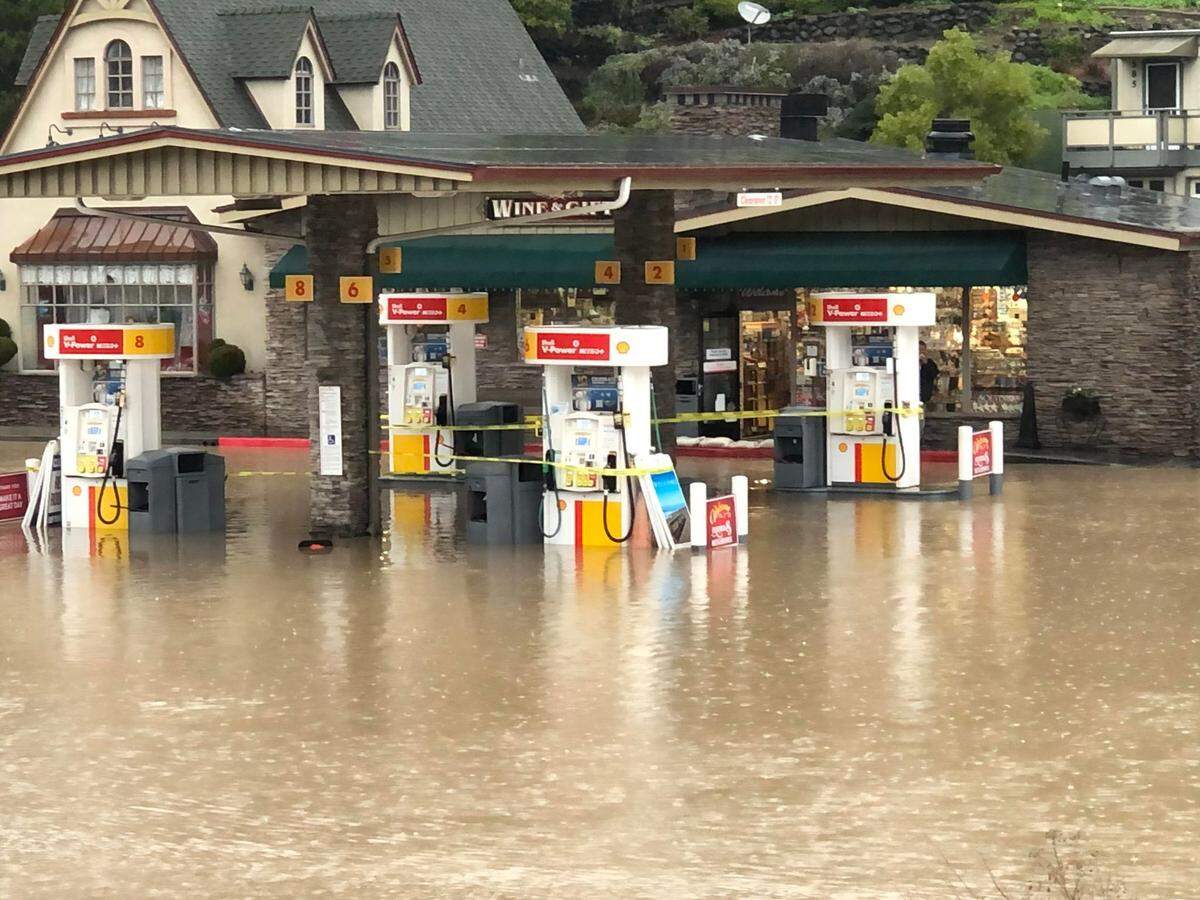
A short time later, they were on their way back to Avila when the floodwaters hit, crashing over the hood of their car.
They managed to pull their Nissan Rogue into Sycamore Mineral Springs Resort, where the elevation provided safety.
“When a truck pulling a trailer was stuck coming toward us, we knew our car would be underwater if we kept going forward, so we turned into the Sycamore,” Norma, 78, wrote in a text. “It happened so fast we weren’t worried. Later, in the restaurant, we had time to think of what might have happened if we hadn’t stopped.”
Worst flooding ever
Dean Hutton, general manager of Sycamore Mineral Springs, was on duty Monday when water came rushing down Avila Beach Drive “like lightning,” as he described it.
He had no idea the flooding would be so severe.
“Absolutely not. This was the worst this property has ever seen,” he said.
With Avila Beach Drive impassable, the resort functioned as a shelter for 42 employees and 57 guests. Some, like the Byrnes, had pulled in after realizing they were in immediate danger.
“If they had continued down Avila Beach Drive,” Hutton said, “I shudder to think what would have happened.”
The electricity was out, but guests were able to huddle in Sycamore’s restaurant and lobby, where power was supplied by a portable generator.
They were offered a free evening meal, deeply discounted rooms and, best of all, a safe place to ride out the storm.
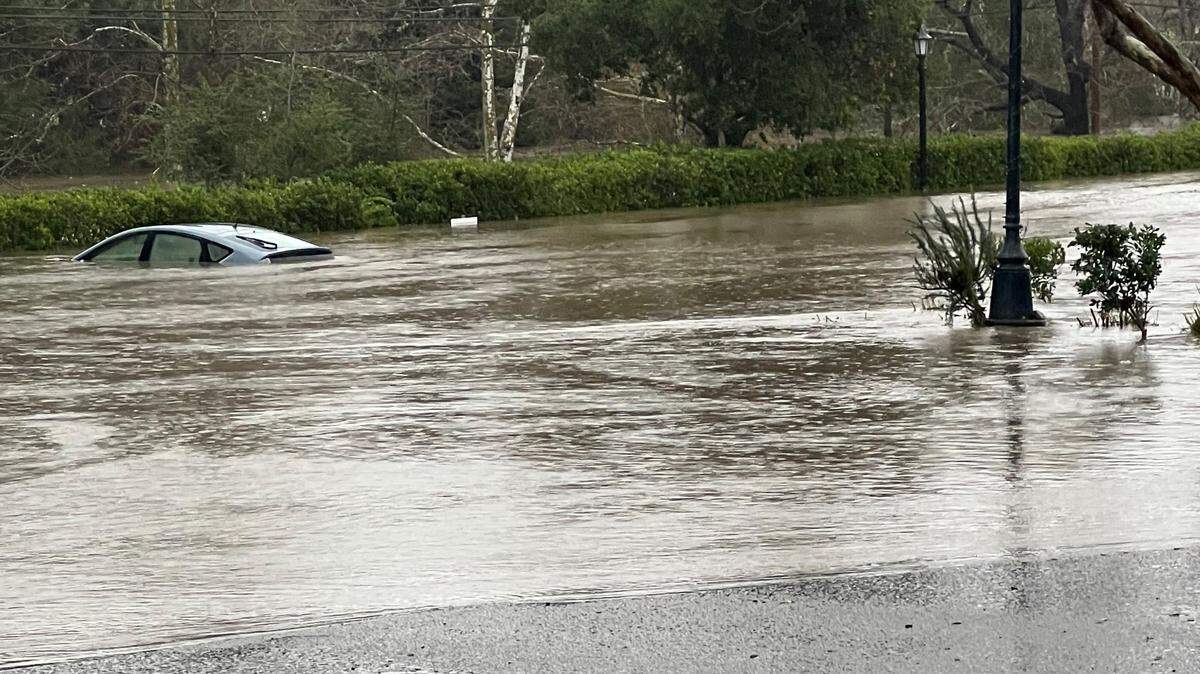
“When we were sitting in the restaurant, a car floated down the road,” Norma said. “It was, like supernatural, it was so weird.”
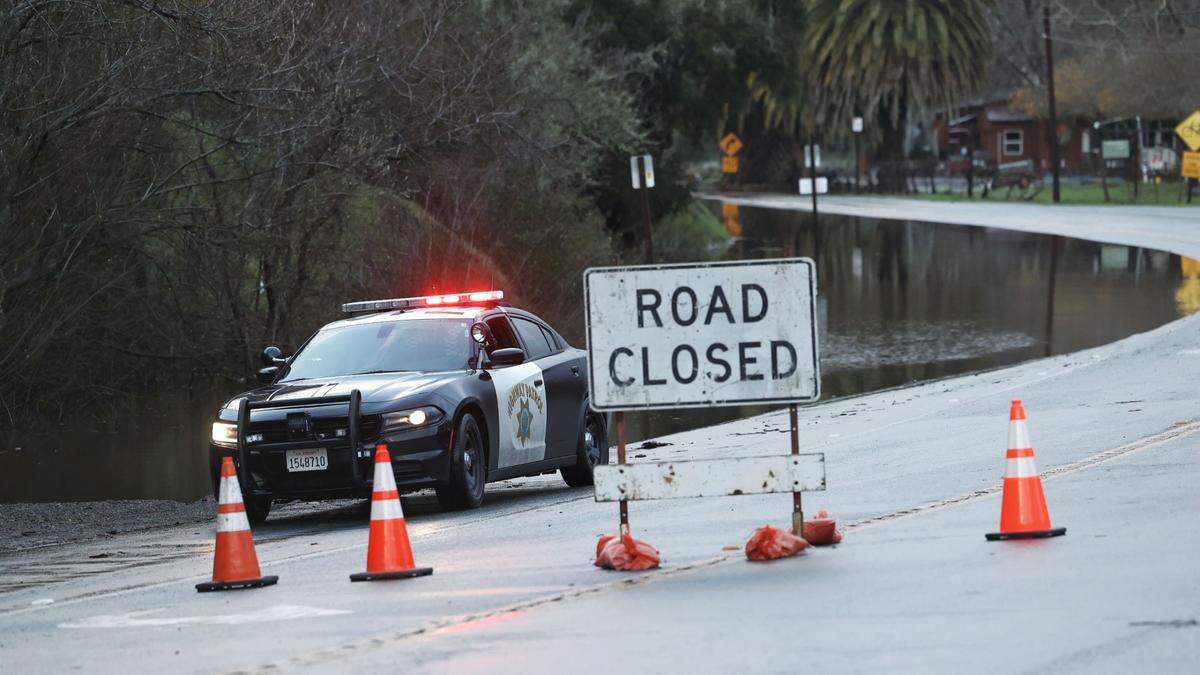
By Tuesday morning, the road was clear and guests were able to return home.
Norma Byrne will be forever grateful.
“I want the world to know that Sycamore rocks,” she said.
Don’t underestimate severe weather
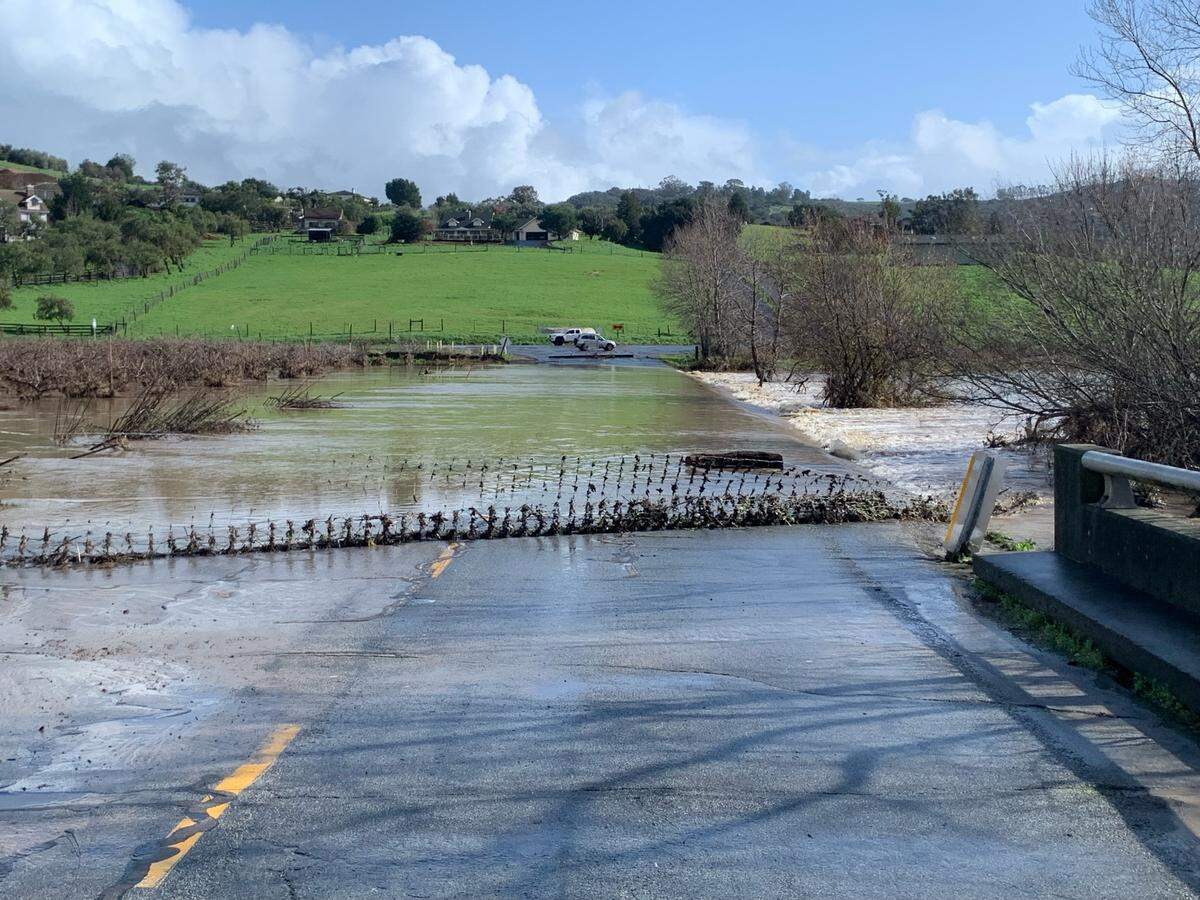
The Byrnes were among the thousands of people stranded on the Central Coast due to the severe flooding, including tourists who had planned their vacations weeks or even months ago; workers unable to get home on account of road closures; locals who tried running errands and keeping appointments as if it were any other day.
It wasn’t.
At the risk of sounding preachy, it’s time for us all to wake up and realize that we can no longer underestimate the danger posed by flooding, even in drought-stricken California.
The type of rain we’ve been experiencing is something almost foreign to many of us. When we hear “rain” we think of drizzle; flooding is something that happens in other parts of the country — we get the earthquakes and the fires.
Climate scientists say otherwise.
“California faces a broadly underappreciated risk of severe floods,” a study in Science Advances says.
“A growing body of research suggests that climate change is likely increasing the risk of extreme precipitation events along the Pacific coast of North America, including California, and of subsequent severe flood events,” it continues.
In other words, this is real, and we’d better adapt.
That includes developing a healthy respect for water — and that starts with education.
We need an intensive public information campaign that goes beyond kids’ coloring books.
(Are you listening, California Department of Water Resources?)
Make some PSAs for Californians who aren’t used to weather.
Popularize that catchy slogan — “Turn Around Don’t Drown®” — that warns drivers not to attempt traveling on roads with even small amounts of moving water. (Six inches of water is enough to hit the bottom of most passenger cars, flooding the exhaust, according to the organization I Drive Safely.)
That message needs to be seared into our brains at an early age — like “stop, drop and roll.”
Pass out freebies — water bottles, maybe? — emblazoned with safety tips.
When severe storms are predicted, bombard us with information so we know to stay off the roads.
We can no longer assume we are somehow exempt from frequent, life-threatening floods.
“Because of climate change, we have to be uber-aware that anything can happen,” Hutton advised. “You can’t rest on what has happened in the past.”
That’s 100% right.
You rock, Dean.