
FEMA shouldn't punish Atascadero for taking its advice
It’s time for the Federal Emergency Management Agency to let the city of Atascadero off the financial hook.
It’s been 21 months since the city appealed FEMA’s demand for the return of $2.65 million in disaster aid — part of the FEMA relief package the city received following the 2003 San Simeon earthquake.
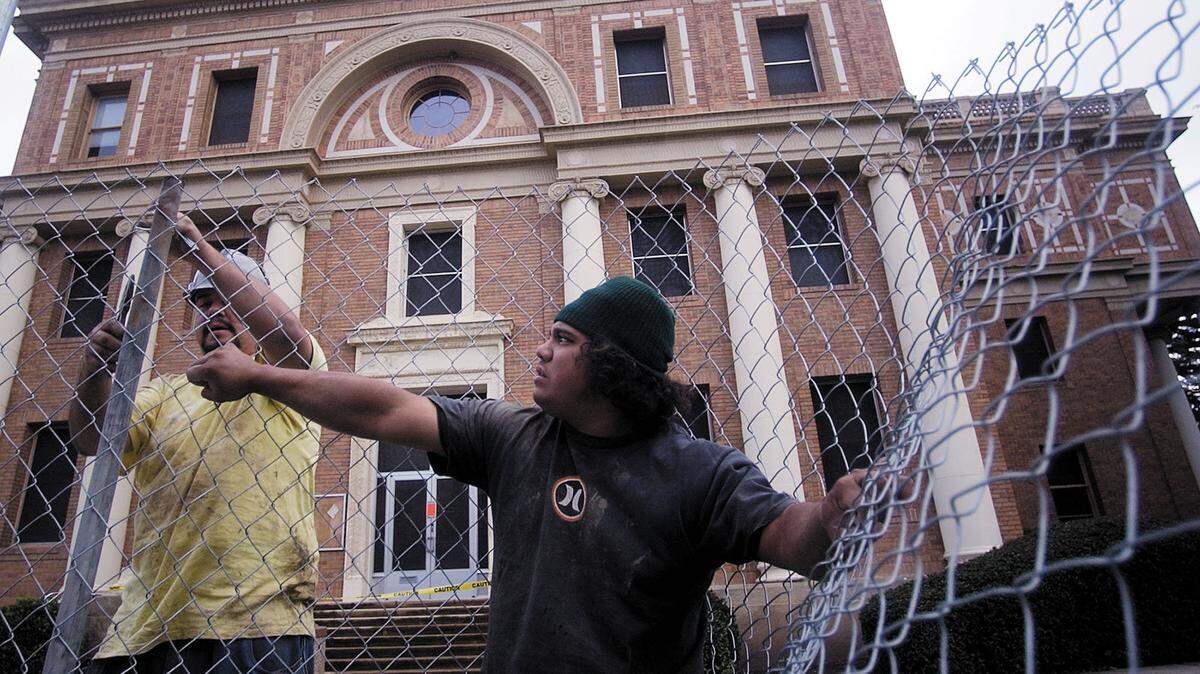
The money in dispute was used to lease the bowling alley that temporarily served as City Hall while the quake-damaged rotunda building was repaired.
FEMA initially approved the expenditure, but as a report by Scripps Howard Foundation Wire described, an audit by the Department of Homeland Security inspector general disagreed with FEMA’s decision. Because the bowling alley was owned by the city’s now-defunct redevelopment agency, the inspector general found the lease arrangement to be improper, since the two agencies were so closely tied.
Our view of the dispute hasn’t changed: We believe the city of Atascadero acted in good faith in getting assurance from FEMA officials before it proceeded with the lease.
To claim Atascadero should have understood the rules better than FEMA itself is asking too much. Yet that’s exactly what one official is saying: “Just because you relied on bad information does not absolve you from responsibility of doing this correctly,” John Kelly, assistant inspector general for emergency management told reporter Sean McMinn.
Of course city officials would turn to FEMA for guidance. After all, FEMA deals with emergencies on a regular basis, while for small cities like Atasacadero, applying for disaster funding is a rare occurrence.
On top of that, the length of time that has elapsed since the appeal was filed is not acceptable. FEMA’s own rules set a 90-day deadline to respond to appeals. It’s been 21 months. That’s further reason to drop the effort to get reimbursement from the city. We are all in favor of protecting taxpayer money, and we strongly support auditing FEMA payouts to guard against fraud and waste.
But this case doesn’t fit that category. The lease agreement between the city and the redevelopment agency was obviously a gray area, open to interpretation, or there never would have been such a disagreement in the first place.
The audit should be used to further clarify FEMA rules — though as far as California redevelopment agencies go, that’s now a moot point — not to punish a small city that made the mistake of following what it thought was sound guidance.
We strongly urge FEMA to put this to rest as quickly as possible; under the circumstances, it would be wrong to severely penalize a small city that can ill afford the loss of $2.65 million.
This story was originally published August 11, 2015 at 4:38 PM with the headline "FEMA shouldn't punish Atascadero for taking its advice."