
Should California allow more oil drilling? Yes — but in moderation | Opinion
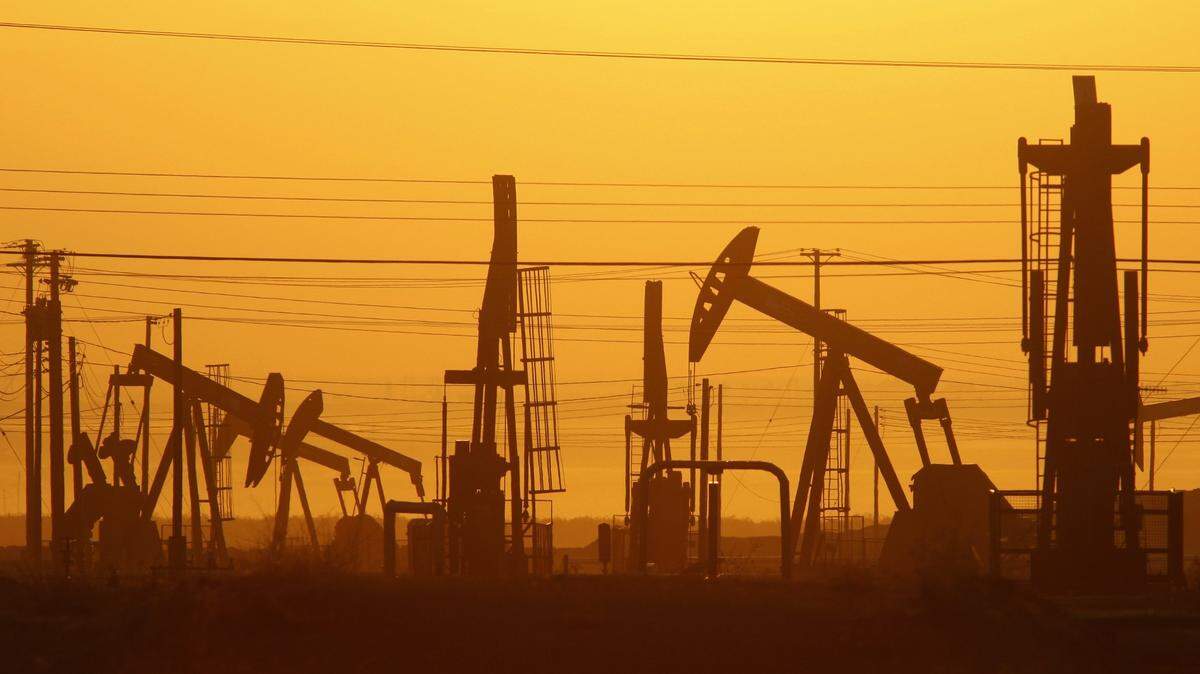
Thanks to electric vehicles, demand for oil has been steadily declining in California. But for now — and for at least another decade or two — cars in our state continue to run primarily on gasoline.
That’s creating a supply-and-demand problem that’s been driven home by current circumstances. Two major refineries — a Phillips 66 facility in Southern California and a Valero plant in Benicia — are scheduled to close in less than a year.
The closures set off alarm bells ringing loudly enough to inspire our eco-friendly governor who normally rants about “Big Oil” to act.
Gavin Newsom introduced a plan in July that would fast-track oil drilling in California — allowing thousands of additional wells in Kern County, which is already producing 75% of the state’s crude oil. The proposal is expected go to the state Legislature in September.
This is coming from a governor who once set a goal of phasing out oil production statewide by 2045.
Now Newsom is being accused of giving up on the “green utopia” and caving to Big Oil in an attempt to better position himself for a run for president.
The governor, however, sees it as a balancing act.
“We are all the beneficiaries of oil and gas. No one’s naive about that,” Newsom said at a press conference. “So it’s always been about finding a just transition, a pragmatism in terms of that process.”
He’s got the basic idea right, but shortcutting environmental review to speed up production could have damaging consequences. And given that Donald Trump has declared a de facto war on clean energy, what we need now is a climate hero willing to push back on the president, rather than someone introducing a watered-down version of “drill-baby-drill.”
This it the wrong time for the governor to retreat — or even appear to retreat — from his commitment to clean energy. This should strictly be about how to decrease our dependence on oil in the best way possible.
Gas for $8.43 a gallon?
Nobody wants to see a huge spike in gas prices, certainly not to the $8.43-a-gallon level that USC business professor Michael Mische has predicted.
But the sudden threat of high prices should not trigger a major expansion of California oil drilling. Not when there are other solutions.
It makes no sense, for example, for California to export state-produced oil to neighboring states like Nevada and Arizona.
And it may make sense — at least on a temporary basis — to allow the import of less-expensive, conventional gasoline from other states rather than relyingonly the cleaner-burning, California blend. Some environmental experts say that will have a minimal effect on air quality.
“Even some advocates of the cleaner formulation a few decades ago argue that the benefits are likely now much smaller as engine technology has improved,” writes Severin Borenstein, faculty director of Energy Institute at Berkeley’s Haas School of Business. “It is possible that the clean air benefits of our special formulation are no longer large enough to justify the costs.”
Also, expanding the network of EV chargers — and making sure they are well maintained — would encourage drivers to go electric, reducing the demand for gasoline. So would backfilling the tax credits canceled by Trump.
What is the plan?
The major thrust of Newsom’s 10-year plan, which is based on recommendations from the California Energy Commission, is to fast track permitting of new oil wells in two ways:
- One, which focuses entirely on Kern County, calls for certifying a county zoning ordinance and its accompanying environmental impact report. That would shield the county from legal challenges from environmental groups that oppose the EIR, which allows the blanket permitting of new wells — as many as 2,700 per year — rather than requiring a review of each one individually.
- The other proposal, called plug-to-drill, would streamline permitting of new wells throughout the state, with a catch: Petroleum companies would have to agree to properly plug and abandon two existing wells for every new one they drill.
State officials also are working to stabilize refinery capacity. The Energy Commission has been negotiating to prevent the Benicia plant from closing next April, but there has been no public indication of how that’s going.
“We’ve continued to have conversations with Valero,” Siva Gunda, vice chair of the California Energy Commission, told a state Assembly committee. “They’re confidential in nature.”
Allow limited new drilling
The Newsom proposal also includes a total ban on fracking, codifying an earlier ban that took effect in 2024. That’s a huge plus.
Plug-to-drill also has benefits. It would help clean up the orphan wells that past oil drillers left behind, creating a toxic nightmare for some disadvantaged communities like Arvin in Kern County, where releases of flammable gases triggered evacuations several years ago.
Orphan wells — so called because there is no one on the hook to bill for the cleanup — can continue to leak methane and volatile organic compounds like benzene and toluene. California has a program to cap them, funded by state, federal and industry dollars, but it’s a long, slow and expensive process.
Plug-to-drill could lead to hundreds more wells being capped, while boosting the crude oil supply by a relatively modest amount, spread throughout various parts of the state.
Plug-to-drill would not override local jurisdictions.
AB 3233, which was signed into law last September and allows counties and cities to “limit or prohibit oil and gas operations or development,” would remain in effect.
Several agencies, including the city and county of Los Angeles, have either passed prohibitions on new drilling or are considering it.
Start closing the book on Big Oil
While some amount of new drilling may be necessary, the residents of Kern County who have suffered ill effects from oil wells located practically in their back yards deserve to be assured that any future oil development will undergo proper review.
That won’t happen if the state swoops in and approves a drilling plan drafted by a county board that’s obviously pro-industry, rather than allowing a court to decide whether the latest iterations of the zoning ordinance and EIR are adequate.
Gov. Newsom does have a duty to ensure that California has an adequate and reasonably affordable supply of gasoline. This cannot lead to slowing California’s transition to zero-emission energy sources.
It’s time to start closing the book on Big Oil, rather than starting a whole new chapter — something state lawmakers should keep in mind when considering the governor’s plan.
.
BEHIND THE STORY
MOREWhat are editorials, and who writes them?
Editorials represent the collective views of the editorial boards of McClatchy Media’s California opinion teams.
They do not reflect the individual opinions of board members or the views of reporters in the news sections of The Sacramento Bee and its sister publication, the San Luis Obispo Tribune. Reporters do not participate in editorial board deliberations or weigh in on board decisions.
In Sacramento, the board includes Executive Editor Chris Fusco, California Opinion Editor Marcos Breton, opinion writers Robin Epley, Tom Philp, LeBron Antonio Hill, Cathie Anderson and op-ed editor Hannah Holzer.
In San Luis Obispo, it includes Opinion Editor Stephanie Finucane.
We base our opinions on reporting by our colleagues in the news section, and our own reporting and interviews. Our members attend public meetings, call people and follow-up on story ideas from readers just as news reporters do.
Read more by clicking the arrow in the upper right.
Tell us what you think
You may or may not agree with our perspective. We believe disagreement is healthy and necessary for a functioning democracy. If you would like to share your own views on events important to California, you may write a letter to the editor (150 words or less) using this form, or email an op-ed (650-750 words) to opinion@sacbee.com. Due to a high volume of submissions, we are not able to publish everything we receive.