
Residents call for ‘pause’ on battery farm in Nipomo. It’s way too late for that | Opinion
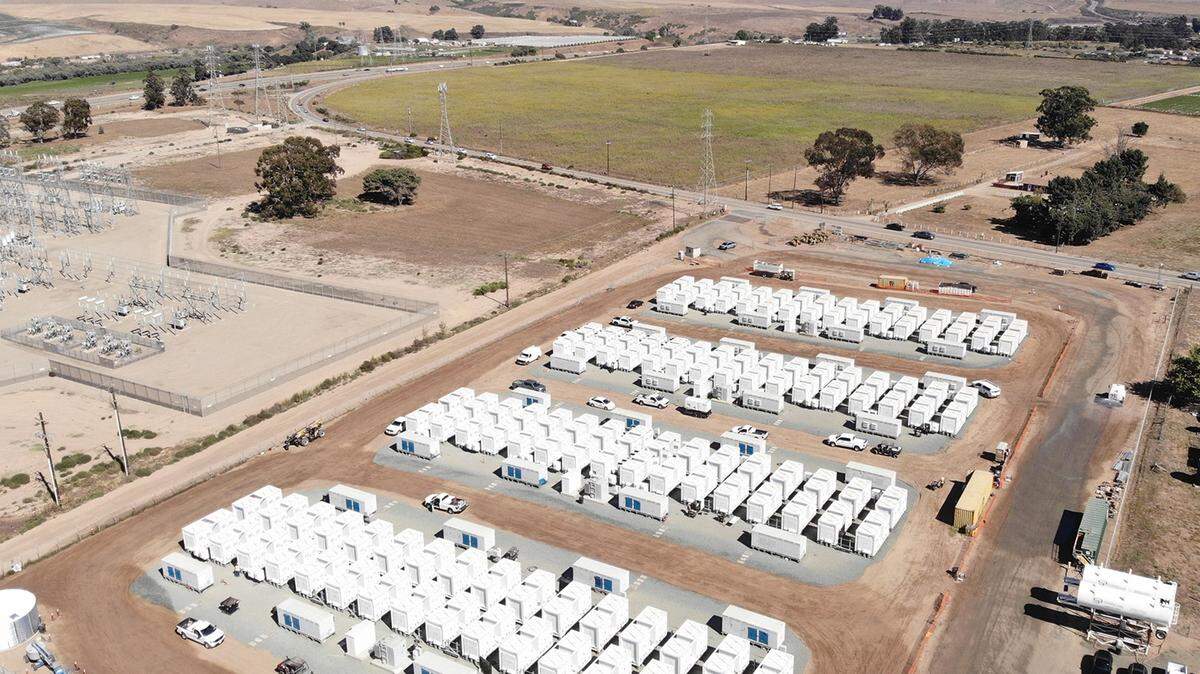
Following a major fire at a lithium battery farm in Moss Landing, some Nipomo residents are speaking out against a battery energy storage system nearing completion in their own community.
At the Feb. 4 San Luis Obispo County Board of Supervisors meeting, more than a dozen speakers said they believe the project jeopardizes the health and safety not just of their own small community, but also of the nearby city of Santa Maria, which is home to more than 100,000 people.
They want the county to delay startup “until the community is ensured that any and all safety precautions are in place,” according to an op-ed from COLAB, a right-leaning organization, that’s posted on the CalCoastNews website.
The article carries this ominous headline: “What blows up in Nipomo doesn’t stay in Nipomo!”
While it’s understandable that residents living near a proposed or existing battery storage facility would be alarmed after the recent fire, this is pure fear mongering.
Demonizing an industry
The blaze at the Vistra Energy facility destroyed an entire building that housed 100,000 battery modules, forced the evacuation of roughly 1,500 residents and created concerns about toxic releases, especially following initial reports of high heavy metal readings in soil.
But let’s put this in perspective.
As concerning as the Moss Landing fire was, no one died or, to our knowledge, was injured.
Far worse consequences have resulted from other energy disasters.
The 2010 San Bruno gas pipeline explosion that killed eight was blamed on PG&E’s failure to detect and repair or replace a faulty section of pipe.
The 2017 Thomas Fire that killed two and was later linked to deadly mudslides in Montecito that killed 23 was caused by SoCal Edison lines coming in contact with each other during a high wind event.
The 2018 Camp Fire that destroyed the town of Paradise and killed 85 people was caused by poorly maintained PG&E transmission lines.
Yet we don’t hear COLAB, or anyone else for that matter, clamoring to tear down transmission towers or dig up gas lines.
Certainly, officials should learn from the Moss Landing Fire and make safety improvements as needed. That’s already happening.
But to demonize an entire industry is absurd; there are 187 utility-scale battery farms operating in California, with many more in the planning stage.
Should we shut them all down on account of what happened at Moss Landing?
Of course not.
Supervisor Paulding blamed for keeping public in the dark
The Nipomo facility, called the Caballero Energy Storage project, is located at the southern end of the county in a rural area near a PG&E substation. It will store 100 megawatts of energy — enough to power 75,000 homes for four hours, according to the Clean Power Alliance.
The facility is markedly different from Vistra’s Moss Landing plant.
At the Caballero facility, battery modules are located outside, rather than in a warehouse, and are spaced far enough apart to prevent a fire from jumping from one to another. Also, the batteries are a newer generation than Vistra’s.
Until now, there has been no controversy surrounding the Nipomo project, which the Planning Commission approved on June 22, 2023.
Not a single member of the public spoke at the meeting, though the commission did receive a few letters of support and one in opposition.
Nipomo residents who are speaking out now say that they were never made aware of the project.
“Some people have said, ‘You should have said something before this got approved.’ Well, I and everyone I have spoken with would have, if only Supervisor Jimmy Paulding had made his constituents aware of it,” Nipomo resident Terri Stricklin wrote on Facebook.
Blaming Paulding is unfair, especially since the project was in the works long before he took office in 2023. It came before the South County Advisory Council in 2021, back when Lynn Compton was supervisor.
When the project was announced in 2022, local media outlets — including The Tribune — reported on it, but it still got little reaction from the public.
Residents are now saying the county should have done more to make the community aware. For example, it could have sent out more letters notifying neighbors of the public hearing.
We agree, as does Paulding.
At Tuesday’s Board of Supervisors meeting, he asked county staff to notify neighbors within 1,000 feet of proposed battery storage sites, rather than the usual 300 feet.
In addition, there’s now a county web page dedicated to battery storage issues.
‘They’ve obtained what’s considered a vested right’
In an ideal world, these measures would have been put in place before the application went to the Planning Commission.
But at this point, the county cannot stop the project, either from an ethical or legal standpoint.
“This is a permitted project. It went through the Planning Commission and was approved. It’s been going through conditions of approval. There may be one or two items remaining for them to (complete) to actually being operating, but as a result of them getting their permit approved an incurring significant expenses, they’ve obtained what’s considered a vested right,” County Counsel Rita Neal told the Board of Supervisors.
Yet it isn’t too late to bring the community up to speed on the project — especially on emergency response plans — and to ensure there is proper oversight moving forward.
Nor is it too late for the Board of Supervisors to consider whether to impose additional requirements on any future battery farm applicants, as many other California jurisdictions are doing.
Los Angeles County, for example, has hired a consultant to adopt new zoning regulations for battery energy storage facilities.
The makes far more sense than assuming that every battery storage facility is destined to explode. That is nothing but irresponsible sensationalism.
Opponents of clean energy — and make no mistake, there are many out there — would have us ban all battery storage.
Do not fall for their tactics.
This editorial has been updated.
This story was originally published February 4, 2025 at 5:00 AM.