
Paso Robles meeting looks like a setup, and recording doesn’t ‘refute’ conspiracy claims | Opinion

For months, Paso Robles city manager Ty Lewis has accused Councilman Chris Bausch and Cal Coast News reporter Karen Velie of conspiring to run him out of office, while Bausch and Velie deny any such coordinated effort.
Now, Velie is offering up a 12-minute snippet of a recording from a March meeting among Lewis, Bausch and Mayor John Hamon as proof no plot exists, within a story that claims “Recording refutes Paso Robles manager’s conspiracy claim.”
The meeting was called by Lewis to discuss ways city leaders — Bausch in particular — could be more collaborative with staff.
But it was Bausch who chose the time and location and insisted on recording the proceedings, Lewis said, and Bausch has apparently not turned over the recording to the city.
Coincidentally or not, the discussions also were overheard by Velie, who happened to be at the very same cafe on the very same day at the very same time — along with apparently two other Lewis critics.
So what we have is a news reporter showing up in the vicinity of a meeting to which she wasn’t invited, and we have a councilman who apparently made a recording, some version of which showed up in the hands of the reporter, but not the city.
It’s quite convenient on many levels.
The meeting in question came six months before the simmering conflict burst into the open when Lewis filed a $2.275 million complaint against the city, accusing Bausch of harassment, creating a hostile workplace and spreading rumors to Velie, who allegedly shared them via Cal Coast News or her radio show on KPRL.
Pointing to the stress he said was caused by the conflict, Lewis went on medical leave for four months before returning in November. Meanwhile, the city and its insurer rejected Lewis’ claim, paving the way for a potential lawsuit.
On the way, The Tribune spoke with two Paso Robles business owners who corroborated Lewis’ complaint and shared allegations of an apparent plot by Bausch and Velie to drive Lewis out of his job as the city’s top administrator.
That brings us up to today and the leaking of the audio of the meeting, yet much of the recording isn’t inflammatory or even particularly interesting, and the main point of contention regarding Bausch’s treatment of staff isn’t even raised until the last 45 seconds, before the audio abruptly ends.
Nevertheless, Velie maintains it proves that Lewis’ accusations of a conspiracy are unfounded, saying “the audio recording of the conversation confirmed Bausch’s version and the Cal Coast News story and refutes Lewis’ version.”
For confused citizens, the incident raises more questions than answers.
Does this recording actually support Velie and Bausch’s case, or does it only further fan the flames of back-room coordination by neglecting to explain several key questions, such as:
Who recorded the meeting?
How did Velie acquire the recording?
Why is the audio only about a third of the meeting’s total duration, which was pegged at 30 to 45 minutes by both Lewis and Hamon?
What happened to the rest of it?
Did it somehow vanish into the ether, or was it selectively edited by someone?
And who was that someone?
How did it come to be that Velie was grabbing a bite to eat at the same cafe on the same day at the same time as the three city leaders?
And, last but certainly far from least, why are neither Velie nor Bausch answering any of these basic questions?
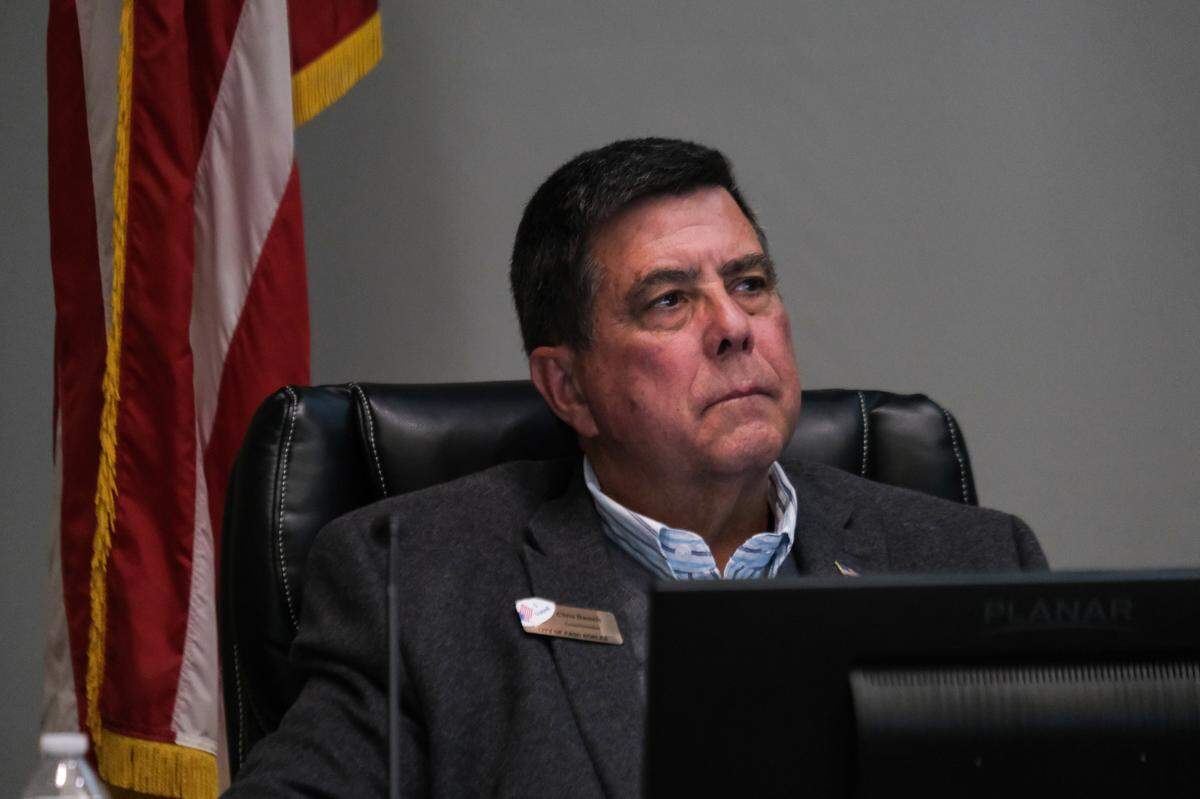
There are many good ways to refute a conspiracy accusation, but dodging accountability and refusing legitimate inquiries, particularly when you’re a sitting councilmember, aren’t two of them.
Unless, of course, you’re a sitting councilmember already accused of harassment and allegedly creating a hostile workplace who now may also be dodging the state’s Public Records Act.
That would at least explain Bausch zipping his lips. But what’s Velie’s excuse?
To try to understand the tangled web, Tribune reporters Chloe Jones and Sadie Dittenber reached out to both repeatedly, along with Lewis, Hamon and the two other Lewis critics — Gary Lehrer and John Roush, who also happened to be at Angela’s Pastries at the same time — yet only two of the six responded to detailed questions about the meeting.
Lewis confirmed he called the meeting to smooth over relations between Bausch and city staff, noting he did not set the time and location. Once all had arrived, both Lewis and Hamon said Bausch recorded the gathering, either on a city-issued or personal cell phone.
Regardless of the meeting’s focus, if that last point is true, the recording is a public record and subject to disclosure under the Public Records Act, which provides citizens with a powerful tool to compel release of government materials that serve the public’s interest.
Yet when both The Tribune and Paso Robles Daily News columnist Clive Pinder filed formal requests for the records as far back as October, the city said it had nothing to turn over.
When The Tribune asked again after Cal Coast News’ publication of the audio, deputy city clerk Mary Sponhaltz responded, “I was not aware of this article or recording. I can confirm Karen Velie has not made a Public Records Act request for the recording, and she did not obtain it through a PRA response from the city. I have not released it nor have I been given access to it or had confirmation it existed.”
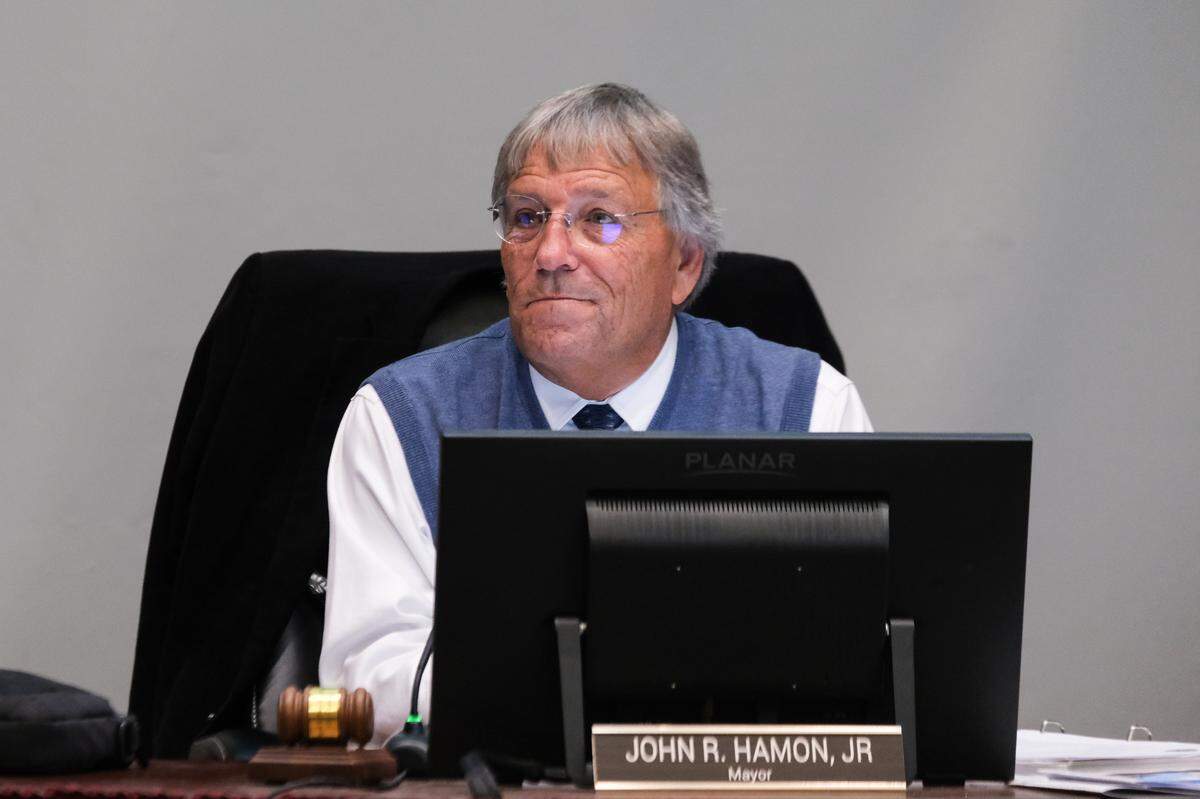
So if Bausch did indeed make the recording as Lewis and Hamon say, how did this public record end up in the hands of the one interested reporter who didn’t file a Public Records Act request, the very same reporter who was so coincidentally positioned to eavesdrop on the discussion in the first place?
Velie addressed that question on Dave Congalton’s KVEC radio show on Thursday, essentially neither confirming nor denying that she got tipped off about the meeting.
“I do not talk about my sources or my work. And that’s not relevant to what happened at the meeting,” she told Congalton. “I am not going to get into was I tipped off about the meeting. … I am not going to say if I had any idea anyone was going to be there, if anyone talked to me, because that is not relevant.”
Which boils down our collection of earlier questions into this: Did Chris Bausch give the recording to Karen Velie while ignoring the Public Records Act, and if so, why?
These are two simple details either of them could answer if they so chose.
If Bausch did, then this audio suggests cooperation among the two against Lewis rather than the reverse.
But we don’t know for sure, because the central characters refuse to tell us what they know.
In the absence of any reasonable explanation, then, all we have is silence.
However, that silence may be all the citizens of Paso Robles need to know when they’re deciding who to believe — and more to the point, who to trust.
It’s not Chris Bausch and Karen Velie.