
These SLO County retirees have golf, a spa and a wine shop — but no grocery store | Opinion
No matter what you call them — bodegas, mini-marts, corner stores — independent groceries are neighborhood heroes.
Sure, Costco and Albertsons are great for big shopping, but smaller, nearby stores are the go-to places when it’s 9:35 p.m. and you have a sudden craving for rocky road.
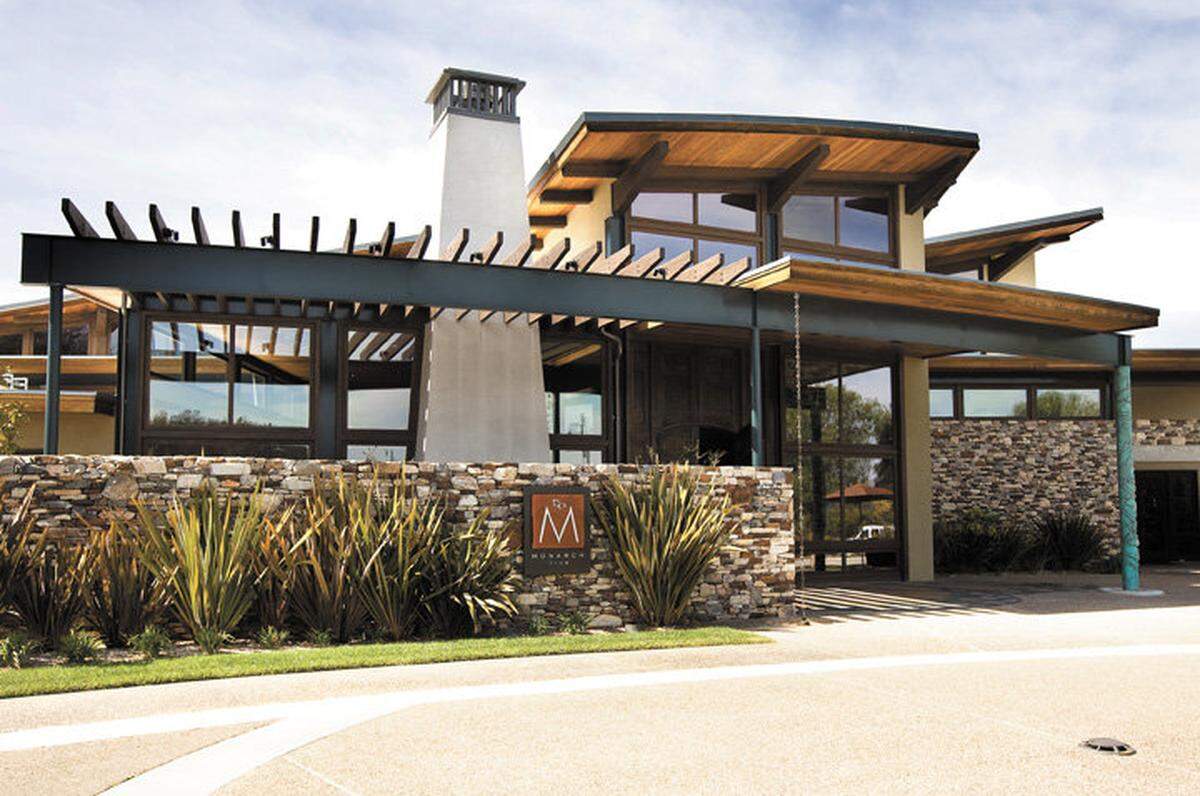
Yet some communities are finding it tough to attract markets of any size. That’s been the case at Trilogy at Monarch Dunes, a 1,200-unit, high-end golf course community in Nipomo that’s drawn thousands of retirees from around the state.
Many moved in years ago, with the expectation that, along with recreational amenities that include a gym, a spa, tennis courts and 30 holes of golf, there also would be a commercial center where they could pick up prescriptions, maybe get a haircut and, most all, shop for groceries.
“What really got us here was this Village Center,” said Pete Scobel, who moved to Trilogy 11 years ago from the Bay Area. He expected it would eventually have “all the amenities needed to retire in place.”
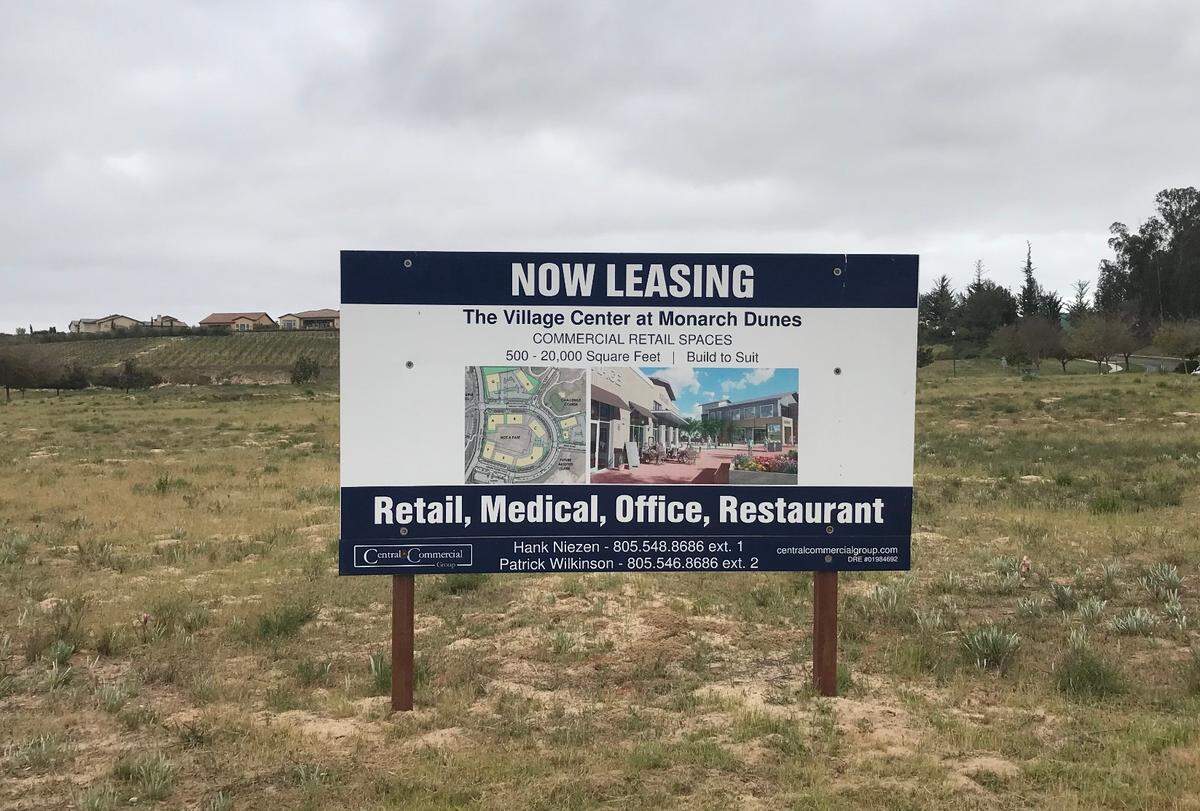
Since then, ownership of the project has changed and some earlier plans have been scuttled. Developers say they haven’t been able to attract big tenants, such as a supermarket or a pharmacy, and they’re asking the San Luis Obispo County Board of Supervisors for permission to build more houses and fewer shops.
If approved, the commercial Village Center portion of the project will be reduced from 140,000 square feet to 38,500 square feet — a decrease of 72%.
Trilogy’s Home Owners Association says a survey shows most residents approve of the change There is, however, a vocal contingent opposed.
‘How do we get a store?’
This isn’t just about a single subdivision; it touches on planning issues affecting communities throughout California.
California is in desperate need of housing, and local governments are under pressure from the state to allow residential construction. At the same time, communities are aiming to slash greenhouse gas emissions, and cutting back on car trips is one way to do. But it’s not easy to entice retailers to open locations in residential areas.
Nate Rose, the spokesman for the California Grocers Association, says the No. 1 question his organization hears is, ”How do we get a store?”
That’s largely up to the private sector.
Dennis Darling, chairman of the Grocer’s Association Board of Directors, put it this way: “Local government can’t make somebody build a grocery store.”
To attract chains like Traders Joe’s or Aldi or Whole Foods, it’s all about demographics. Whole Foods in particular has traditionally looked for a well-educated, affluent customer base, primarily in urban areas.
Independent stores, on the other hand, can and do thrive even in small, out-of-the-way communities, but there are barriers to entry.
“Construction costs, the regulatory atmosphere, the lack of labor availability are all really hard issues to overcome right now,” Darling said.
Financial incentives in the form of federal and state loans and grants are available for markets opening in “food deserts” — areas where residents don’t have access to fresh, healthy foods.
Eligibility is based on residents’ income levels, the distance to the nearest market and the availability of transportation.
Wealthy communities like Trilogy don’t qualify for such aid. Nor do they get much sympathy; after all, plenty of stores are just a few miles away, and delivery is an option.
That overlooks the fact that some residents don’t drive on account of medical conditions and may not want to depend on delivery.
It also misses the larger point: This isn’t just about personal convenience.
It’s about strategic planning.
By encouraging exercise and socialization, neighborhood markets improve public health and quality of life and they’re good for the planet.
‘If you build it, they will come’
Preston Holdner, area president for the applicant, Shea Homes, says buyers were never promised that a large commercial center would be built.
“It was explicitly disclosed that the plans very well could and would change,” he said in an interview.
Even so, when the project began its journey through the approval process in the late 1990s, applicants described it in grand terms. Some referred to it as a mini-Silicon Valley that would include homes, a commercial center, a large business park, a 500-room-hotel, a sheriff’s substation, and possibly even a school.
”This is truly, ‘If you build it, they will come,’” said John Jannecke, who was then the project’s spokesman.
That didn’t happen, and now it’s up to the county Board of Supervisors to decide whether to give up on the plan for what was once envisioned as a self-contained community.
According to County Counsel Rita Neal, the board’s options are limited.
“A public entity could require basic services (i.e. a market) but the problem is that the developer could come back later and ask for a change in conditions,” she said in an email. “Additionally, say they are required to put in a market and they do. Nothing prevents them from coming back later for a change of use based on changed conditions.”
What good, then, are conditions if applicants can simply shrug their shoulders and say, “We tried our best. It didn’t work”?
Is there no way to hold them accountable? If so, what sort of precedent does that set for future projects?
At the very least, applicants should be required to prepare a feasibility study indicating whether their plans are even realistic, rather than offering vague “if we build it, they will come” assurances.
To be fair, Trilogy does have a mail center, a doctor’s office, two restaurants and a wine shop that carries a few grocery items. There also is a plan to add a 100-unit extended care facility. That’s excellent.
But is it too much to ask to include a neighborhood market in the mix?
We don’t believe so.
If local governments are going to require electric vehicle chargers, solar panels and battery-ready homes in the name of climate action, they should also push for well-planned communities that meet the basic needs of residents.
And what’s a more basic need than food?
If the grocery industry finds it too onerous to operate in certain areas, find a solution. Expand existing incentive programs; provide commercial space at reduced rent; help communities set up food co-ops.
Stop treating markets as amenities and start acknowledging them for what they truly are: necessities.
This story was originally published March 12, 2023 at 5:30 AM.