
Shell Beach bench rescue is a feel-good story. Most erosions won’t end that way | Opinion
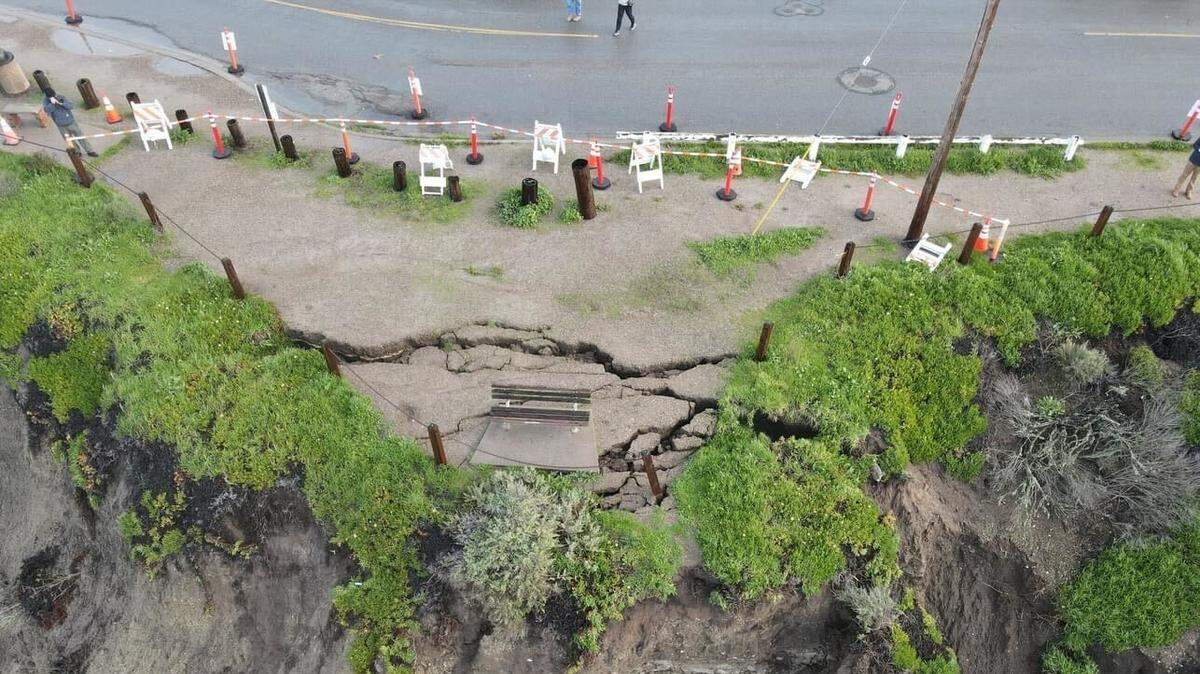
Here’s some good news: A beloved clifftop bench at Margo Dodd Park in Shell Beach has been rescued.
The city of Pismo Beach removed the local landmark that was in danger of toppling into the sea. It’s now sitting in storage.
That’s a relief for the many locals who had a strong attachment to it, but it would be a mistake to just smile and move on.
This is a reminder of what California faces. Cliff erosion poses a huge threat to the coast, and it will only grow worse as the sea level rises with the melting of glaciers.
in Southern California, sea level rise could cause cliff erosion rates to double by 2100, according to U.S. Geological Survey researchers.
Yet this is not something we talk about much.
As with earthquakes, we know the threat is there, but for the most part, it’s not something that consumes us — especially if we live inland, away from the fancy homes that line the coast.
It often doesn’t seem real until we see it with our own eyes, which explains this recent headline from Los Angeles Times columnist Gustavo Arellano: “How I finally learned to care about Orange County’s crumbling coastline.”
The disappearance of a picnic table — “an oasis,” he called it — helped lead to his awakening.
It may seem odd to fixate on a bench or picnic table when there’s a potential for far greater damage. For instance, in some seaside communities, entire homes are in danger of being destroyed as the cliffs beneath them crumble.
Yet it’s often the small, familiar things — a bench, a tree, a staircase — that tug at us the most.
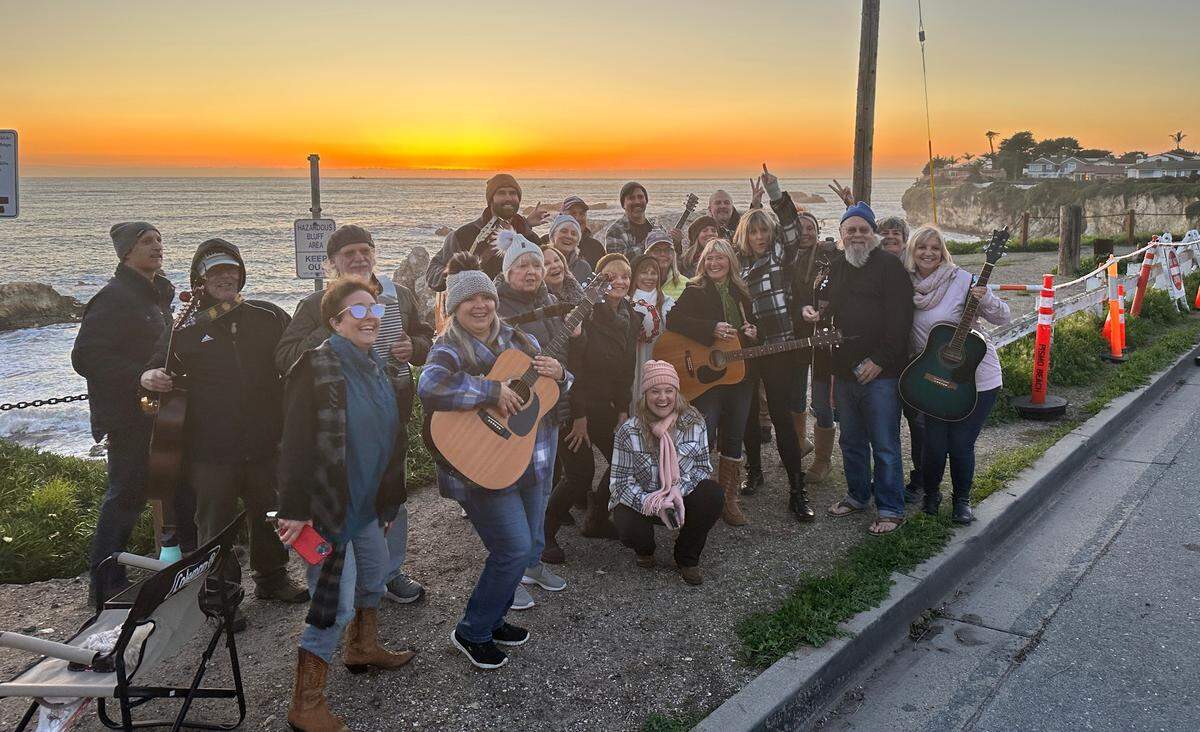
‘Hard to predict what’s going to happen’
Cliff erosion and sea level rise are wonkish subjects fraught with uncertainty. Predictions are based on scenarios, from not-too-bad to catastrophic.
“It’s kind of hard to predict what’s going to happen because it involves Antarctic and Greenland glacier melting,” said Pismo Beach Mayor Ed Waage, who serves on a statewide sea level rise working group. “It’s hard to tell how fast or how much or, you know, what it’s going to do.”
If it’s any consolation, an extensive study that analyzed erosion rates for every cliff along the California coast identified several hot spots, and not one is in San Luis Obispo County. But our neighbors to the north and south do have areas of high erosion — Big Sur in Monterey County (no surprise there) and Point Arguello in Santa Barbara County.
That doesn’t mean SLO County is in the clear.
There already have been several instances of damaged seawalls and stairways that provide public access to beaches.
Caltrans realigned nearly three miles of Highway 1 north of Piedras Blancas “to address current and anticipated impacts from coastal erosion.” The project, completed in 2017, cost nearly $20 million.
And within the next 15 years, San Simeon must relocate its sewer plant, according to county Supervisor Bruce Gibson, who also serves on the sea level rise working group.
‘Managed retreat’ or ‘graceful withdrawal’?
In the case of critical public infrastructure, there’s little choice but to relocate or stabilize it, no matter the cost.
It’s trickier when private property is involved.
There are two basic alternatives: installing “armoring” in the form of a sea wall or rip rap to keep the ocean at bay, or letting nature take its course and abandoning oceanfront dwellings, which is oftentimes referred to as “managed retreat.”
Unsurprisingly, private property owners aren’t overly fond of managed retreat — some don’t even like the name.
“‘Managed retreat’ is a code word for give up — on our homes and the town itself,” a resident of Pacifica, a Northern California community where some homes come right up to the cliff edge, told Slate.
Kinder, gentler terms include “resilient relocation,” “transformational adaptation” and “graceful withdrawal.”
Those unwilling to “gracefully withdraw” can install a sea wall — but that often means fighting for a permit from the California Coastal Commission.
And there’s a trade-off. Because sea walls block the natural flow of sand, they can wipe out beaches in front of coastal properties.
For that reason, the Coastal Commission has supported less intrusive remedies, such as living shorelines — barriers created with vegetation, shell mounds, rocks, and other natural materials.
Let the bench be a wake-up call
So what do all these big problems have to do with a little bench in Shell Beach?
Lots of things.
That bench is a wake-up call, alerting us to the need to pay attention to what’s happening on our coast and to recommit to cutting greenhouse gas emissions, which have been linked to the melting of ice caps.
It’s a reminder to hold local public officials accountable for not just passing climate action plans, but for actually implementing them, and to support state legislation that will help communities deal with this unprecedented crisis. For instance, SB 1078 would create a revolving loan pilot program to help coastal communities purchase vulnerable properties.
And it’s a lesson in what’s precious to communities — that it’s not just the highways or the sewer plants that are worth saving, but also a rather ordinary bench that morphed into a community treasure.
So please, Pismo Beach, don’t keep the bench under wraps too long.
It deserves to be in a place of honor — one that’s safe from the rising sea.
This story was originally published March 5, 2023 at 5:30 AM.