
Mental illness and a bogus arrest shouldn’t condemn this SLO County man to jail
Can we all agree that living with mental illness is not a crime?
Like cancer, heart disease or diabetes, it’s not a condition patients deliberately bring on themselves.
Yet many who are diagnosed with schizophrenia and other serious brain disorders continue to be treated as criminals when they act out.
While many politicians talk a good game about treating, rather than incarcerating, mentally ill defendants, the reality on the ground is far different.
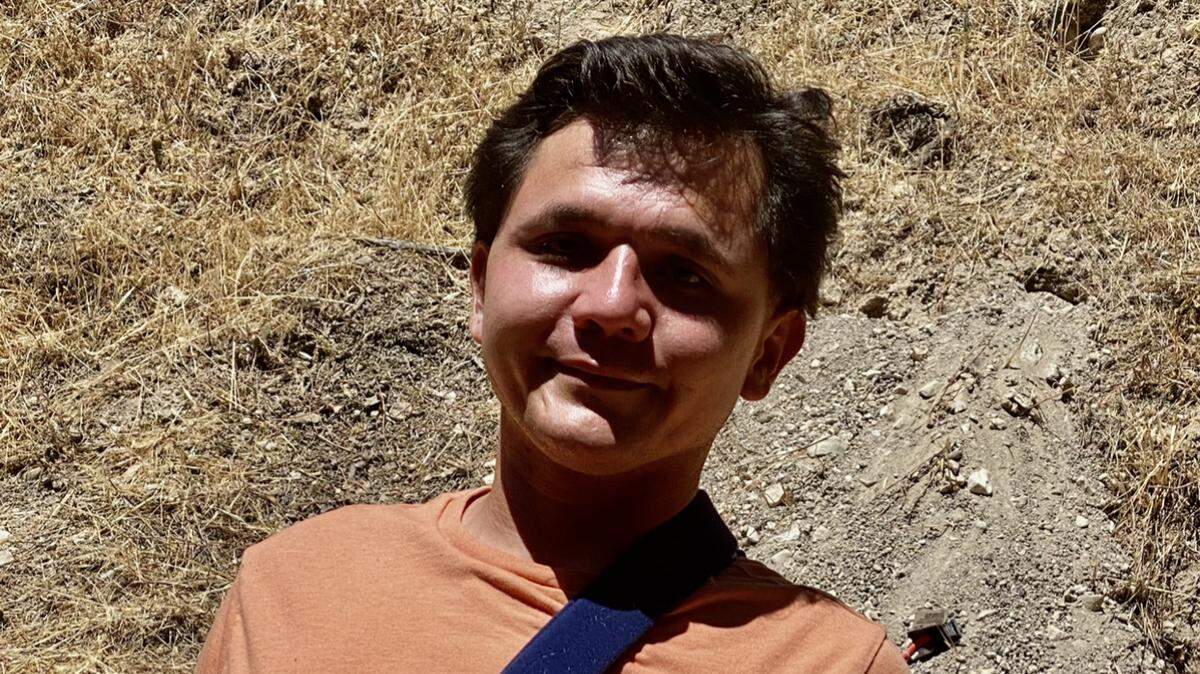
Take Joseph Perez of Atascadero, who was diagnosed with schizophrenia at age 19.
Now 36, he faces criminal charges stemming from incidents that occurred while he was experiencing mental health crises — a situation that was brought to light through excellent reporting by Tribune writers Chloe Jones and Sara Kassabian.
Perez’s family and his defense attorney, Trace Milan, are fighting to get Perez the treatment he needs, rather than risk having him locked up in a cell for offenses he allegedly committed when he wasn’t aware of his actions.
“He obviously is someone in this county who needs help,” Milan said. “I can’t imagine there is anyone who needs that more than this young man.”
Did SLO County man use ‘deadly weapon’?
Perez and his family have been through hell over the past several months, ever since Perez was accused of resisting arrest and assaulting an officer with a “deadly weapon” — a soft cast he had on his arm — while he was at Twin Cities Community Hospital in Templeton on a mental health hold.
It’s a bogus, overblown charge. The officer involved complained of pain, but there was no report of any serious or even moderate injury.
A couple of months after the June 2021 incident at the hospital, Perez was arrested again after allegedly throwing a ceramic figurine at his mother. He also tossed a rock toward his parents.
Again, no injuries were reported.
Perez’s mother, Lisa Kania, reluctantly agreed to his arrest in that incident, under the belief he would receive the treatment he needed.
Instead, he spent six months locked up in San Luis Obispo County Jail, where he was sent after being declared incompetent to stand trial.
Under a 2021 appellate court ruling, Perez should have been transferred to a state mental hospital or other treatment facility within 28 days of being declared incompetent for trial, but Kania said she was given excuses as to why that didn’t happen.
“The judge blamed COVID,” she said.
She also learned there were 1,200 people on a waiting list for hospitalization — a list that has since grown to 1,900.
What’s next?
Perez is now free on bail, but he still faces a possible jail sentence should he be convicted of the criminal charges.
However, there is a chance he could be accepted into the county Mental Health Diversion Court. If that happens, he’ll be enrolled in an outpatient treatment program that includes weekly check-ins with a county psychologist, psychiatrist and social worker, and group therapy four days a week.
“At least we might get some support,” Kania said.
If Perez successfully completes the program, the criminal charges against him could be dropped.
However, the San Luis Obispo County District Attorney’s Office has vacillated over whether Perez is a good candidate for the outpatient program.
A clinical psychologist who examined Perez found that he meets the criteria for admission to the program, according to a copy of the evaluation Kania provided to The Tribune.
“If he remains consistently compliant with medication, and monitoring for this is built into his treatment plan, future decompensations and violence of this kind do appear to be preventable as he does not appear to be angry, hostile, or volatile by nature, only reacting to the presence of mental health symptoms that led to erratic, aggressive conduct,” the psychologist wrote.
If Perez is not allowed into the program, his attorney said he will pursue a plea of not guilty by reason of insanity. But Milan believes diversion court is a better option.
“What’s the harm in letting him in, even if it fails?” Milan asked.
Low acceptance rate
That same question can be posed in hundreds of other cases.
Only a small percentage of applicants for diversion get accepted into the SLO County program.
According to a Tribune analysis, 59 out of 277 applicants were allowed in between March 2019 and April 2022 — a 21% acceptance rate. Of those 59, so far only five have successfully completed the program and had their charges dismissed.
Why so low?
According to officials, people living with schizophrenia can have a difficult time in the program because they don’t do well in group settings — and group therapy is a big component.
That being the case, wouldn’t it make sense to offer a program more tailored to their needs?
To be sure, lack of funding and staffing — along with the difficulty in hiring experienced personnel given the current worker shortage — are hurdles.
But that’s no reason to ignore this crisis in care.
We should not be arresting people on suspicion of relatively minor offenses committed when they’re dealing with mental health issues.
We shouldn’t jail them for months on end when they haven’t been convicted of a crime.
And we shouldn’t limit access to local mental health treatment aimed at helping the very people who are being turned away.
We can’t shake our heads in sympathy and at the same time pretend this doesn’t really concern us.
Nor can we wait for the state to act on Gov. Gavin Newsom’s CARE Court proposal, which would compel treatment for people with severe mental illness.
People like Joseph Perez need help now — not a year or two from now when another program and/or more funding might come along.
A first step is to determine the scope of the need. We strongly urge the Board of Supervisors to conduct an open hearing on unmet mental health needs in San Luis Obispo County.
We also urge the District Attorney’s Office to agree to Perez’s placement in a diversion program.
But we can’t stop there.
As Perez’s mother points out, there are many others with similar needs who aren’t getting the treatment they deserve.
“I worry not just about Joseph, but about people who don’t have family,” she said. “I can’t even imagine what they’re going through.”
This story was originally published June 14, 2022 at 5:30 AM.