
SLO needs a new police station – but a huge ‘gateway’ building that costs $52 million?
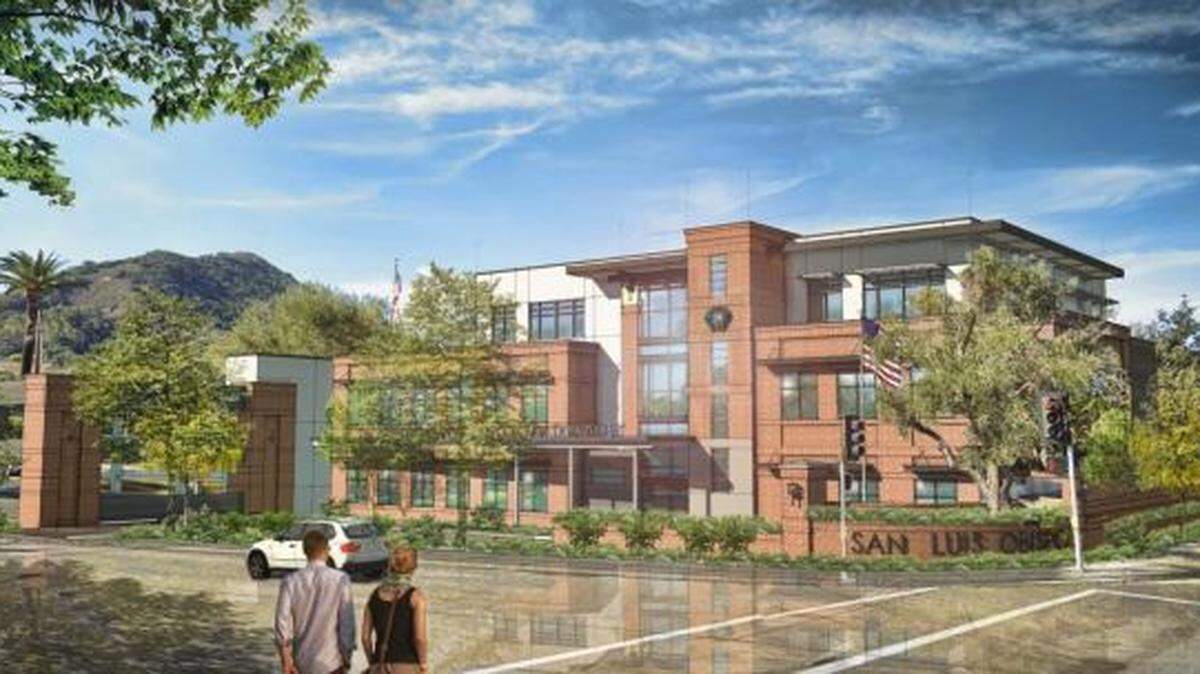
No doubt about it — the city of San Luis Obispo is overdue for a new police station.
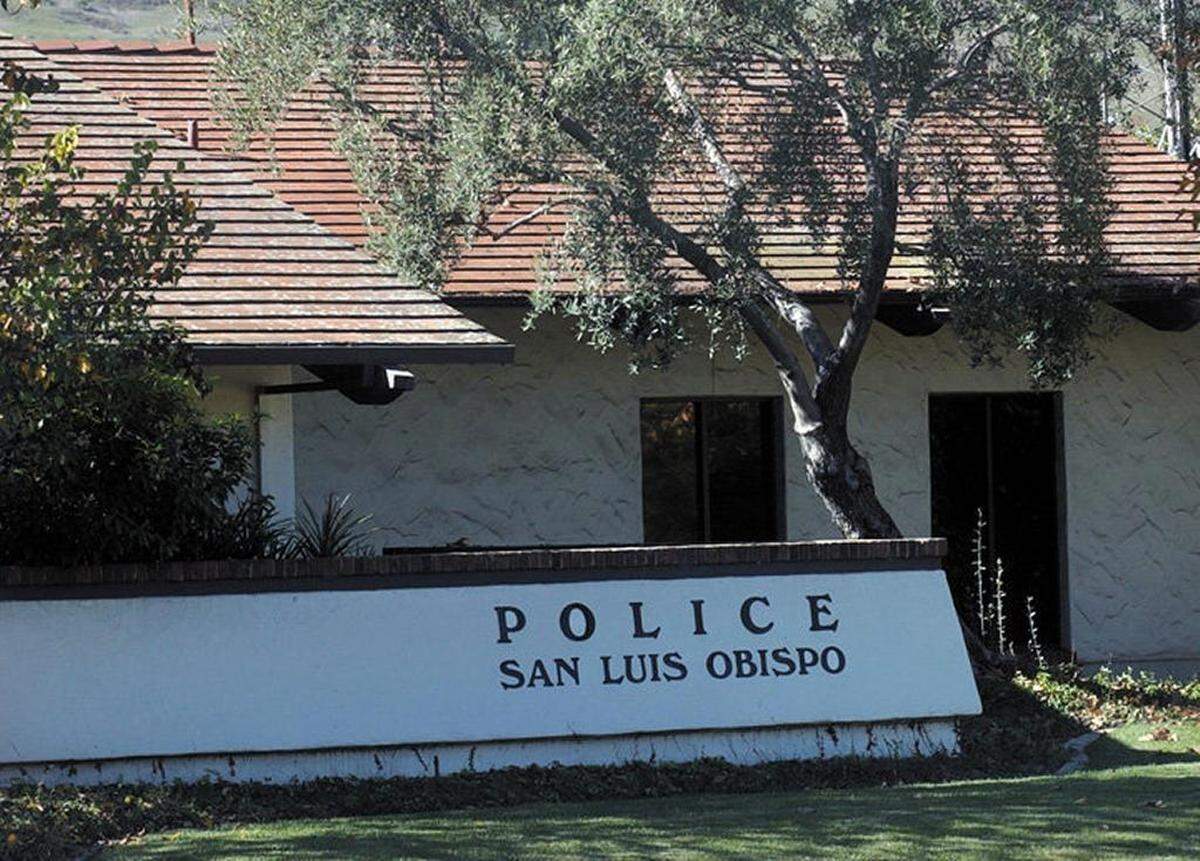
The current building at Walnut and Santa Rosa streets is too small, outdated, doesn’t meet ADA standards and isn’t up to seismic code.
Retrofitting the sad, old station for an estimated $18 million doesn’t make sense, since the department would still need more space.
But is a $52 million, 37,768-square-foot behemoth truly necessary? (The current station is 16,388 square feet.)
Several residents already are saying no, some as a matter of principle — they believe it’s time to rethink traditional policing and see no need for a expansion — and others on account of the cost.
On first impression, the project unveiled at a Tuesday City Council meeting does seem overly large and ambitious for a city the size of San Luis Obispo. The word “fancy” also comes to mind.
Michael Scott, an architect with RRM Design Group, described it as a “gateway” project — one that would reflect the character of the downtown.
“We want to make sure that this facility speaks San Luis Obispo and is part of the San Luis Obispo community,” he said.
Of course we want a public building that’s a credit to the city. But a police station is not the public building that should serve as a “gateway.” And $52 million is a sizable price tag. Is it truly the best option?
Why so expensive?
So here’s what we do need: A serviceable, attractive police station — one that doesn’t look like a bunker and is large enough to accommodate the department for at least another 30 years. (Ideally, it would be built with expansion in mind, because we don’t want to have go through this every few decades.)
And yes, that’s going to be a big investment, though hopefully the final project will come in at less than the current estimate.
But there’s only so much economizing that can be done, since police stations have unique requirements — including tight security measures, communication centers, special access and evidence storage needs — that drive up costs.
On top of that, in California police and fire stations must meet higher earthquake safety standards than other buildings.
The precaution makes sense. In the event of an earthquake, we need emergency responders to be able to do their jobs.
Still, the additional seismic strengthening for essential buildings drives up the cost by 30%, according to information presented to the council.
If it’s any consolation, sticker shock is common in communities building new police stations.
Here are some headlines:
Homer, Alaska: “Why does a new police station cost $7.5 million?”
Pittsfield, Massachusetts: “Lanesborough deals with ‘sticker shock’ from cost estimate of new police HQ.”
Seattle, Washington: “Expensive new police station sparks outcry at City Hall.”
Note to city: At future meetings, how about providing per-square-foot cost comparisons with other newly built stations, so we have a basis to compare and contrast?
Who knows, we might even conclude that $52 million isn’t so bad after all.
Keeping the cost — and size — down
One proposed feature getting some pushback is a 1,500-square-foot community room.
The room would be available as a meeting place for nonprofits and other local groups. It also could serve as a gathering place during times of emergency, such as major storms or earthquakes.
Except, there already are plenty of other spaces around town that serve those purposes.
Community events have been held at the library, the Ludwig Center, City Hall, even the Board of Supervisors Chambers, where several candidate forums have taken place. Local churches and schools have offered shelter during emergencies.
We appreciate the effort to make the new police station — or public safety center, as it’s formally called — an accessible and welcoming place.
But a police station is, by its very nature, a high-security building. It doesn’t give off the same friendly vibes as say, a senior center or school auditorium. In fact, people who have had negative experiences with police can be triggered just walking past a station.
Here’s how Mayor Erica Stewart put it: “I definitely feel that putting a community room in a place of power doesn’t build trust moving forward among people with diverse backgrounds and lived experiences.”
If the Police Department wants to build more bridges with the public, it would be better off spending more time out in the community, rather than expecting the community to come to them.
Measure G revenue
Whatever the final bill for the new station, it’s going to be a heck of a lot of money. And as several members of the public pointed out Tuesday, it’s being spent at a time when there are pressing needs for low-cost housing, emergency shelter, social services and other assistance.
But this doesn’t have to be an either/or.
With prudent spending, San Luis Obispo can build a new police station and address other needs.
The fact is, the city has a duty to provide a range of services to its citizens — police and fire protection, sewer and water, decent streets, flood control, parks and open space.
Voters recognized that when they approved Measure G — a 1% sales tax increase — last year. The ballot measure made it clear that the funds would go toward a variety of uses, with fire/community safety near the top of the list.
It passed easily, and now, Measure G revenue will make construction of the new police station possible.
That’s entirely appropriate.
A new station is not, as was stated Tuesday, a “reward” for bad behavior on the part of police.
There are valid reasons to distrust law enforcement right now — across the nation and here at home. But those problems are best addressed through training and changes in policies and procedures, not by denying police departments the facilities and tools they need to do their jobs.
Conditions at the current SLO police station are only going to deteriorate more and, with delays, costs will continue to escalate.
The project should move forward, but the community must have a strong voice in its development.
Fortunately, there’s plenty of time for that. The rendering presented on Tuesday was a concept, nothing more.
The city is putting together an engagement plan that will include opportunities to check out the proposals, ask questions and offer opinions.
Take advantage of that.
After all, you’re footing the bill for this. You owe it to yourselves to get involved and lobby for a station that’s appropriate and adequate — but not extravagant.