
He had a history of being a ‘creeper.’ How did Paul Flores evade authorities for so long?
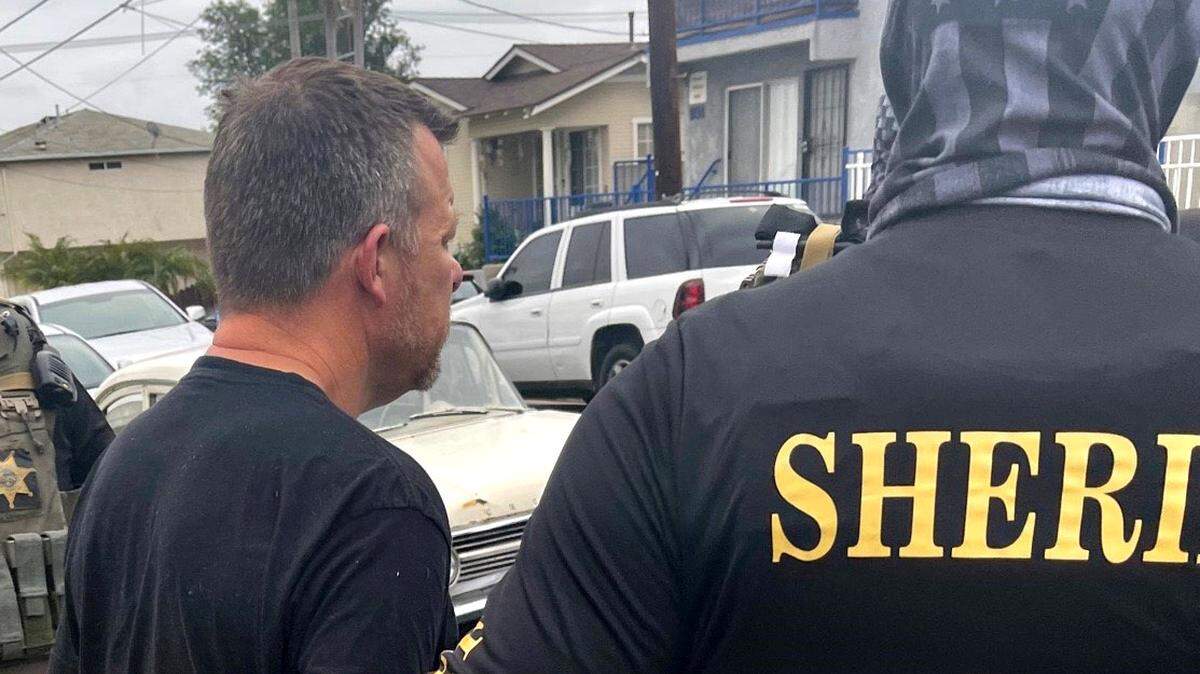
He was described as a “psycho” and a “creeper” — someone “most girls knew to stay away from.”
So how is it that Paul Flores — the man accused of killing Cal Poly student Kristin Smart 25 years ago — was able to get away with that behavior for so long?
He had a reputation for sexual misconduct as far back as high school, and that raises the question: Could strong intervention early on have made a difference?
We should point out here that Flores, 44, has never been convicted of any sex crime, though documents recently unsealed by the court revealed that 29 women reported incidents of sexual misconduct to investigators.
Several of those occurred at Cal Poly; according to reports, they included unwanted groping, stalking and banging on women’s doors and windows in efforts to gain entry into their rooms.
One person reported calling police after Flores tried to force his way into her dorm room, but there’s no way of knowing how many such incidents were reported at the time — or what action, if any, was taken.
Kristin Smart case was a ‘butchered investigation’
Cal Poly’s police department — which was then under different leadership — has been blamed for early missteps that hamstrung the investigation and indirectly gave Paul Flores the freedom to remain at large for 25 years. During that time, he allegedly committed more sexual offenses, including four rapes.
Jim Murphy, the Arroyo Grande attorney who represents the Smart family in a wrongful death lawsuit against Paul Flores, says Cal Poly police “butchered the investigation.”
Among other shortcomings, he says Poly police didn’t take early reports of Smart’s disappearance seriously and waited too long to start an investigation. By the time Flores’ dorm room was searched for evidence, it had already been emptied and cleaned.
Murphy included Cal Poly as a defendant in the wrongful death lawsuit — a case that’s been on hold for years because the criminal investigation and prosecution have taken precedence.
The university was dismissed from the case in 1998, after the court found there wasn’t a valid reason to sue Cal Poly.
“Apparently, they can’t be held liable for a bad investigation,” Murphy said. “To hold a university responsible, you have to almost show egregious negligence.”
What the law says about university liability
According to the court’s ruling, the university was immune from prosecution under Government Code section 845, which says this:
“Neither a public entity nor a public employee is liable for failure to establish a police department or otherwise to provide police protection service or, if police protection service is provided, for failure to provide sufficient police protection service.”
On top of that, the court pointed out that Cal Poly had no prior knowledge that would lead authorities to believe Kristin Smart could be in danger.
“.... The facts alleged in the complaint show that Kristin Smart’s alleged murder was not foreseeable in light of the absence of prior similar incidents of violent crime at the university,” the decision says.
As a general rule, a government agency must have some prior knowledge of risk in order to be held liable for a bad outcome.
That’s common sense. A police department, for instance, can’t be expected to know when and where random attacks will occur.
But if, say, a city receives several complaints about a pothole, does nothing, and a bicycle rider subsequently hits the pothole, falls, and suffers major injuries, the city can be found liable.
UCLA stabbing case isolates liability to classroom
Courts have historically found that universities cannot be held responsible for on-campus acts of violence.
But that changed — slightly — in 2018, when the California Supreme Court ruled on a case filed on behalf of a UCLA student who had been brutally stabbed by a fellow student who was later found to be suffering from schizophrenia.
According to news reports about the case, the university had been alerted to the student’s erratic behavior. He had reported hearing a clicking sound in his dorm room and thought it meant other students were trying to shoot him; was kicked out of the dorms after pushing a student; and sent lengthy emails and letters to faculty members, making unfounded accusations about other students.
A lower court dismissed the case, but the state Supreme Court ruled that if a public university knows of a “foreseeable threat” to students, it does have a duty to protect them — but only in a “curricular setting” such as a classroom.
In other words, if a student is walking back to the dorms following a party — as was the case with Kristin Smart — the ruling would not apply.
That’s an awfully narrow set of circumstances. Still, it is something, and it reinforces the importance of reporting suspect behavior.
How to report sexual misconduct at Cal Poly
Cal Poly officials say students have several options for reporting sexual misconduct and other problem behaviors: campus police, the Office of Equal Opportunity, Office of Student Rights and Responsibilities, Safer, and the Student Ombuds Services.
The university also has a CARE team the includes professionals from several departments who meet monthly to discuss students’ concerns.
“If a potential issue or cause for concern is identified, the CARE team can activate a smaller behavioral intervention team to develop a response plan and address the matter,” university spokesman Matt Lazier wrote in an email.
“The health and safety of Cal Poly’s students is the highest priority for the university,” he wrote, adding that reports of misconduct are “taken very seriously and addressed quickly.”
The Kristin Smart tragedy is a case study in why it’s so important to report what, in legal lingo, are “foreseeable threats” — and a pattern of behavior like that exhibited by Paul Flores should fall into that category.
What happened to Kristin Smart can serve not just as a wake-up call, but as warning jolt — a real-life example of why incidents of sexual misconduct should not go ignored.
Yet some students have told us the university appears to shy away from talking about Smart.
“... I feel like they always try to shove it under the rug,” biology student Zachary Allen told a Tribune reporter.
That’s not serving Smart’s memory, and it’s certainly not serving students.
There’s a reason sexual predators can get away with their crimes for years.
It’s silence, and it’s got to stop.
Sharing Smart’s story is not going to scare students away. It’s going to help protect them.
If Cal Poly is sincere about placing top priority on student health and safety — and we believe it is — it should shine a light on what happened to Kristin Smart, and how it might have been prevented.
This editorial has been updated to correct the date Cal Poly was dismissed from wrongful death lawsuit.
This story was originally published August 2, 2021 at 7:00 AM.