
SLO County’s congressman wants to protect Australian kangaroos. What about American chickens?
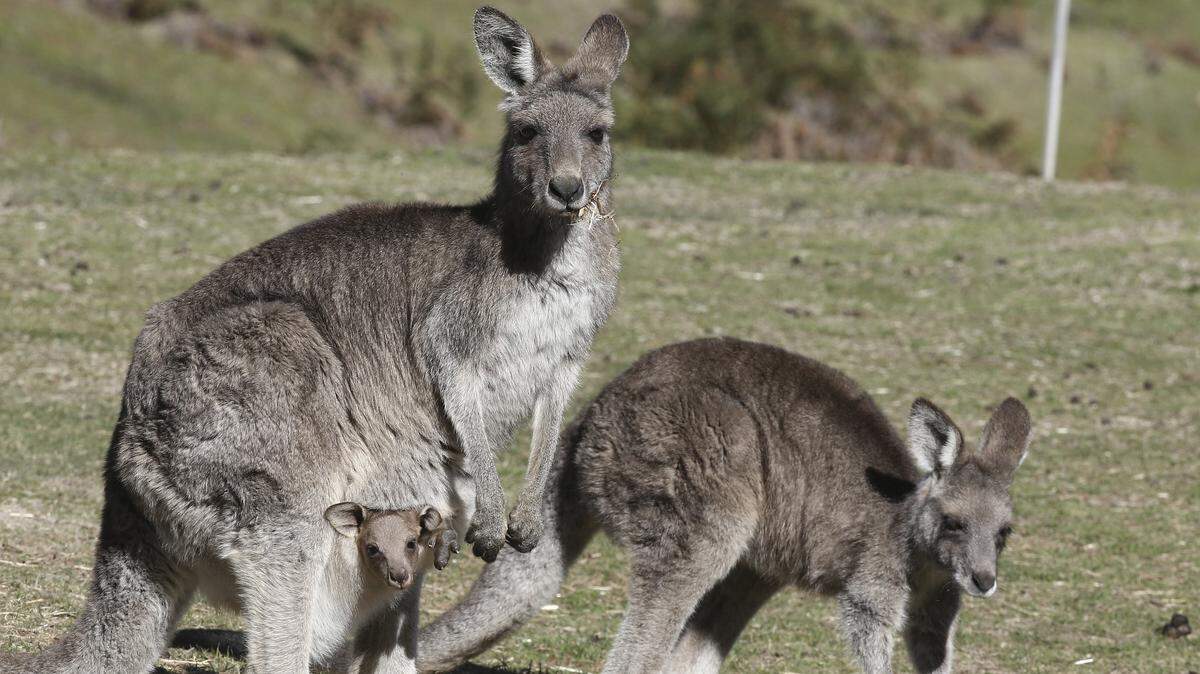
If Congressman Salud Carbajal has his way, no American will ever again dine on kangaroo meat ... or hitch up their jeans with a kangaroo-hide belt ... or dribble a soccer ball with feet shod in “k-leather” cleats.
California already has banned kangaroo products, and now Carbajal, a Democrat from Santa Barbara, wants to take that nationwide.
He announced this week that he’s joined with Pennsylvania Republican Brian Fitzpatrick to introduce the Kangaroo Protection Act, which would forbid the sale of kangaroo body parts in the U.S.
“I’m proud to stand against kangaroo trafficking and have introduced the Kangaroo Protection Act to make it illegal to exploit kangaroos in the United States and impose penalties for violations,” Carbajal said.
Animal welfare groups are thrilled.
“Lawmakers are taking a stand against harming kangaroos!” wrote One Green Planet.
“Tell your legislators to save the lives of millions of kangaroos a year!” instructed the Kangaroos Are Not Shoes Campaign, which has been working to stop major athletic shoe manufacturers from using kangaroo hides to produce soccer cleats.
But not everyone is impressed with Carbajal’s effort to protect kangaroos.
“Why’s he worried about Australia?” one Tribune Facebook poster wrote.
“No one cares about what happens in Australia. Start working for American citizens for a change,” wrote another.
Australia’s kangaroo industry isn’t happy either.
“No threatened species of kangaroos are commercially harvested in Australia and nor are kangaroos harvested for their hides,” industry spokesman Dennis King told ABC Rural, an Australian news outlet. “Their hides come off ... when the kangaroos are being processed for their meat for human consumption and for pet food.”
It may seem odd for a California congressman to worry about kangaroos in Australia when the U.S. is battling a pandemic.
But concern about the welfare of iconic Australian animal has grown for a couple of reasons:
Last year’s devastating wildfires killed or displaced 3 billion animals, including millions of kangaroos, according to the World Wildlife Fund.
And the campaign against kangaroo cleats — which recently gained new followers with the release of the short film, “Nike profits. Kangaroos Die” — has played a role.
As for Carbajal’s involvement, this isn’t exactly a one-off.
The congressman also is a strong defender of monarch butterflies; he recently urged the U.S. Fish & Wildlife Service to protect the rapidly declining monarch butterfly population.
He’s earned a 100% rating from the national Humane Society for supporting animal welfare bills, including one that strengthens restrictions on possessing and exhibiting big cats and another that prohibits the sale of shark fins.
(Not-so-fun fact: Rep. Devin Nunes of Tulare scored 0% on the Humane Society’s score card.)
We have no particular problem with Carbajal taking on this cause. There’s nothing frivolous about protecting animals from abuse.
Besides, legislators should be able to handle myriad issues, small and large. That’s what we elected them to do.
But let’s not lose sight of the fact that when it comes to animal welfare, the United States is far from blameless.
To put it bluntly, we need to get our own animal house in order.
One example: Just this month, New York Times columnist Nicholas Kristof wrote about an undercover investigation of a Nebraska farm that raises chickens for Costco.
“The chickens grow enormous breasts, because that’s the meat consumers want, so the birds’ legs sometimes splay or collapse. some topple onto their backs and then can’t get up. Others spend so much time on their bellies that they sometimes suffer angry, bloody rashes called ammonia burns; these are a poultry version of bed sores,” Kristof wrote.
Yet federal laws that protect other farm animals, including the Humane Methods of Slaughter Act, don’t apply to chickens.
“Their life and death is sadly filled with misery,” said Josh Balk, vice president of farm animal protection at the. Humane Society of the United States.
Food companies have been putting pressure on producers to improve conditions, and that’s had some success.
But getting federal laws passed to protect chickens is pretty much out of the question, Balk said, due to opposition from the poultry industry.
In other words, a bill to protect kangaroos in Australia has a better shot at passing than a bill mandating humane treatment of poultry right here at home.
That’s just wrong. We’d love to see Congressman Carbajal do something about it.
This story was originally published February 25, 2021 at 5:30 AM.