
Some SLO County renters are living in squalor. It’s time to hold bad landlords accountable
Imagine going out to eat at a restaurant back in pre-COVID days and finding standing water in the bathroom, walls covered in mold and cockroaches skittering across the dining room floor.
It would leave you sick to your stomach, right?
Chances are, you’d waste no time calling county Environmental Health Services to complain — and you’d be doing everyone a favor.
Now imagine putting up with conditions like that 24/7 — only there’s no guarantee anyone in authority will do something about it.
While San Luis Obispo County has a robust restaurant inspection program that ensures restaurants are following health and safety rules, there is no local agency routinely checking up on rental housing.
In some communities, it’s hard to even get officials to respond to complaints of dire circumstances.
Too often, the SLO County rental industry is treated, not as a real business that should be required to comply with health and safety codes, but as a side hustle that can be left to its own devices.
That has to stop.
Tribune investigation
Bedbugs, cockroaches, mold, broken windows, leaky roofs and zero heat were among the squalid conditions Tribune reporters Lindsey Holden and Cassandra Garibay encountered in a nine-month investigation into substandard rental housing in San Luis Obispo County.
The investigation included a survey of 200 tenants — 83% of whom reported at least one significant problem with their rental units.
One of the worst cases: A mother was unable to bring her baby boy home from neonatal intensive care because fungus — described as mushroom-like growths — was sprouting around the windows; it required removal of a wall to get rid of it.
Many renters simply put up with horrible conditions, rather than report them to authorities. In the SLO Tribune survey, only six of the 200 renters turned to a government agency for help.
Why stay silent?
Tenants may be afraid the landlord will raise the rent or even evict them. They may not know how to go about holding landlords accountable.
Or they may decide it’s simply easier to put up with the situation — all the while forking over monthly rent — knowing how tough it is to find decent rental housing in high-priced San Luis Obispo County.
Not only has the supply of new mutli-family units failed to meet the demand, there’s also far too little being done to ensure the existing stock of aging rentals is maintained in livable condition.
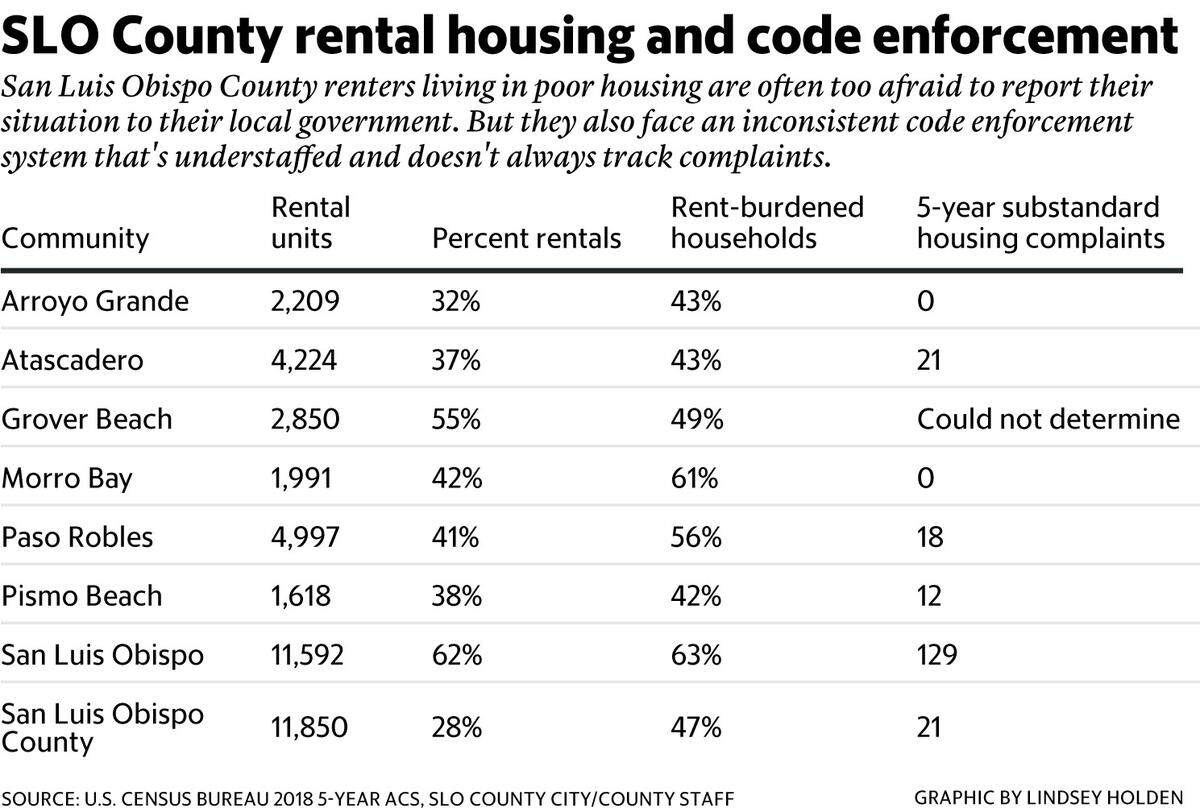
Holden and Garibay found that cities often don’t adequately track complaints to code enforcement; the cities of Arroyo Grande and Morro Bay reported zero complaints over five years.
Even when officials are aware of problems, there’s no guarantee that action will be taken.
Take the infamous Grand View Apartment episode in Paso Robles — a worst-case scenario if ever there was one.
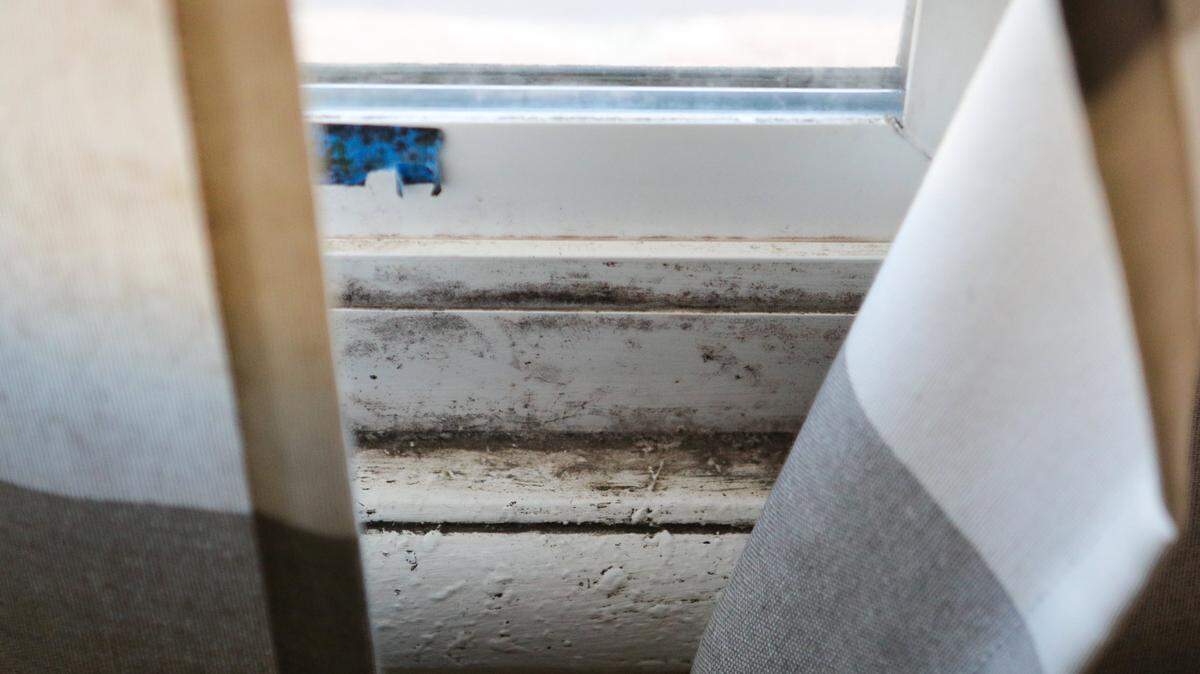
The city knew about conditions for years, but took no definitive action, leaving tenants with no recourse but to file a class-action lawsuit.
Rather than make necessary repairs, the owners sold the property — forcing many of the tenants to scramble to find new housing.
Had the city kept on top of the issue in the first place, it might not have come to that.
So what can be done?
What’s happening elsewhere
The city of Modesto experienced a problem similar to what happened in Paso Robles.
A derelict, two-story building in the downtown was divided into studio apartments that rented for $585 per month. The building had mold, rats and cockroaches, rotting bathroom floors, holes in walls and floors, and bad plumbing. The city eventually condemned it, forcing tenants to vacate.
That served as a catalyst to get the community talking about how to prevent such situations from happening again. Last year, the City Council passed a rental inspection program aimed at protecting tenants — especially low-income tenants who may be reluctant to complain.
This happened in Modesto — not in Berekely or Santa Cruz or other liberal California enclaves.
In fact, cities and counties in many parts of the state have rental inspections ordinances — the list is too long to include here — but there are no such programs in San Luis Obispo County.
The city of San Luis Obispo did pass a rental inspection ordinance in 2015, but it was repealed in 2016. Landlords objected to the cost of the program; tenants worried their rent would be raised or they’d even lose their housing if the landlords couldn’t afford to make necessary repairs.
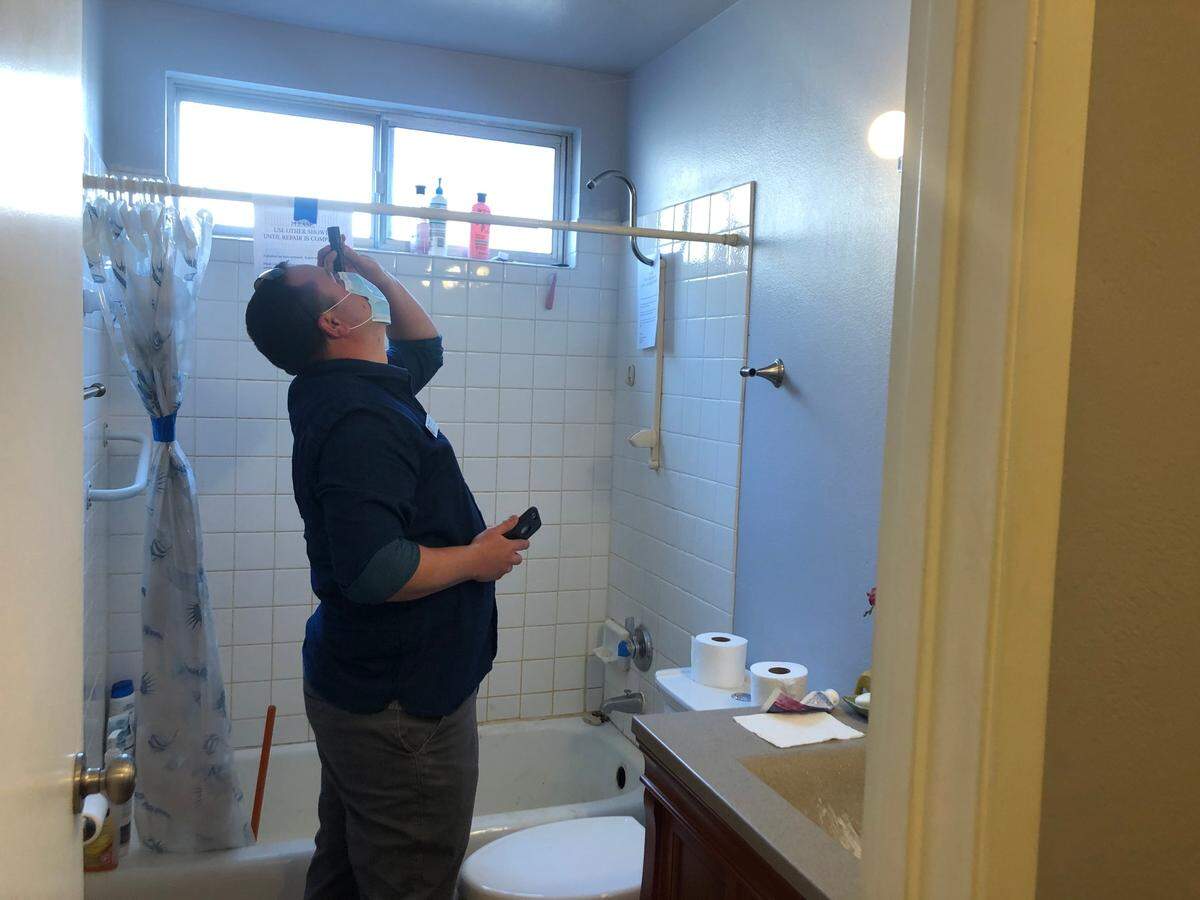
The city now operates a complaint-driven program; over the past five years it tracked 129 complaints of substandard rentals. By comparison, the county reported receiving just 21 complaints, even though it has a larger number of rental units under its jurisdiction.
What happens to violators
First, code enforcement officers work with landlords to fix the problem.
If that’s not successful, a city can impose fines. In San Luis Obispo, for example, the fine is $100 for a first violation; $500 for a second; and $1,000 for a third.
There are more drastic remedies as well.
Many years ago, San Luis Obispo County filed criminal charges against an 89-year-old landlord who repeatedly failed to make necessary repairs to some rentals in Nipomo. He was placed on probation, and when that failed, a judge ordered him to spend four days in jail.
Or consider this more recent case: In 2017, the city of Santa Maria filed a civil lawsuit against a landlord after inspections identified more than 4,000 fire, building and code compliance violations that included plumbing leaks, electrical hazards, cockroach and bedbug infestations, structural hazards and dilapidated laundry rooms and common areas.
The properties included 386 apartment units, 95 boardinghouse units, and 30 mobile home or RV spaces.
Santa Maria eventually settled with the landlord, who agreed to make necessary upgrades and to pay the city $336,000 to cover its expenses in the case.
In other words, there are tools available to go after bad landlords — but agencies have to pick them up and use them.
What comes next?
For too long, agencies in San Luis Obispo County have either ignored or been slow to act on this dirty little secret of substandard housing.
Now the secret is out, and it’s time to demand action on several fronts:
Education: Local governments, housing organizations, churches, health agencies, etc., should join forces in reaching out to tenants to make sure they 1) know their rights 2) know what to do if landlords violate their rights and 3) have referrals to agencies and organizations that can help, including tenant organizations.
Cities can start by making sure there is easy-to-find information for renters on their website in both English and Spanish, and that it includes a form for reporting problems to code enforcement.
Tracking and enforcement: Every agency in the county should not only have a robust system to track complaints, it also should report the outcomes of subsequent investigations. If nothing else, that would serve notice to landlords that complaints are taken seriously.
Inspections: Unfortunately, San Luis Obispo’s experience with rental inspections has been treated as a cautionary tale — a warning to other cities that they shouldn’t even attempt such a move. That’s ridiculous. All options should be on the table, especially in cities that know they have an issue with substandard rentals. At the very least, there should be periodic inspections of properties with a history of health and safety violations.
These steps will doubtless cost money and may even require hiring additional staff at a time when local governments are struggling. We strongly urge officials to allocate a portion of new tax dollars — voters in six of the seven cities just approved tax increases — toward the effort.
No one should have to put up with mold, vermin, leaky roofs, faulty plumbing and heating — not at a restaurant, and certainly not in rental housing.
Other California cities and counties have stepped up to protect tenants and hold bad landlords accountable. It’s time to demand that our agencies do the same.