Union Pacific should block access to ‘rape tunnel’ near Cal Poly before someone gets hurt
As the owner of the so-called “rape tunnel” near Cal Poly, it’s time Union Pacific Railroad stepped up and took responsibility for the danger posed by its property.
Simply posting “no trespassing signs” doesn’t cut it — not when the railroad knows full well that Cal Poly students regularly use the tunnel as a shortcut to and from campus.
While the railroad may not be legally liable, it is morally responsible. If Union Pacific can’t make the passage safe for pedestrians — and that seems unlikely — it should figure out a way to keep them out.
That, however, is not enough.
Ideally, Union Pacific, Cal Poly and city of San Luis Obispo would join forces to engineer an all-weather, pedestrian-friendly crossing over or under the railroad tracks before another student is struck and killed by a train — or hurt while taking another haphazard shortcut like the skanky Union Pacific storm drain.
About that tunnel: There have been no reports of sexual assaults there, but it’s easy to see how it earned its name — even though, luckily, it has yet to live up to it.
The tunnel is dark, dank and frightening. Water runs through it during the rainy season — it was designed as a culvert that allows water to flow under the tracks. Still, it’s a convenient shortcut to and from the many student housing complexes near Sierra Vista Regional Medical Center.
Two student organizations at Cal Poly want to make the passage safer by replacing a make-shift path of wooden pallets and planks with something a bit sturdier, and putting reflective tape inside the tunnel to make it brighter.
It’s a commendable idea — except students have run into a bureaucratic morass. In addition to Union Pacific, the Regional Water Quality Control Board and state Fish and Game would need to bless any project, even a temporary fix like the one the students are proposing.
History of fatalities
What’s really needed is a permanent fix for a decades-old problem of how to safely channel thousands of students to and from campus.
Since 1975, at least five young people have died while attempting to cross the tracks in the vicinity of Cal Poly, and there have been many near misses.
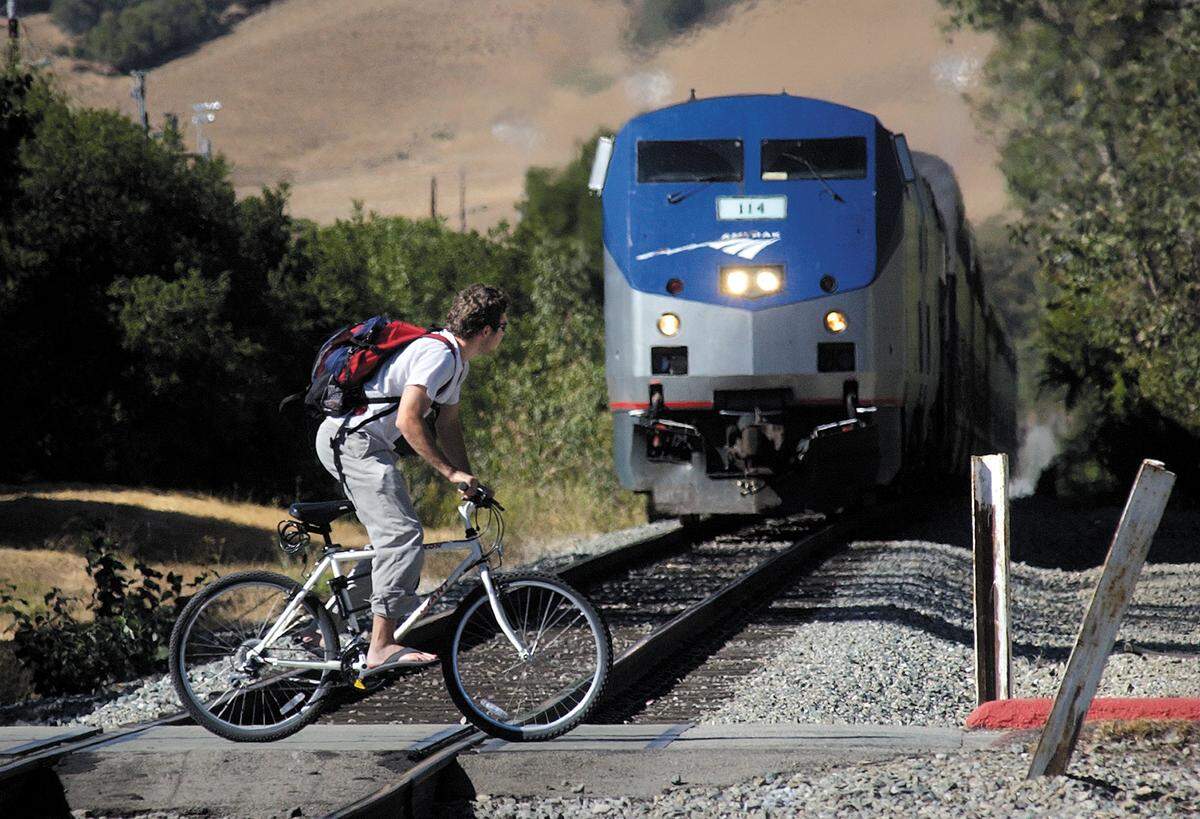
The most recent deaths occurred in 2010, when 17-year-old Oscar Gonzalez was struck about a quarter-mile south of California and Foothill boulevards. He was wearing headphones at the time.
In 2016, 22-year-old Thomas Tilton Stone of Vallejo, a senior business student at Poly, died while trying to cross at the California and Foothill intersection. Stone was wearing earbuds.
Following Gonzalez’s death, Union Pacific installed some fencing to prevent unsafe crossings, but that didn’t solve the problem — students are still taking chances.
Also, the fencing that was intended to keep students appears to have inadvertently funneled more pedestrians into the “rape tunnel.”
There are, of course, safer routes students could and should take to and from campus. But when you’re running late or you’re anxious to get home after a long day, you are going to take the most direct path from one place to another, which is why many brave the tunnel’s scary conditions.
It’s also why Union Pacific’s feeble attempt to shirk responsibility by posting “no trespassing signs” is having no effect.
And about those signs: A Tribune reporter and a photographer both visited the tunnel, and neither noticed a single sign.
For starters, the signs must be far more visible.
Union Pacific also needs other deterrents. Put up surveillance cameras and/or occasionally patrol the area. Install grates that would allow water to flow through but keep people out. Or find some other creative engineering solution.
Surely, this can’t be the only place in the nation where railroads have encountered this problem. What’s worked in other places?
Figuring that out is step one.
Beyond that, Cal Poly, the city of San Luis Obispo and Union Pacific need to partner to develop workable, safe and efficient pedestrian and bicycle circulation plans for the neighborhoods near Cal Poly.
It’s a step that’s long overdue.
This story was originally published December 5, 2019 at 7:13 AM.