
SLO County supervisors, here’s your chance to encourage affordable housing. Don’t blow it
Fingers crossed.
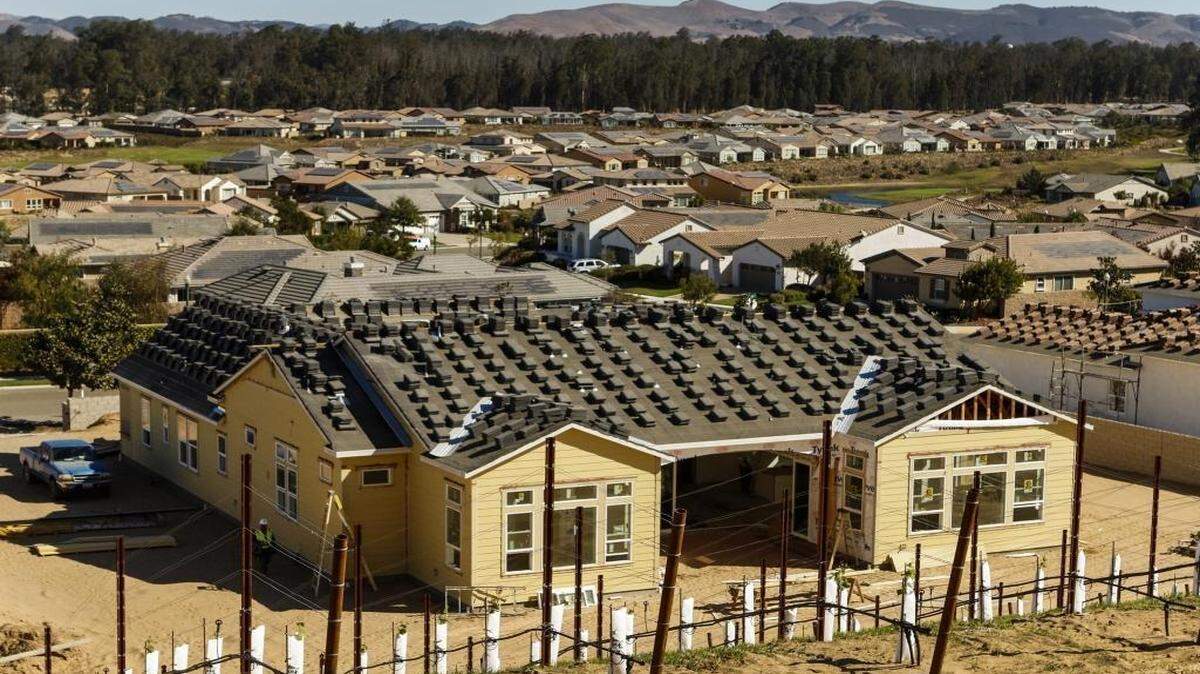
Tuesday may be the day the county Board of Supervisors takes meaningful action to increase the supply of housing in San Luis Obispo’s unincorporated areas.
By “housing,” we don’t mean golf course communities where townhomes go for $600,000 or more (not including HOA fees). We don’t need any more exclusive developments that have been magnets for wealthy retirees fleeing crowded urban hubs.
What we desperately need is housing for the rest of us — you know, the 85 percent of county residents who don’t earn enough to afford a median-priced home in San Luis Obispo County.
So far, the Board of Supervisors has done precious little to help this demographic. When it has acted, it’s been too late to make much of a difference.
For example, the Board of Supervisors didn’t pass an affordable housing fee until 2008 — after hundreds of homes already had been built without any affordable housing requirements.
To make matters worse, the fee ordinance took effect the same year the Great Recession hit. To soften the blow on home builders — who weren’t really building anyway — the board decided to keep the fee at its lowest level, instead of raising it annually.
Now, 10 years later, the fee has only been raised once, to $1.50 a square foot. That works out to $3,150 for a 2,100-square-foot house, which isn’t much compared to what other jurisdictions charge.
While the county fee is better than nothing, it isn’t nearly as effective as it should be, which is why we’re pleased the Board of Supervisors is considering a revamp of the fee ordinance.
The main points: It would exempt small homes from paying any fee; apply a “stepped fee increase” to larger homes; and begin charging a fee for single, custom homes.
Currently, the fee is applied only to projects with two or more units.
It’s about time the board closed this loophole. Who knows how many tens of thousands of dollars have been lost because builders of huge, custom-built mansions (and yes, there are many tucked away in the unincorporated county) weren’t charged a fee.
But even with these changes, there won’t be nearly enough revenue to make real progress.
It will take between $2 million and $4 million per year for the county to meet its affordable housing goals, according to an analysis by various housing and business groups that have been involved in discussions with the county.
Here are their ideas for generating more revenue:
- Use $5 million in county general funds to establish an affordable housing fund.
- Raise the transient occupancy tax (bed tax) by 1 percent.
- Put a property tax surcharge on vacation rentals.
- Earmark a portion of the cannabis tax to support affordable housing.
- Put a special-purpose bond measure on the ballot to fund affordable housing. That would require a two-thirds majority vote.
- Put a general obligation bond measure on the ballot, which requires only a simple majority vote. Also, place a companion advisory measure on the ballot that would earmark the funds for affordable housing.
We doubt that two-thirds of voters would approve a special-purpose bond measure.
We also question whether the county is in the financial position to allocate $5 million from the general fund — not when it just had to make some cuts and dip into reserves to balance the annual budget.
And it’s far too early to expect a stream of revenue from the fledgling cannabis industry.
That leaves increasing the bed tax; a tax surcharge on vacation rentals; and a general obligation bond. We urge the board to seriously consider those options.
This step is long overdue.
It’s time for the Board of Supervisors to set aside ideological differences and help constituents locked out of the housing market.
This story was originally published August 20, 2018 at 4:48 PM.