
We have major concerns about both SLO County sheriff candidates — but one is more qualified
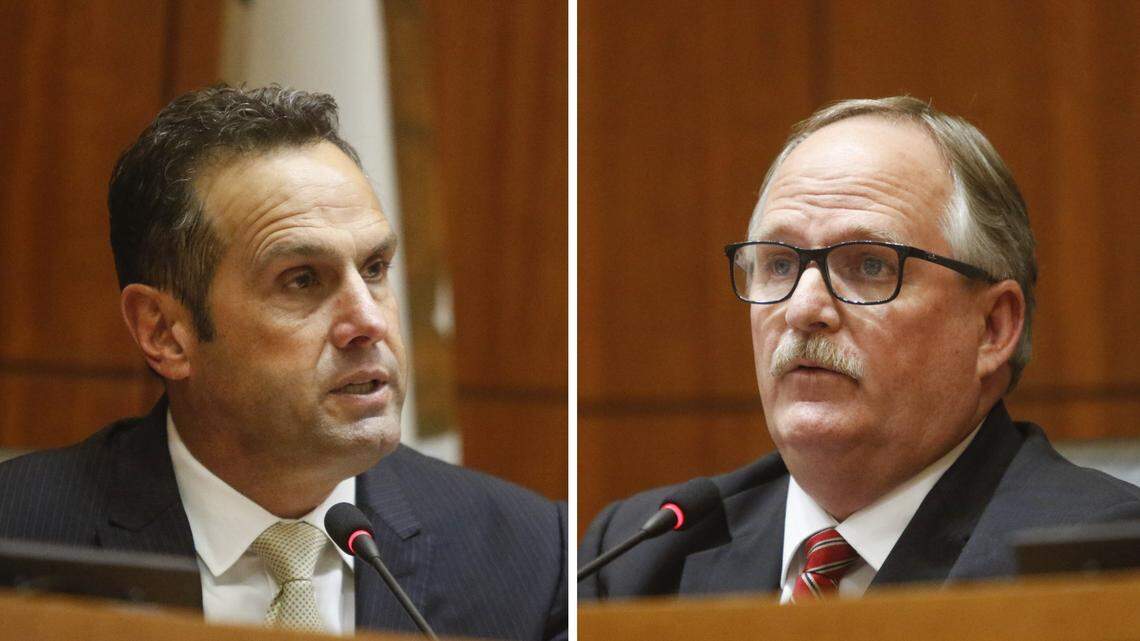
In the race for San Luis Obispo County sheriff, two-term incumbent Ian Parkinson faces challenger Greg Clayton, a private investigator who has never held a leadership position in law enforcement.
This is a tough choice, because both of these candidates have serious shortcomings and for that reason, we offer our thoughts, rather than a formal endorsement.
While Parkinson has some impressive accomplishments — completion of the new woman’s jail being one of the most notable — we cannot overlook the jailhouse death of Andrew Holland, a mentally ill inmate who died of a blood clot after spending 46 hours strapped naked to a restraint chair.
It's true that Parkinson wasn't the only one responsible: Everyone from the manufacturer of the restraint chair to the doctor who gave the OK to keep Holland strapped down deserves a hefty portion of the blame, and in a just world, would be held culpable.
Still, the sheriff ultimately must answer for a death that was entirely preventable. Parkinson should have put a new restraint policy in place years ago, especially since there was a well-documented history of problems with restraint chairs in other jurisdictions, including Ventura County. Instead, it took Holland’s death to shine a light on the need to radically change the way the jail deals with mentally ill inmates.
Under these circumstances, we can understand why some voters would prefer anyone to Parkinson.
However, Clayton has not shown us that he is qualified for the job. He is not well enough informed and would require too much on-the-job training to get up to speed on what it takes to run a modern-day law enforcement agency.
Clayton has no management experience, nor has he ever been responsible for developing and administering a multi-million dollar budget. His most recent experience with a law enforcement agency occurred 26 years ago, when he worked for the San Luis Obispo Police Department. He left the police force due to an on-the-job injury; he's worked as a private investigator for the past 25 years.
While Clayton is a strong advocate of jail reform, he's shaky on the issues: At recent candidates’ forums, he had difficulty answering some basic questions, and he floated ideas for programs that are already in place.
It’s possible that Clayton could do a fine job as sheriff, but this is too important a job for someone untested in a leadership position. We cannot endorse Clayton simply because he is the only alternative to Sheriff Parkinson.
We wish it were otherwise. We wish other candidates had entered the race with the qualifications and credentials worthy of the office. That didn’t happen.
We're left with two choices and, all things considered, Parkinson is the stronger candidate. He has more experience, more knowledge of the issues and, while there have been peaks and valleys, major crimes are down. Last year, they were the lowest they've been since 2011, the first year Parkinson was in office.
Parkinson has made strides in other areas as well. Some examples: Under his leadership, a full-time pathologist has been hired; technology, including video equipment in patrol cars, has been upgraded; and anti-gang efforts have been stepped up, both by expanding the gang task force and introducing a gang resistance education program in local schools.
Also, we also believe that Parkinson will be a better sheriff going forward, shaped as he has been by this tragedy. Since Holland’s death, he's made several changes at the jail, including destruction of the restraint chair and adoption of a new restraint policy. At his urging, the Board of Supervisors agreed to hire a chief medical officer at the jail.
But much more needs to be done, starting with less finger-pointing and far more transparency from Parkinson, especially about the Holland case.
We’re still not certain we have an entirely accurate account of what occurred, as the official version has changed over the past year. For example, we learned only recently that Holland was administered drugs a short time after he was restrained. So why wasn’t he released from the chair at that point?
Though many Parkinson supporters believe otherwise, this is not a witch hunt. We've been raising questions about the Holland case not to put Parkinson on the spot, but because we believe the best way to prevent this from happening again is by knowing as much as possible about what occurred, and because we believe elected officials should be held accountable for what happens on their watch.
Yet attempts to clarify what happened have been met with anger, defensiveness and, lately, silence.
Is it any wonder some voters would consider an under-qualified candidate as a viable choice?
If Parkinson is re-elected — and judging by the support he's receiving, we expect he will be — we recommend he redouble efforts to communicate with all of his constituents, especially on the issue of mental health. Don't wait another year or two for another round of town hall meetings.
We also strongly urge Parkinson to devote his next term to making San Luis Obispo County a model in the treatment of mentally ill offenders, rather than a county that inspires outrage over a horrific and needless death.
This story was originally published May 19, 2018 at 2:42 PM with the headline "We have major concerns about both SLO County sheriff candidates — but one is more qualified."