
SLO mayor’s leak of Grand Jury report: ‘Tempest in a tea pot’ or serious crime? | Opinion
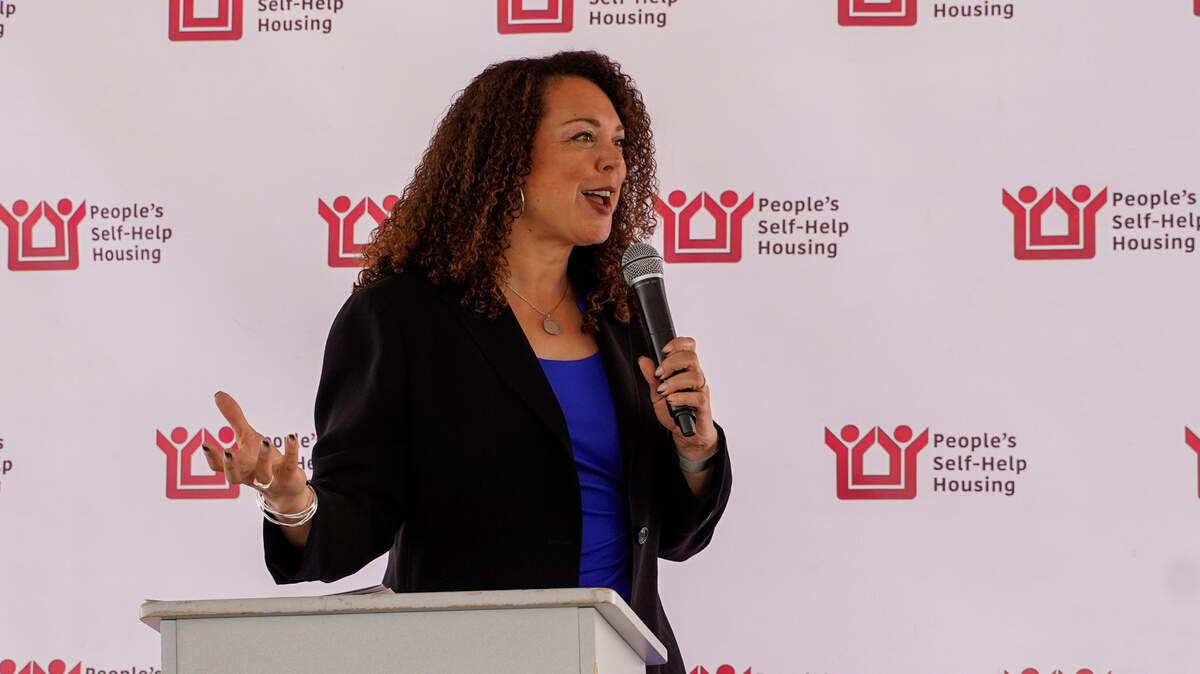
San Luis Obispo Mayor Erica Stewart has acknowledged that she shared a confidential county Grand Jury report with Cal Poly before it was released to the public — a clear violation of California law.
Should it be treated as no big deal — a “tempest in teapot” — as one person commented on The Tribune website — or should there be serious consequences for the mayor, who is up for reelection in November?
First, some background: The 2025 report dealt with rowdy, off-campus fraternities that have been causing headaches and sleepless nights for nearby neighbors for years.
As reported in The Tribune, the Grand Jury sent Stewart an advance copy of the report — along with a letter warning that it should not be shared.
The mayor, who works at Cal Poly, passed it on anyway to a colleague at the university.
Now some are calling on Stewart to resign.
“This (Tribune) article vividly illustrates that both SLO city officials and CP officials have not earnestly been trying to solve the problems in our neighborhood,” one person posted on The Tribune website. “They are in the bag for the out-of-control frat boys, and voters ought to demand change. Mayor Erika (sic) Stewart should resign NOW.”
Others want the mayor to be prosecuted under Penal Code Section 93305, which lays out how grand jury reports are to be handled.
“No officer, agency, department or governing body of a public agency shall disclose any contents of the report prior to the public release of the final report,” it says.
District Attorney Dan Dow said his office is aware of the allegations.
“I cannot comment on whether a charging decision has been made, is under consideration, or whether any legal basis exists to extend the limitations period in this matter,” he said via email. “What I can tell you is that my office takes the integrity of the grand jury process seriously.”
“The people of San Luis Obispo County deserve public officials who follow the law, including the laws that apply specifically to them,” he added.
The city of SLO was the target of the investigation — not Cal Poly
According to statements she made to The Tribune, the mayor was under the impression that a draft of the report would also be shared with Cal Poly.
Except, that’s not the way things work.
State law requires grand juries to share draft reports with the “affected agencies,” so they can review the documents and make any necessary corrections before it is released to the public.
In this case, the affected agency was the city of San Luis Obispo — not Cal Poly. (County grand juries are not authorized to investigate state or federal agencies.)
Stewart told The Tribune that she shared the document with Courtney Kienow, an economic development official at the university, “in order to provide a thorough and factual response to the Grand Jury report.”
That makes sense intellectually, but it’s still a violation. As a public official, Stewart should know the blowback that comes with failing to follow to the letter of the law.
Still, some see this as much ado about nothing.
“Not that newsworthy and certainly not a scandal of any kind,” one person posted on The Tribune website.
“Seems like a simple misunderstanding. They both clearly thought Cal Poly had a copy. Turns out, Cal Poly didn’t have a copy. Nothing changed. No harm was done. So what’s the big deal?” another wrote.
Stewart should not resign as mayor
This should not be blown out of proportion — calling on Stewart to resign is ridiculous. If voters are that upset, they can vote her out in November.
Keep in mind, too, that this was a one-off. It’s highly doubtful that Stewart — or any other local official — would commit such a violation in the future.
But nor should the incident be written off as a case of no harm, no foul.
The leak further strained relations between the city and the residents living near Cal Poly.
The situation was exacerbated even more by the release of a series of texts between Stewart and Kienow, where they traded back-and-forth criticism about the Grand Jury report.
“It really is like the anti-student neighbors wrote it,” Kienow wrote to Stewart.
This was an embarrassing lapse of judgment. Stewart should have known better than to leak a confidential report under the assumption that Cal Poly would be getting its own copy anyway. A quick call to the city attorney would have set her straight.
And if the mayor really needed information from Cal Poly to draft her response, she could have posed questions to university staff, rather than sharing the entire draft.
Grand juries have an important role to play. While their role is advisory, bringing problems to the attention of the public can act as a catalyst for change.
Their rules should be respected. In this case, they were not.
If the mayor hasn’t issued one already, an apology to the Grand Jury should be high on her agenda.