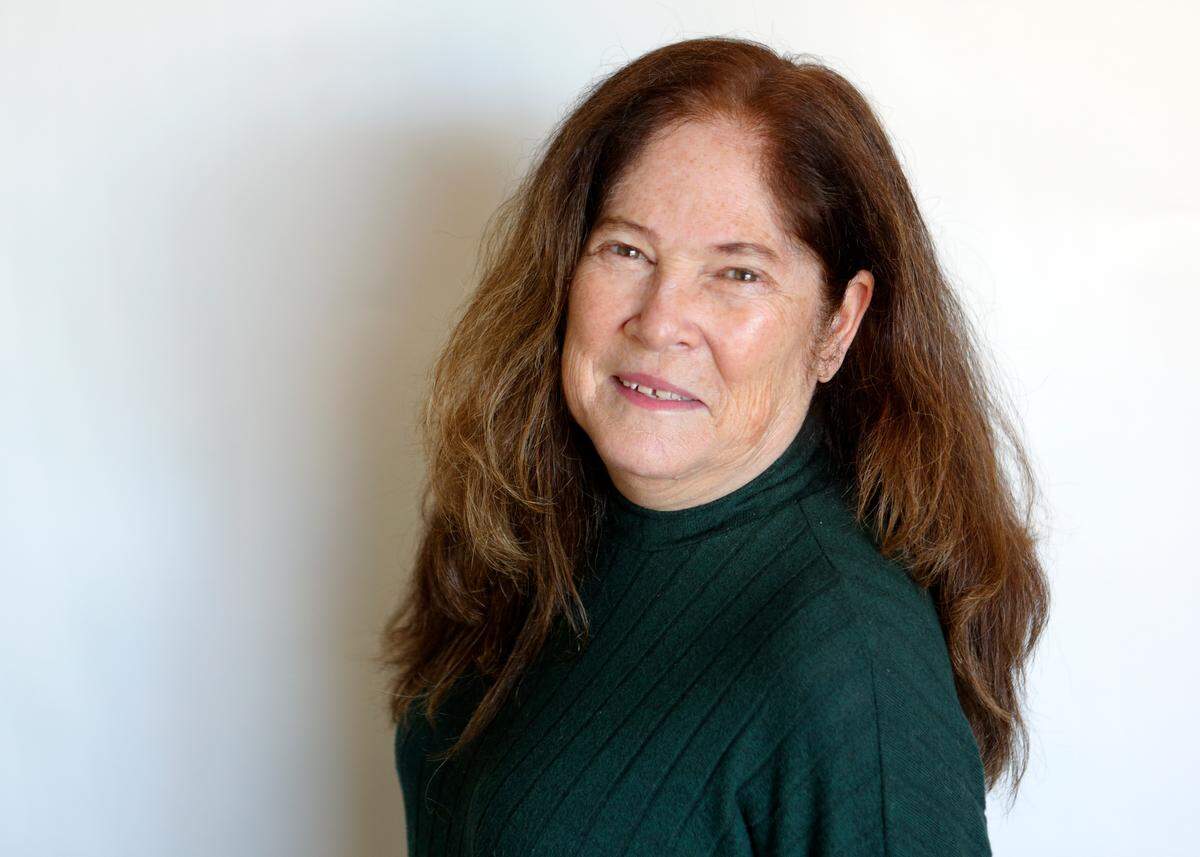
He’s campaigning for SLO County supervisor on a shoestring. Can he win? | Opinion
It’s common for political candidates to turn down certain types of donations — be it from oil companies, developers or political action committees. It’s become a form of virtue-signaling, a message that a candidate is not beholden to special interests.
Michael Erin Woody, who is running for county supervisor in District 2, is carrying things a step further.
Not only does he refuse donations from corporations, unions and PACs, he will not accept more than $500 from any single contributor, even though the current limit is $5,900.
“There’s no reason why anyone needs to raise more than $500 (per donor),” Woody said in an interview. “It’s absurd to think I can contribute more to a local supervisor candidate than to someone running for president of the United States.” (The individual contribution limit for federal races is $3,500.)
As of the last accounting period, Woody had accepted just $2,500 in donations, mostly in $100 increments.
The bulk of his funding is from a personal loan of $35,000 that he made to his campaign.
Self-funding is not all that rare; just look at billionaire Tom Steyer, who is pumping tens of millions of dollars into advertising in a bid to be California’s next governor.
But for a local candidate to self-fund while setting a stringent cap on donations is highly unusual, if not unheard of.
“Bless anybody who can do that,” Woody’s opponent, Jim Dantona, said.
However, he sees value in fundraising.
“Fundraising is a key part of getting people to buy into your campaign and for you to make connections,” Dantona said. “If you can get people to invest in you at $10 or $15 or $1,000 or $5,000 .... that says something.”
From $100,000 to sky’s-the-limit
Fundraising has played an increasingly important role in races for the Board of Supervisors — leading to accusations that special interests are having an outsized influence on the county.
Not so long ago, $100,000 was considered an adequate “war chest.” That’s roughly what Eric Michielssen raised when he ran unsuccessfully against incumbent Debbie Arnold in 2016.
Just four years later, in 2020, Ellen Beraud raised approximately $365,000 in another unsuccessful attempt to unseat Arnold in District 5.
In 2022, the District 2 race between incumbent Bruce Gibson and challenger Bruce Jones raised a combined total of over $1 million, though that included two elections — the primary and the November run-off.
In 2024, District 5 candidates Heather Moreno and Susan Funk collectively raised more than $700,000 for a race that was decided in the primary.
Supervisors tried raising contribution cap to $25,000. That didn’t last
Why is campaigning for supervisor in a semi-rural county like San Luis Obispo so expensive?
It’s partly the nature of the beast. Unlike cities, supervisor districts not only have more voters, they also cover much more ground. That means more signs, more mailers, more meet-and-greets, more door-to-door canvassing — with more distance to travel.
Those were among the justifications raised back in 2020 when the conservative majority on the Board of Supervisors raised the contribution limit to $25,000.
“The money doesn’t go in our pockets when we run. It goes for things like advertising, it goes for radio, for TV. That’s really expensive,” Supervisor Lynn Compton said then. “People are saying, ‘Let’s get money out of politics.’ That’s just not the reality of getting your message across nowadays.”
It was an outrageous move — one that invited even more special-interest money into campaigns.
The backlash was fierce.
“In 14 years on this board, I have never seen public comment go 700 to one against us doing this,” said Supervisor Bruce Gibson, referring to the 700 calls and written messages his office received in response to the high limit.
When liberals gained control of the board, they reset the contribution limit to match the state cap, which is now $5,900.
‘I’m doing this to win’
But even that’s too much for Woody, who believes it’s possible to mount an effective campaign for supervisor on a shoestring.
Yard signs cost a candidate $5 each, he said. Freeway signs are $100, and he paid just $2 each for the 12-page brochures that he passes out when he canvasses door to door.
“You don’t need hundreds of dollars to run a good, effective campaign.” he said. “It doesn’t cost any money to do research and talk to voters.”
Money — or lack thereof — isn’t all that sets his campaign apart. Woody is running as a politically unaffiliated candidate, which means he receives no endorsement or financial backing from Democrats or Republicans.
Again, that’s unusual in a county that has become increasingly partisan. This is the first time in at least 25 years that a principal candidate in a supervisor’s race has not been affiliated with either major party.
”My whole goal is to get people to see campaigning differently, and to see politics differently,” Woody said.
But that’s not his primary driver.
“I’m not doing this to raise awareness,” he said. ”I’m doing it to win.”
This story was originally published March 15, 2026 at 5:00 AM.